#2026-astronomy
#2026-astronomy
[ follow ]
#astronomy #nasa #james-webb-space-telescope #space-exploration #cosmology #dark-matter #jwst #universe

#dark-matter




OMG science
fromFuturism
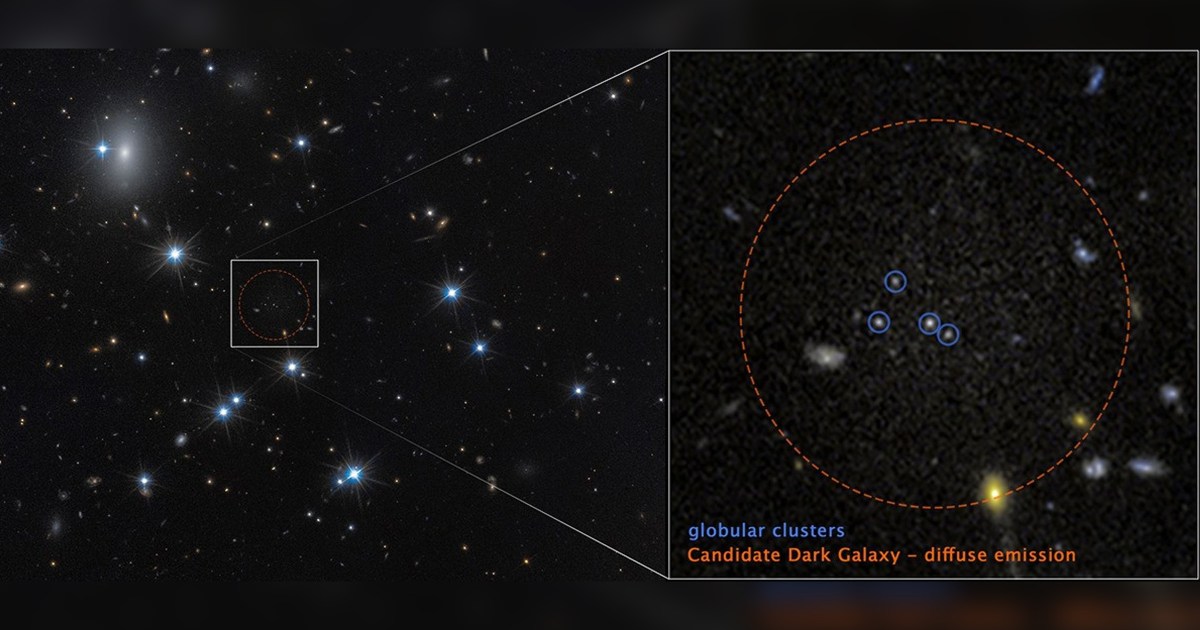
1 month agoHubble Spots Bizarre Galaxy That Appears to Be 99.9 Percent Dark Matter
Astronomers discovered galaxy CDG-2, composed of at least 99.9 percent dark matter, representing one of the most dark matter-dominated galaxies ever found and a candidate for theoretical dark galaxies.

fromNextgov.com
6 days agoCitizen Science Month 2026 Is about more than just stargazing
Citizen Science Month is built around a goal of 2.5 million 'Acts of Science,' tying the annual event to America's 250th birthday through a simple but powerful idea: lots of small contributions can add up to something really meaningful.
OMG science
Science
fromwww.scientificamerican.com
1 month agoHave astronomers found a runaway monster black hole or just a very weird galaxy?
Astronomers discovered RBH-1, a potentially runaway supermassive black hole traveling at over three million kilometers per hour, though ambiguous data makes its true nature uncertain.
Science
fromwww.scientificamerican.com
1 month agoThe universe's brightest supernovae are turbocharged by newborn magnetars
Superluminous supernovae are powered by newly formed magnetars—highly magnetized, rapidly spinning neutron stars that emit intense radiation, marking the first direct observation of a magnetar's birth.



fromBig Think
2 months agoWhat the Universe looks like: from nearby to far away
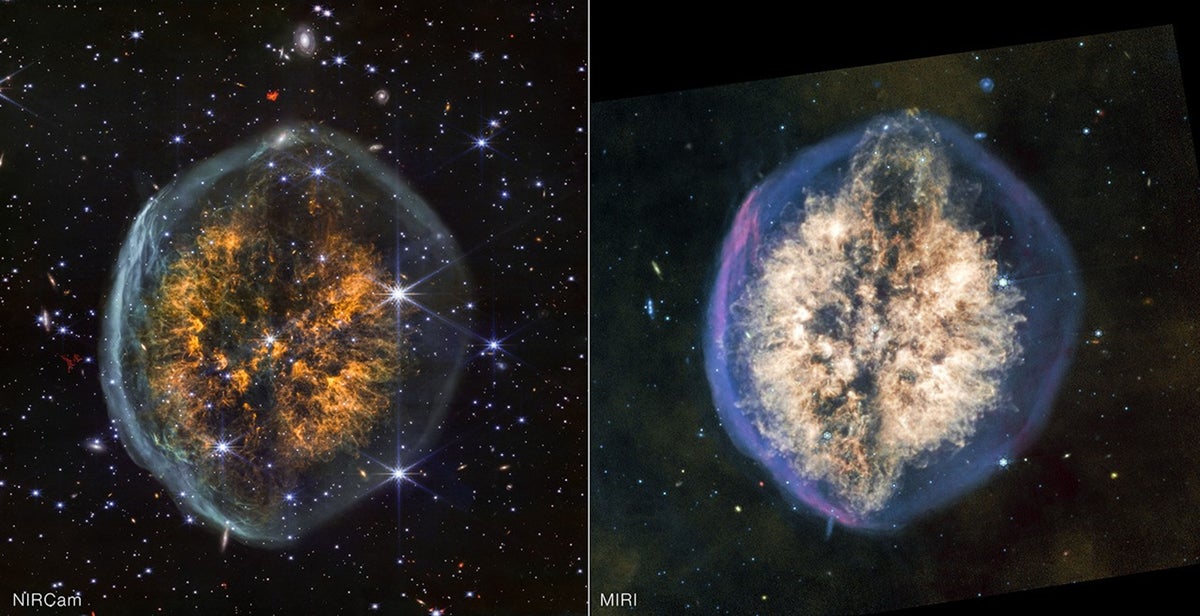
Looking skyward fills us with wonder. Off-world, the Sun, planets, stars, and galaxies all await. Our Solar System encompasses our own cosmic backyard. Farther away, stars and star clusters abound within the Milky Way. Hundreds of billions of stars exist just within our home galaxy. Inside our Local Group, only Andromeda surpasses us in mass, size, and stars. More than 5 million light-years away, galaxies abound in groups and clusters.
Science

fromMail Online
1 month agoSee the Milky Way like NEVER before in largest image of its kind
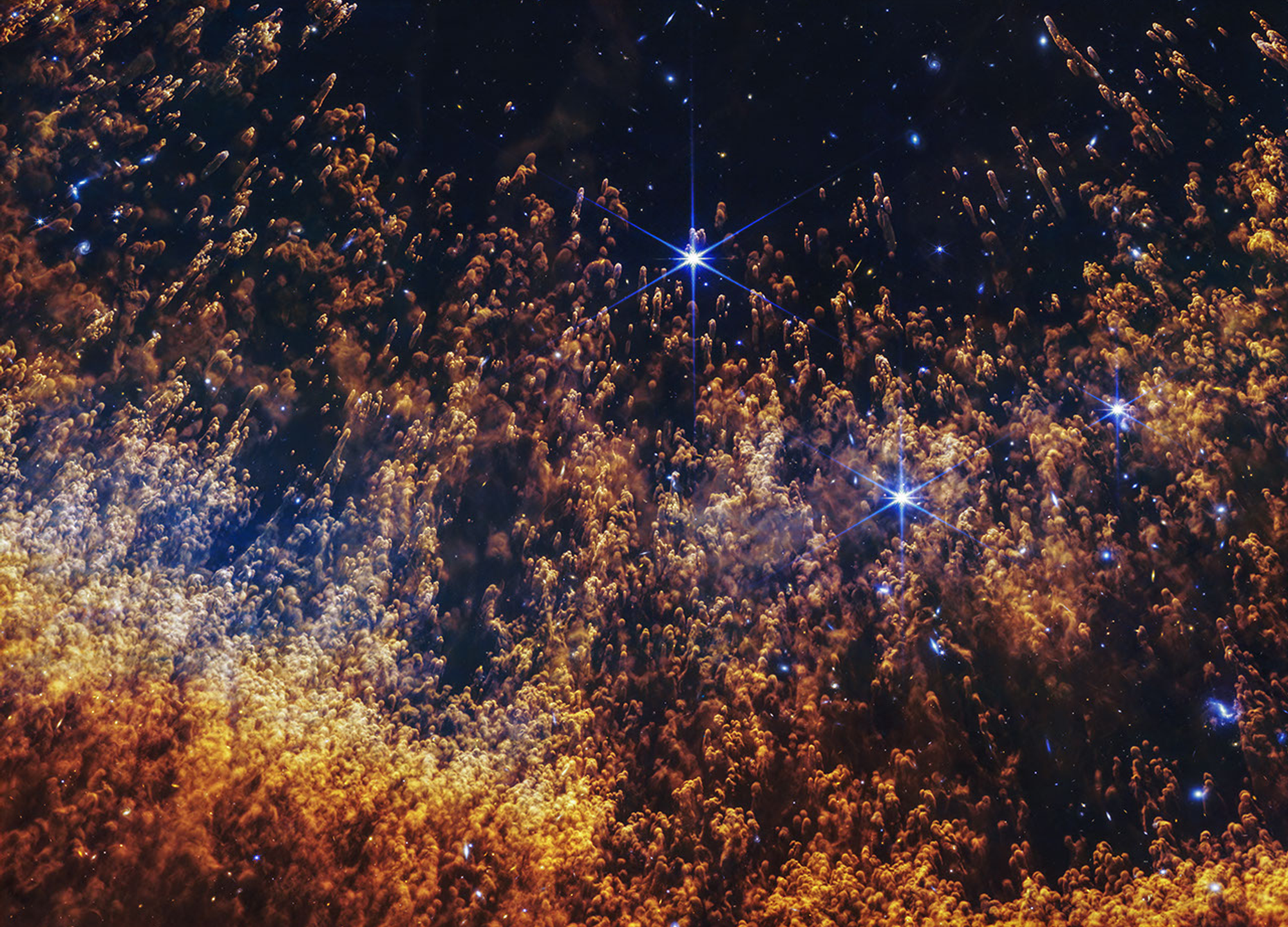
One of the most exciting aspects is the rich chemistry we detect. We see dozens of different molecules, including some complex organic molecules that contain carbon, the same element that forms the basis of life on Earth. From ACES, we are learning more about how the ingredients for planets, and potentially life itself, can arise in the universe.
Science
Science
fromwww.theguardian.com
1 month agoNew image reveals secrets of Milky Way galaxy in stunning detail
The Alma telescope captured an unprecedented detailed image of the Milky Way's center, revealing previously unknown filaments of matter flowing to form stars and planets, advancing understanding of galactic formation.
fromBig Think
2 months agoJWST shakes up the hunt for earliest galaxy cluster
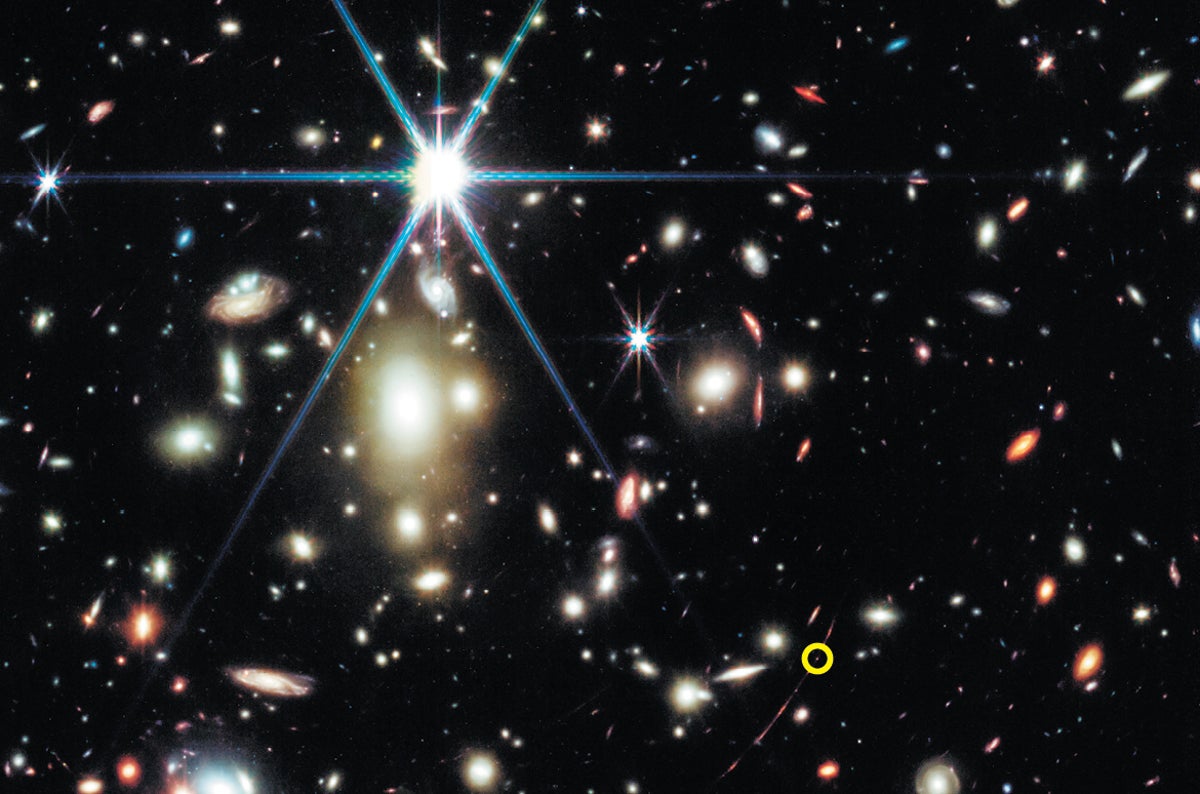
The Hubble Space Telescope displayed what the Universe looks like. Its successor, JWST, now reveals how the Universe grew up. Galaxies formed and grew massive swiftly: requiring under 300 million years. Larger-scale, more massive structures, like galaxy clusters, take longer. The earliest mature, fully-fledged cluster is CL J1001+0220. Simulations predict such clusters to appear late: after 2-3 billion years. However, proto-clusters, or still-forming galaxy clusters, appear far earlier.
Science

fromwww.scientificamerican.com
2 months agoThe biggest explosions in the universe, ranked
The universe is exploding. Or parts of it are. The night sky may seem calm, even serene, but that masks events of a catastrophic and nearly unimaginable scale. Across the galaxy and even the cosmos itself, immense outbursts of energy occur that could easily vaporize our planet. Happily, space is vast, and the terrible distance between these events and us diminishes what we see to a faint glowusually.
OMG science
fromTravel + Leisure
2 months agoThese Are the Best Star Parties and Astronomy Festivals in the World for 2026-From Desert Valleys to Coastal Lagoons
There is a profound, quiet magic in standing alone under a truly dark sky, but the experience becomes something else entirely when shared with a community of fellow explorers. Star parties are the heartbeat of this experience: communal, high-energy gatherings where everyone from veteran astronomers to total beginners can share a wide-angle view of the cosmos. It's a chance to level up your astrophotography skills, learn the latest in deep-space science from experts,
Science
fromwww.scientificamerican.com
2 months agoHow can galaxies ever collide in an ever-expanding universe?
Okay, first thing first: the universe is in fact expanding. We've known this for more than a century now, and it's the basis for modern cosmology. This idea is called the big bang modelwhich is an unfortunate name because it brings to mind a cosmos expanding like an explosion, with galaxies moving away from each other through space like shrapnel. But in fact space itself is expanding, and that's different.
Science
fromFuturism
1 month agoAstronomers Spot Huge Microwave Laser Blasting Into Space
This system is truly extraordinary. We're seeing the radio equivalent of a laser halfway across the universe. Fundamentally, masers and lasers are focused beams of light in the same frequency. In the realm of astrophysics, these can arise from clouds of dust being excited into a higher energy state from the light emitted by other sources, like stars and black holes.
OMG science
[ Load more ]