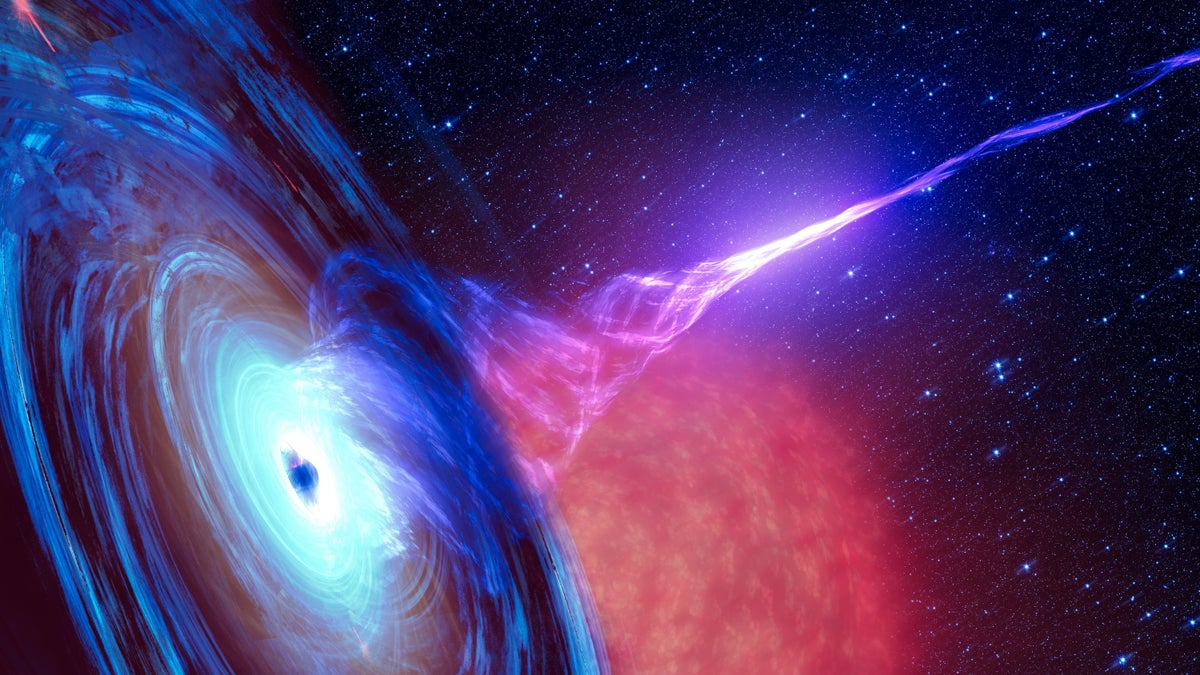
"The universe is exploding. Or parts of it are. The night sky may seem calm, even serene, but that masks events of a catastrophic and nearly unimaginable scale. Across the galaxy and even the cosmos itself, immense outbursts of energy occur that could easily vaporize our planet. Happily, space is vast, and the terrible distance between these events and us diminishes what we see to a faint glowusually."
"Locally, the sun is capable of some epic tantrums. Solar storms are eruptions that release some of the energy stored in the sun's strong magnetic field. These can create intense, localized explosions called solar flares, or much more powerful and dangerous coronal mass ejections, which spread out over a far larger volume. Both generate blasts of high-energy subatomic particles that can slam into Earth's magnetic field, causing widespread problems such as blackouts, loss of satellites, and more."
Catastrophic explosions occur throughout the universe, emitting immense energy that could vaporize planets if close enough. Vast interstellar distances usually reduce those outbursts to faint glows by the time they reach Earth, making direct effects rare and often minimal. The level of planetary hazard depends on an event's intrinsic power and proximity. The sun can produce extreme events—solar flares and coronal mass ejections—that release stored magnetic energy and hurl high-energy particles toward Earth. These solar eruptions can disrupt electrical grids, damage satellites, and produce auroras. More powerful cosmic explosions pose greater threats but must be correspondingly nearer to endanger Earth.
Read at www.scientificamerican.com
Unable to calculate read time
Collection
[
|
...
]