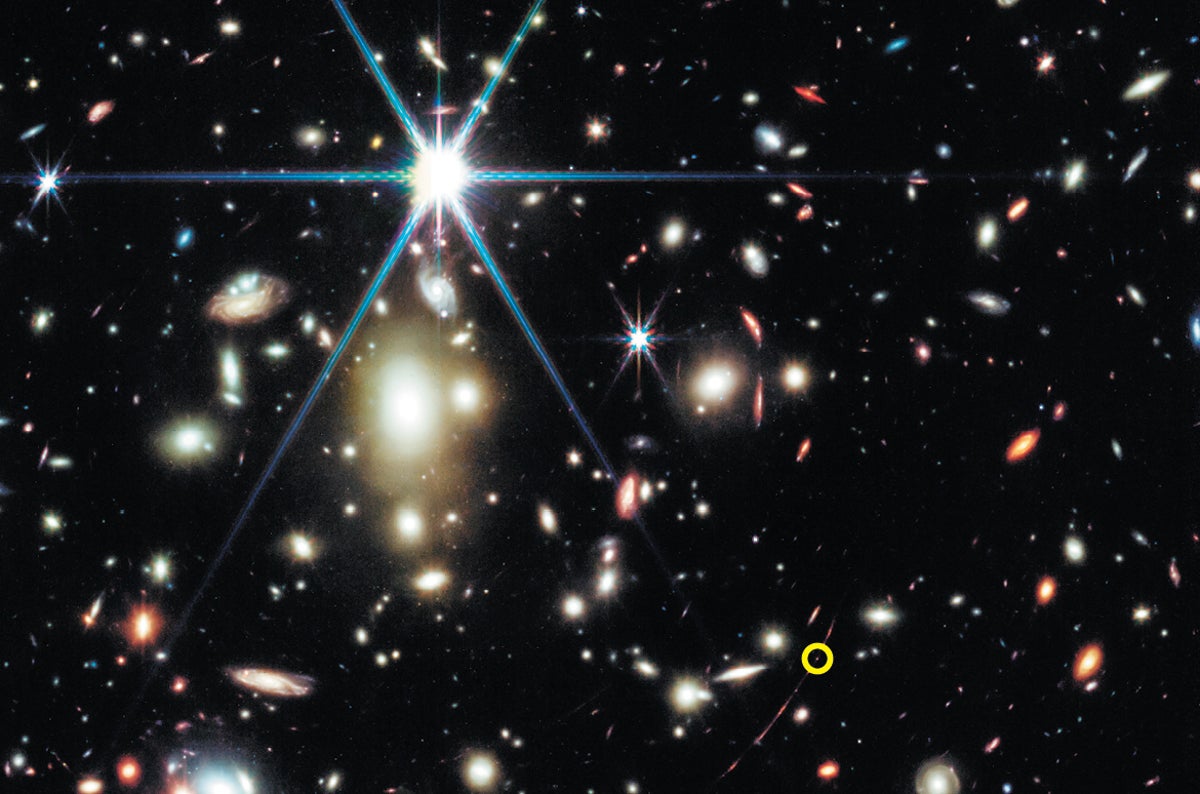
The James Webb Space Telescope launched from French Guiana on Christmas Day 2021 and traveled for a month to a location 1.5 million kilometers from Earth. The deployment included a tense week as the telescope's tennis-court-size sun shield unfolded from its compact launch configuration, and science operations began in summer 2022. JWST revealed that supermassive black holes with masses exceeding a million suns existed when the universe was only about three percent of its present age. One formation scenario posits that smaller black holes from Population III star explosions merged rapidly under gravity to produce million-solar-mass black holes, but the required merger rates remain puzzling.
"On Christmas Day 2021, alongside other astronomers, I watched the James Webb Space Telescope (JWST) launch from French Guiana and begin its month-long journey to its destination, 1.5 million kilometers from Earth. The trip was filled with many nerve-racking moments, particularly the week-long period in which the telescope's tennis-court-size sun shield array slowly unfolded like origami from its bus-size liftoff configuration. Luckily, JWST made the trip safely and began operations in the summer of 2022."
"One of the biggest surprises that has emerged is the discovery that supermassive black holes, some with masses more than a million times that of the sun, existed when the universe was no more than about 3 percent of its current age. How such massive black holes came to exist so long ago is a puzzle. Perhaps less massive black holes formed from the explosive deaths of the first stars, known as Population III stars,"
Read at www.scientificamerican.com
Unable to calculate read time
Collection
[
|
...
]