#youth-nicotine-addiction
#youth-nicotine-addiction
[ follow ]
#public-health #mental-health #social-media #age-verification #parenting #nicotine-addiction #addiction
fromBusiness Matters
1 week agoEU must take bold tobacco control stand amid industry's latest influence campaign
The EESC warns against 'excessive increases' on the grounds that they could fuel illicit trade, thereby recycling one of the tobacco industry's oldest false narratives arguments against stronger regulation.
Europe politics

fromwww.theguardian.com
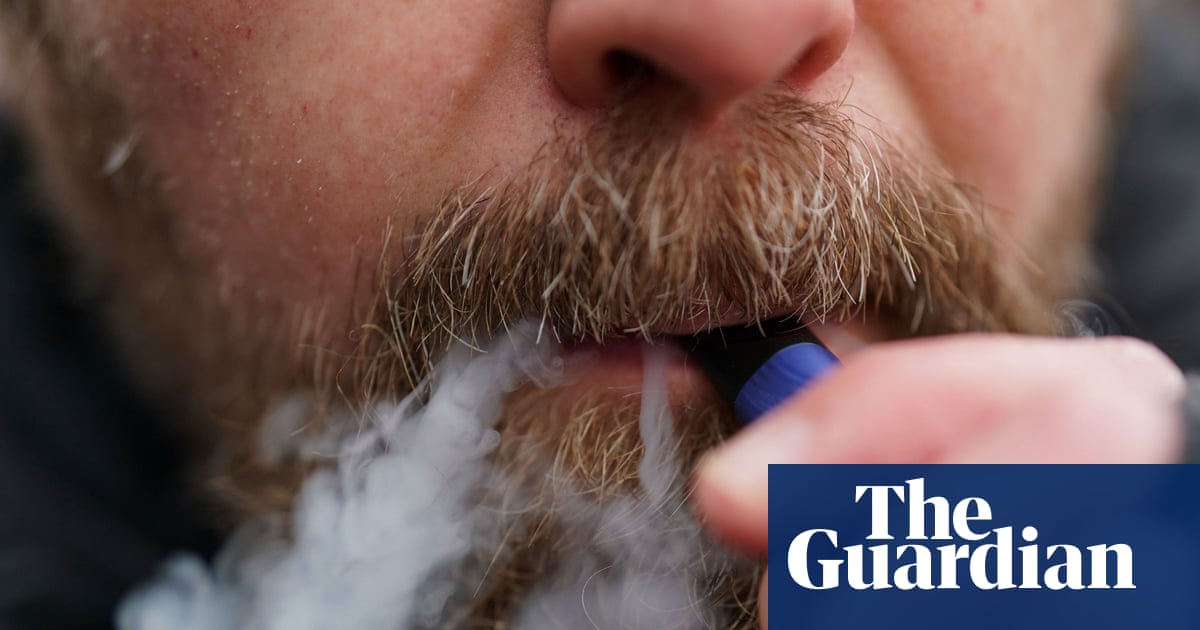
3 weeks agoThe vape capital of Britain: how have two Manchester backstreets come to dominate the e-cigarette trade?
Ali's store, Fly Vape, is located in Cheetham Hill, Manchester, an area that has become a surprising hub for the vaping industry, housing over 50 outlets specializing in vaping products.
London startup
-(3).png?trim=0,150,0,150&width=1200&height=800&crop=1200:800)

Medicine
fromenglish.elpais.com
1 month agoWhy some people get hooked and others don't: genetics, childhood and brain circuits explain addiction
Addiction is a mental disorder requiring professional treatment, not a matter of willpower or personal choice, yet society continues to stigmatize it as a moral failing.
Health
fromwww.theguardian.com
1 month agoWhy is smoking so addictive and what are the best ways to give up?
Cigarettes are extremely addictive because nicotine rapidly triggers dopamine release in the brain within 10-20 seconds, creating immediate pleasure that reinforces addiction despite well-known health risks.
fromInside Higher Ed | Higher Education News, Events and Jobs
1 month agoYouth Suicide Rates Decline, Risks Remain
The number of suicides per 100,000 young people ages 10 to 24 declined by nearly 12 percent, from 11 to 9.7, between 2021 and 2024. The decrease was driven largely by reductions among young men, whose suicide levels fell by nearly 15 percent, while suicides among young women declined by about 2 percent.
Mental health

Relationships
fromwww.independent.co.uk
1 month agoAggressive teenagers may age faster and have a higher risk of health issues
Aggressive behavior in early adolescence predicts faster biological aging and higher BMI by age 30, according to a University of Virginia study of 121 middle school students followed into adulthood.
Psychology
fromPsychology Today
1 month agoWhy Behaviour Change Is So Hard to Do
Behavior change fails when immediate costs exceed rewards, not due to willpower; relationships unconsciously reinforce old behaviors while punishing new ones, and reinforcement proves more effective than punishment for lasting change.
fromThe Atlantic
2 months agoLet Teens Exist in Public
My local Target was the first place I noticed the shift. One day, a few years ago, a sign appeared: red text on white paper announcing that no one under 18 would be allowed in without an adult. Before the poster, every weekday afternoon, clots of teens would move through the arteries of the store, occasionally blocking them. The kids would laugh among themselves, swatch makeup on their arms, peruse the candy offerings.
US politics
fromHer Campus
2 months agoHow to Put and Keep Your Phone Down in 2026
I've reached a boiling point. I don't want to live my life and see others live their lives through phones. I'm sick of watching AI slop (AI-generated images and short videos that dumb us down) and news that is upsetting, exhausting, and hopeless. And, simultaneously, I'm scrolling through Instagram and mindlessly comparing myself to strangers, consuming content from a toxic algorithm, shaping what I see. Social media, for me, has become overwhelming;
Mindfulness


fromTODAY.com
2 months agoStudy Finds This Is How Teen Boys Are Being Lured Into Gambling
No longer is gambling confined to Las Vegas casinos. A 2018 landmark ruling by the Supreme Court allowed states to legalize sports betting, opening the doors to new types of online gambling and games of chance. 'Young boys are largely being pulled into this universe online by algorithmically sent messages,' said Steyer of online games that include chances to open loot boxes and 'win' a prize. 'It seems so innocent, but in fact, it's no different than going into a casino and putting down five or $20 on a hand of blackjack.'
Parenting
Public health
fromwww.independent.co.uk
1 month agoRecreational drugs triple the risk of stroke in young people, study finds
Recreational drugs including cannabis, cocaine, and amphetamines significantly increase stroke risk in young people, with amphetamines potentially tripling risk in those under 55.
fromNature
2 months agoIs social media addictive for teens? US courts wade into scientific debate
Opening arguments began this week in a landmark case, among the first in a tsunami of lawsuits over possible harm to children and adolescents caused by social media, video games and artificial intelligence. In the current case, a young woman alleges that she became addicted to social-media platforms as a child, causing the anxiety, depression, and body dysmorphia that she lives with today.
Mental health
UK politics
fromwww.theguardian.com
2 months agoDining across the divide: Kids shouldn't really have smartphones it's akin to tobacco in 60s and 70s'
Two men debate children's smartphone use: one calls for government intervention over addictive tech, the other blames parents for outsourcing responsibility.
fromPsychology Today
2 months agoWhy Teens Ignore Warnings and What Actually Works
Without effective tools and preparation, many parents understandably default to instinct and use common ineffective tactics, such as warning, advising, informing, or trying to control their teens. The adolescent brain has been compared to a car with a powerful gas pedal and weak brakes when in the presence of other teens or when expecting to be seen by them (Bulow, 2022; Steinberg, 2008). Further, they are drawn to peers, and then instinctively rev each other up into risky experimentation and sensation-seeking.
Parenting
fromBusiness Insider
1 month agoI started smoking when I was a teen and quit 20 times. I still love the occasional cigarette.
The day I turned 16, I picked up two things - my driver's license and a $1.98 pack of Kool 100 Milds from a gas station I knew would sell to me. It was 1995, and I still remember the freedom and rebellion alive in my heart while my hair blew in the wind. From the window of her mom's LeBaron convertible, my friend and I flicked our cigarettes and seemingly our adolescent troubles with them.
Public health
fromPsychology Today
2 months agoWhy Addiction Treatment Keeps Failing
For decades, addiction treatment in the United States has relied on a familiar explanation when people relapse: recovery is hard, addiction is chronic and setbacks are part of the process. That narrative is often delivered with compassion, but it can obscure a more troubling reality. Many treatment failures are not personal shortcomings. They are predictable outcomes of how recovery is currently designed.
Mental health
Mental health
fromSilicon Canals
2 months agoThe overlooked condition that's as deadly as smoking 15 cigarettes a day - Silicon Canals
Chronic social isolation increases mortality and functional decline comparable to smoking 15 cigarettes a day, creating a widespread, underrecognized public-health loneliness epidemic.
fromwww.independent.co.uk
2 months agoSmoke-free law could see use drop below 5% in young people
A law banning the sale of tobacco to anyone born after 2009 could see smoking in young people drop below 5 per cent decades earlier than expected. The government plans to introduce the smoke-free generation" law as part of the Tobacco and Vapes Bill, which would progressively raise the age of sale so that anyone born in 2009 or later can never legally be sold tobacco, starting from 2027.
Public health
fromwww.mercurynews.com
2 months agoZyn is seeking FDA approval to say it's less harmful than cigarettes
The Food and Drug Administration is holding a public meeting Thursday to consider whether Philip Morris International can advertise its pouches as a less-harmful alternative for adults who currently smoke cigarettes. Government documents posted before the meeting suggest FDA regulators are leaning toward approving the company's request. But the meeting will give an outside panel of health experts a chance to weigh in and ask questions of both the company and the agency.
Public health
fromwww.bbc.com
2 months agoVaping in cars with children could be banned under new plans
"Second-hand smoke increases the risk of heart disease and lung cancer and we want to protect children and the sick from harm," he said. "Prevention is better than cure, so this government is taking pressure off the NHS and building a healthier Britain where everyone lives well for longer."
Public health
fromPsychology Today
2 months agoSmoking Fentanyl, Cannabis, Methamphetamine, or Tobacco
Some experts have mischaracterized smoking fentanyl as "safer" than injecting, seeking to reduce risks among users. Narrowly considered, the statement is accurate, as inhalation avoids needle-sharing, reducing risks for HIV, hepatitis C, bacteremia, abscess formation, and infective endocarditis among users. However, there's no clinical-trial-level evidence (randomized trials with real patients) showing smoking illicit fentanyl is safer than injecting it. It isn't, and that conclusion is unsupported by toxicology, environmental exposure science, or emerging data.
Public health
fromReadWrite
2 months agoChildren exposed to gambling face problem gambling
The Gambling Authority of Ireland (GRAI) has found that problem gambling is much more likely amongst people who were exposed to gambling as children. The study, which was conducted by the ESRI's Behavioural Research Unit, found that rates of problem gambling are significantly higher among people who gambled as children, whose parents gambled, or whose parents had positive attitudes towards gambling.
Public health
Public health
fromwww.standard.co.uk
2 months agoLondon's illegal vape hotspots: Interactive map reveals millions of devices seized worth tens of millions of pounds
London councils seized 2,480,789 illegal vapes (estimated £22.4m) from 2020–2025, while enforcement beyond confiscation remains largely limited.
Public health
fromBusiness Matters
2 months agoWorkplace Smoking Rules and Productivity: Why Businesses Are Seeing a Shift to Nicotine Pouches
Workplace break rules now balance productivity, fairness, and external property and client constraints, prompting micro-breaks and smoke-free nicotine options to fit tighter schedules.
[ Load more ]