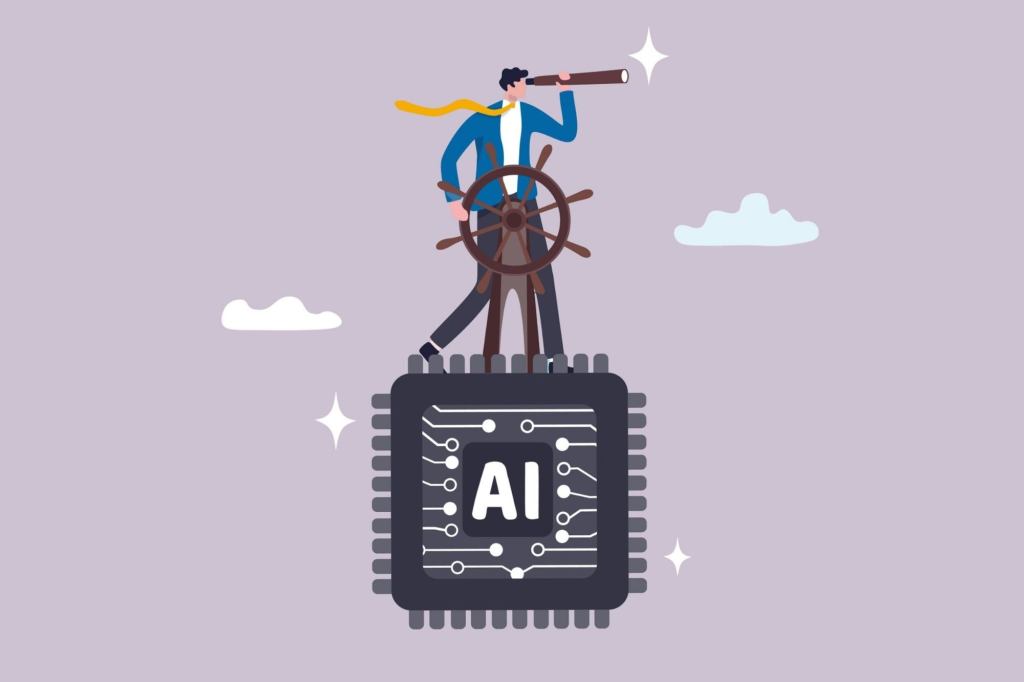
Most people know the story of Paul Bunyan. A giant lumberjack, a trusted axe, and a challenge from a machine that promised to outpace him. Paul doubled down on his old way of working, swung harder, and still lost by a quarter inch. His mistake was not losing the contest. His mistake was assuming that effort alone could outmatch a new kind of tool.
If you've chosen a target asset allocation-the mix of stocks, bonds, and cash in your portfolio- you're probably ahead of many investors. But unless you're investing in a set-and-forget investment option like a target-date fund, your portfolio's asset mix will shift as the market fluctuates. In a bull market you might get more equity exposure than you planned, or the reverse if the market declines. Rebalancing involves selling assets that have appreciated the most and using the proceeds to shore up assets that have lagged.
Retiring at 55 can feel like crossing a finish line, but your 401(k) does not instantly align with your new lifestyle. Early retirement opens up a set of rules, tax surprises, and strategic options that many people do not see coming. Some can work in your favor, like penalty free withdrawals under certain conditions. Others can drain your savings faster than expected if you are not careful.
The Pain Point: The single biggest, most expensive mistake in construction is a subcontractor building off an outdated set of plans. In a traditional, email-based bidding process, plans and addenda are scattered across dozens of different "Re: Re: FWD: FINAL_PLANS_v3" email chains. It's a logistical nightmare and a massive liability. What They're Looking For: A central command center or a digital plan room. A great NCM platform gives a GC a single, cloud-based portal to house every single document for a project.
10b5-1 trading plans were once offered mainly to the C-Suite and Board, designed to provide them with a structured and compliant framework for trading their company stock under the Securities and Exchange Commission's (SEC) Rule 10b5-1. Now, many companies are adopting a broader view of risk management that includes democratizing access to 10b5-1 trading plans. This is anchored in the reality that senior executives are not the only employee segment with access to sensitive information and equity compensation: Other roles often require working with MNPI.
Running a business isn't simple. Even when you do things right, problems still show up. A deal can collapse. A client can complain. An employee can feel mistreated. One issue turns into another, and suddenly you're spending more time defending your work than doing it. That's why business asset protection matters. It's not about hiding money or avoiding the rules. It's about structure. When your business is built the right way, a single mistake won't ruin everything you've worked for.
"Fail fast" has become a defining principle of modern product development. It encouraged teams to move rapidly, validate assumptions, and avoid spending time on ideas that don't work. However, as experimentation has increased, so have the consequences. In organizations where products are linked to sensitive data, social influence, or financial decision-making, reckless speed can result in user loss, broken trust, or reputational damage.
The world of cryptocurrency trading continues to grow rapidly, attracting beginners and experienced investors who are eager to explore its potential. However, the crypto market can be unpredictable, with prices changing quickly and trends shifting overnight. That's why creating a balanced and well-thought-out portfolio is essential. CW-Management experts explain how traders can use diversification and CFD trading to manage risk and build a more stable crypto strategy without relying on luck or guesswork.
The difference between traders who blow their accounts and those who build sustainable income comes down to one thing: treating forex like a business instead of a casino. Traders who follow a consistent plan with proper risk management are significantly more profitable than those who don't. This handbook gives you the system. You'll learn how to build a trading plan, manage risk like institutions do, and develop strategies you can actually trust.
In 2025, prop firm trading has become more competitive than ever, with traders managing strict rules and drawdown limits. To stay profitable, traders rely on advanced risk management tools that combine mechanisms such as dynamic trailing stop, break-even settings, daily loss caps, multi-symbol controls, and partial close. Among these mechanisms, partial close stands out as one of the most effective ways to secure profits while still keeping trades open to capture larger market moves.
As artificial intelligence transforms every industry, organizations are placing an increased focus on the quality of their data. The ability to generate value from AI depends not only on computational power or model sophistication but also on the trustworthiness of the data that underpins every insight, decision, and interaction. For Aon, the global professional services firm, this recognition is central to its enterprise transformation. For more than a century, Aon has served as an advisor to clients navigating complex and interconnected risks.
It has become cliché to say that the cloud is the backbone of digital transformation, but cloud outages like the recent AWS incident make enterprise dependence on the cloud painfully clear. Last week's AWS outage impacted thousands of businesses worldwide, from SaaS providers to e-commerce companies. Revenue streams paused or evaporated, customer experiences soured, and brand reputations were at stake. For enterprises that suffer direct financial losses from any outage, the frustration runs deep.
"As a result, we don't need as many roles in some areas as we once did," he wrote, without disclosing the number of affected roles. Protti said Meta is making the changes as it has invested in "building more global technical controls" over the past few years, and has made "significant progress" in its approach to risk management and compliance.
Most people jump into trading way too recklessly. They buy whatever looks good, panic-sell when things go bad, and chase whatever hot tip they heard at lunch. Then they act shocked when their account balance keeps shrinking. The difference between newbies and traders who actually make money? Planning. Why planning actually matters Every successful business runs on a plan. They know where they're going, how they'll get there,
Copy trading has become an appealing option for individuals who want to participate in the market without spending extensive time analysing charts, and for good reason, as instead of learning technical analysis yourself, this option allows you to copy professional traders' strategies in real time. However, a question that may come to mind is whether copy trading is genuinely profitable.
Unlike Bitcoin, many altcoins have low liquidity and limited oversight, making them prone to price manipulation and insider exploitation. Sudden spikes in trading volume, large whale transfers to exchanges, token unlocks or social media hype often precede sharp declines. Platforms such as Nansen, DEXTools and LunarCrush help detect abnormal wallet activity, fake liquidity and sentiment manipulation. Researching fundamentals, diversifying portfolios, setting stop-losses and avoiding hype-driven channels are key to protecting your funds.
U.K. fintech Revolut has hit yet another roadblock to its longstanding mission of becoming a real bank in its home country: Its full banking license is on hold because the country's central bank is concerned over whether the startup can maintain its risk management controls in the face of its blazing fast international expansion. The Bank of England wants Revolut to commit to building its risk management stack to match its international growth before the regulator can approve a full banking license
Yet risk management teams are still expected to work with processes and tools designed for a more leisurely age-manual reviews of hundred-page documents, hand-typed case narratives and memos, and compliance processes that chase regulations one change at a time. Generative AI (gen AI) offers a different path, changing how risk teams work. Instead of spending hours manually combing through documents, teams can receive clear, decision-ready summaries in minutes. While technology does not replace professional judgment, it accelerates the groundwork, allowing experts to concentrate on assessing exposures and taking action before risks escalate.
From embracing calculated risk to mastering communication and leveraging LinkedIn as a strategic tool, Haddadin shares his journey and the practices that have helped him stand out in both the legal and business worlds. LinkedIn: The Modern Business Development Playbook Fretzin opens the conversation by comparing today's powerful tools to the old-school grind of cold-calling from the phone book. LinkedIn, he says, has become the top playbook for business development especially for lawyers. Haddadin agrees: Building a digital presence isn't optional; it's essential.
Kudotrade, one of the leading global CFD brokers known for its award-winning trading platform, is proud to announce the official launch of "Kudo Funded" its Proprietary Trading (Prop Trading) Platform. Following strong anticipation from the trading community, the platform is now live and ready to provide traders worldwide with an unprecedented opportunity: access to substantial trading capital without risking their own funds.
The first milestone was moving away from spreadsheets and homegrown systems. In the early 2000s, many lenders were still relying on highly manual processes to manage audits. These approaches weren't scalable and left too much room for human error and inconsistency. The introduction of configurable platforms gave lenders a better way to enforce sampling rules, ensure consistency in audits and improve reporting.
Cybersecurity veteran Brian Gumbel - president and chief operating officer (COO) at Dataminr - works at the confluence of real-time information and AI. Mainlined into humanity's daily maelstrom of data, Dataminr detects events "on average 5 hours ahead of the Associated Press" - it picked up the 2024 Baltimore bridge collapse, for example, about an hour ahead of all mainstream media sources. The accuracy rate of its "news" is, says Gumbel, a highly impressive 99.5%.
Combined with the creation of the Department of Government Efficiency, there's renewed pressure for government to operate more like the private sector. In theory, that might sound reasonable. But in practice, the comparison is not only unhelpful; it's often misleading. It ignores the fundamental difference between the two sectors: government missions are defined by mandates, not markets. To meet current mandates, the government and its industry partners need to reevaluate and redefine their partnerships.
Emerging markets are increasingly important for multinational companies (MNCs), but entering these markets can be a difficult and costly experience. As interest in emerging markets grows, so too has research into their unique challenges and opportunities. A critical, yet overlooked, problem is that companies often take an overly optimistic view of how quickly success can be achieved in these complex, unfamiliar environments-a phenomenon we call the temporal optimism trap.
Exchange Traded Funds (ETF) have quickly emerged over the past few decades as the investment asset class of choice for investors who prefer ETF real time pricing, lower expenses, and wide menu of choices over mutual funds or similar pooled investment platforms. Due to their real time market pricing, they can avail themselves of digital technology to create synthetic derivative high-dividend streams, such as with the YieldMax catalog of ETFs, something that is unavailable from mutual funds.
Trading can be exciting, but it is also unpredictable. Many traders lose money because they start trading live without testing their strategy. This is where backtesting comes in. It allows traders to test their strategies on historical trading data before risking real money. By understanding how a strategy would have worked in different market conditions, traders can make smarter decisions and reduce risks.
It's budget season. Once again, security is being questioned, scrutinized, or deprioritized. If you're a CISO or security leader, you've likely found yourself explaining why your program matters, why a given tool or headcount is essential, and how the next breach is one blind spot away. But these arguments often fall short unless they're framed in a way the board can understand and appreciate.
Making investments is a smart step toward securing your financial future, but managing them shouldn't feel like a full-time job (unless it is, in which case, getting organized is still going to be super helpful!). Staying on top of your investments is essential to optimizing your returns over time and understanding what's working and what's not. This habit not only helps you increase savings and reduce debt but also brings peace of mind.
From back-to-school through the winter holidays, the busy retail selling season is also a time to forecast sales, set budgets, and plan for the coming year. Here are 12 new and time-tested books to help make informed choices. by Nick Foster Thinking seriously about the future is a must for those who hope to shape it. This just-released book guides readers in going beyond the usual "lazy certainties and fearful fantasies" to imagine and create what comes next.
Spread betting occupies a curious niche in the UK financial landscape. Its tax perks, low barriers to entry and 24-hour markets lure thousands each year, yet most walk away poorer. The question that hangs over every new account holder is brutally simple: can you actually craft a spread-betting strategy that works, and sticks, for the long haul? The short answer is "yes, but not by accident." The longer answer requires a candid look at how strategies are built, tested and stress-proofed.
It was at the Agency where I first truly understood the power of diverse teams," she says. "Success in the field depended on building inclusive, cross-functional units where every voice had value regardless of background, discipline, or rank. Just as critical was cultivating psychological safety: creating a space where people could speak truthfully, challenge assumptions, and innovate under pressure. That foundation of trust was essential to overcoming some of the hardest missions we faced, and it remains core to how I lead today.