#neighborly-relations
#neighborly-relations
[ follow ]
#friendship
Psychology
fromSilicon Canals
2 days agoThe person who always offers to drive, always picks the restaurant, always plans the trip is rarely the controlling one in the group. They're the one who learned early that if they didn't organize the connection, the connection simply wouldn't happen. - Silicon Canals
The organizer in a friend group often acts out of learned necessity to maintain connections, not from a desire for control or leadership.

Psychology
fromSilicon Canals
2 days agoThe person who always offers to drive, always picks the restaurant, always plans the trip is rarely the controlling one in the group. They're the one who learned early that if they didn't organize the connection, the connection simply wouldn't happen. - Silicon Canals
The organizer in a friend group often acts out of learned necessity to maintain connections, not from a desire for control or leadership.
Online Community Development
fromInside Higher Ed | Higher Education News, Events and Jobs
1 week agoA Town-Gown Partnership Focused on Climate Resilience
Agnes Scott College collaborates with Decatur to address climate change through a joint Climate Resilience Plan, focusing on sustainability and community engagement.
fromwww.bbc.com
3 weeks agoCampaigners celebrate after new town plans dropped
Campaigner Aysha Hawcutt stated that residents were 'not anti-homes', but believed the Adlington plan was 'the wrong proposal in the wrong place'. She expressed pride in the community's resilience against the development threats.
London politics
Relationships
fromPortland Monthly
3 weeks agoFrom the Editor: Building Community Isn't Always Fun. Do It Anyway.
Proximity-based community organizing builds solidarity across differences through sustained engagement and shared material goals, fostering understanding that transcends initial disagreements.
fromThe Art Newspaper - International art news and events
3 weeks agoReimagining communities: inside the Hong Kong International Cultural Summit
Communities make museums and museums make communities. Part of the establishment of M+ was a public consultation where people were asked what kind of museums they wanted. The recommendation was not to build lots of little museums, but to create a big museum that was cross-disciplinary, unburdened by labels like "modern" or "contemporary". It was to be a museum plus more, and that was how we became M+.
Arts
fromThe Cipher Brief
1 week agoTaking a Stand on Adversaries' Influence in the Western Hemisphere
The January 3rd Operation Absolute Resolve ousted Venezuelan Dictator Nicholas Maduro, marking a significant shift in US policy towards countering adversarial influence in the western hemisphere.
World politics
Agriculture
fromRealagriculture
1 month agoAg Policy Exchange: Finding common ag policy ground among countries in a divided world
Global agriculture faces interconnected geopolitical, economic, and environmental challenges requiring sustainable, resilient, and affordable food systems through coordinated international policy approaches.
Philosophy
fromWarpweftandway
4 weeks agoTwo Collaborative Learning () Events This Week
The 四海为学 Collaborative Learning Project hosts two free public events: Louise Edwards discussing childhood and gender in China on March 19, and Peter Hershock exploring AI and agency from a Buddhist perspective on March 20.
Education
fromArchDaily
1 month agoWhen the School Becomes the City: Community-Centered Projects in the Global South
School architecture functions as a catalyst for social transformation by creating multifunctional civic spaces that integrate education, culture, sports, and community engagement within urban territories.
Online Community Development
fromPsychology Today
1 month agoNo One Is Coming to Help-Except Your Neighbors
Building community-led resilience networks and mutual aid groups nationwide enables neighbors to support each other through overlapping crises including climate change, inequality, and government violence.

fromFast Company
2 months agoOur embrace of individuals over institutions isn't serving us well
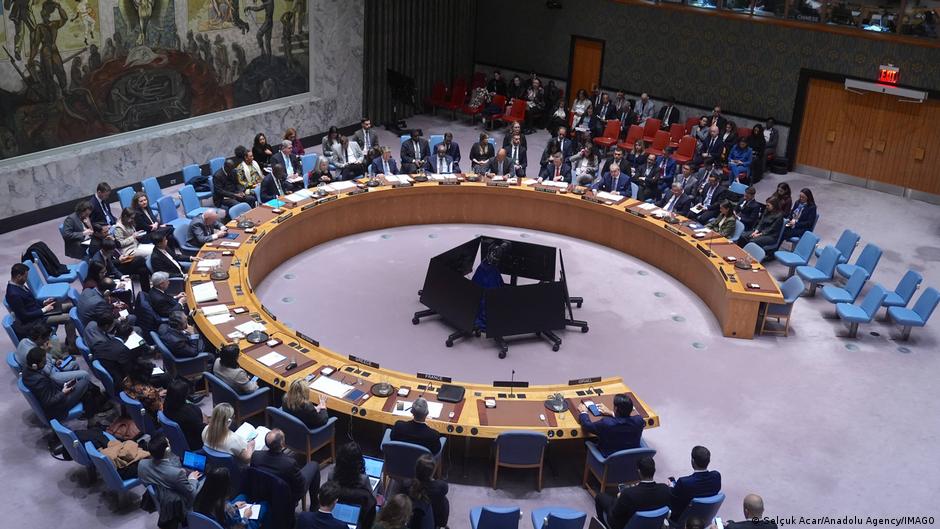
In the early 20th century, sociologist Max Weber noted that sweeping industrialization would transform how societies worked. As small, informal operations gave way to large, complex organizations with clearly defined roles and responsibilities, leaders would need to rely less on tradition and charisma, and more on organization and rationality. He also foresaw that jobs would need to be broken down into specialized tasks and governed by a system of hierarchy,
History
World politics
fromwww.aljazeera.com
1 month agoWhy international law is still the world's best defence
The post-World War II international legal order faces erosion from ultranationalism, great-power rivalries, and norm violations, risking a return to force-based politics where power supersedes principle.
Psychology
fromPsychology Today
1 month agoHow to Help Communities Rebound from Crisis and Disaster
Disaster psychology provides an empirically-based framework for building community resilience and growth during crises through understanding predictable psychological phases and natural recovery mechanisms.
fromNieman Lab
2 months agoJournalism lost its culture of sharing. Here's how we rebuild it
If you've worked in a technical role in news for long enough, you likely remember when the "show your work" spirit was everywhere. Newsroom nerds shared code on GitHub, swapped tips on social media and unfurled long blogs guiding others on how to get things done. You might also have a vague sense that - like reaction GIFs, demotivational posters, and that guy who sang "Chocolate Rain" - you're seeing less of it these days.
Media industry
fromHarvard Business Review
2 months ago"People Need Unifying Messages"
In this issue of the HBR Executive Agenda, editor at large Adi Ignatius talks to Harvard Business School professor Ranjay Gulati about how leaders can act with clarity amid rising social tension and rapid technological change.
Business
fromInside Higher Ed | Higher Education News, Events and Jobs
2 months agoStrategies for Supporting International Scholars (opinion)
While everyone is subject to their individual situations, for many, the process begins with an F-1 student visa, which they hold as they complete a Ph.D. over five to six years. After graduation, they may choose to transition to Optional Practical Training (OPT), which provides a year of work authorization, with a two-year extension for STEM graduates. Some may then transition to a H-1B temporary work visa, which provides for three years of work authorization and is renewable for another three years.
Higher education
Relationships
fromSlate Magazine
2 months agoHelp! I Wanted to Extend a Simple Thank You to a Neighbor. But They Took Advantage of My Generosity.
Neighbor shoveled unexpected snow; host offered lunch but felt resentful when partner joined and ordered pricier items; host wants clear, fair repayment expectations.
fromwww.theguardian.com
2 months agoKindness of strangers: stranded on a tiny Indonesian island, a local took us under her wing
We were expecting to see houses and buildings dot the shore, as well as the hawkers who'd typically crowd around piers in Indonesia with food and wares to sell. There was none of that. It was just a pier next to a tiny village. After disembarking, we set off walking and within 100 metres ran out of houses, surrounded only by rice paddies and farmland. There was nothing to do and nowhere to go, and not even a tree to seek shade under.
Travel
fromwww.npr.org
2 months agoWant to be part of a village? You might need to get out of your comfort zone
People say it takes a village to do difficult things: raise a child, sustain a community, build a barn. But we don't often talk a lot about what it takes to be a villager. What does it mean to not just be in a community, but to help create one? Priya Parker, author of The Art of Gathering: How We Meet and Why It Matters, says the key is to put yourself out there, even if it's scary.
Relationships
Miscellaneous
fromLondon Business News | Londonlovesbusiness.com
2 months agoPrisoner exchanges are not peace, but they are human - London Business News | Londonlovesbusiness.com
A large prisoner exchange returned 314 POWs, reuniting families and freeing unlawfully prosecuted Ukrainians, but such swaps do not indicate genuine diplomatic progress.
fromwww.mercurynews.com
2 months agoAsking Eric: This neighbor seems nice but I hear she's a liar. Should I ignore her overtures?
I'm no judge but there seems to be a lot of hearsay happening here. The neighbor who gave you the warning was vague in a way that perhaps suggests discretion, but in reality, only muddies the waters. Either say something helpful (and objectively true) or say nothing at all; a blanket warning hews too close to gossip for my taste. If you want to be friends with this other neighbor, trust your judgment and proceed with caution, just as you would with anyone else.
Relationships
fromPrx
2 months agoThe World
As bitter cold descends on Ukraine, so has a fresh barrage of Russian drone and missile strikes. Recent attacks on transformer substations and power plants have plunged Kyiv into its worst wartime heating and power outage. Also, as opposition leader and Nobel Peace Prize winner María Corina Machado meets US President Donald Trump in Washington, Venezuelans are watching with a mix of hope and unease.
World news
fromPrx
1 month agoThe World
The US Supreme Court has struck down much of the Trump administration's tariffs on foreign goods, which have been a cornerstone of its trade and foreign policies. Also, Iran prepares for a possible US military strike. And, the International Energy Agency has removed climate change from its list of priorities for the next two years, following threats from the US
World news
fromThe Cipher Brief
2 months agoWhat U.S. - China Cooperation Means for the World
Of all countries, China should appreciate the need to stop Mr. Maduro from smuggling these illicit drugs into the U.S., killing tens of thousands of Americans. China experienced this in the Opium War of 1839-1842, when Great Britain forced opium on China, despite government protestations, resulting in the humiliating Treaty of Nanjing, ceding Hong Kong to Great Britain. Mr. Maduro was violating U.S. laws, in a conspiracy to aid enemies and kill innocent Americans.
World politics
fromNature
2 months agoHow to rescue the aid industry: focus on conflict prevention, not just relief
In 2025, the administration of US President Donald Trump ordered the US Agency for International Development to be closed; this year, it withdrew the country from 66 international organizations. Other Western nations that are plagued with high levels of debt and pressure to prioritize domestic challenges have slashed their foreign aid, too. According to projections, official development assistance dropped by 9-17% in 2025, amounting to some US$55 billion.
World news
fromEntrepreneur
2 months agoHow to Win Big With Public-Sector Partners
Understanding the difference in purpose Unlike private businesses, which exist to make a profit, public institutions are designed to create impact - especially social and economic outcomes that benefit everyone, not just paying customers. A public agency doesn't measure its success in revenue or margins, but in how much it improves lives, builds equity and maintains public trust. This doesn't mean budgets and spending don't matter - they absolutely do - but money is not the goal. It's the tool.
World politics
fromNextgov.com
2 months agoTrust, trade and the new data diplomacy
Data has become the defining currency of global power. The nations and organizations that can manage, protect, and share it responsibly will shape the future of economic resilience and international cooperation. In an era where artificial intelligence and digital interdependence connect every market and mission, the ability to build and maintain trust in data is now a central pillar of both commerce and diplomacy.
World news
[ Load more ]