#agnes-slocombe
#agnes-slocombe
[ follow ]
#contemporary-art #art #sculpture #contemporary-painting #art-history #painting #art-exhibition #joan-semmel
Arts
fromThe Art Newspaper - International art news and events
1 day agoBritish Art Show-exhibiting UK's 'most exciting' art in past five years-announces line up for tenth edition
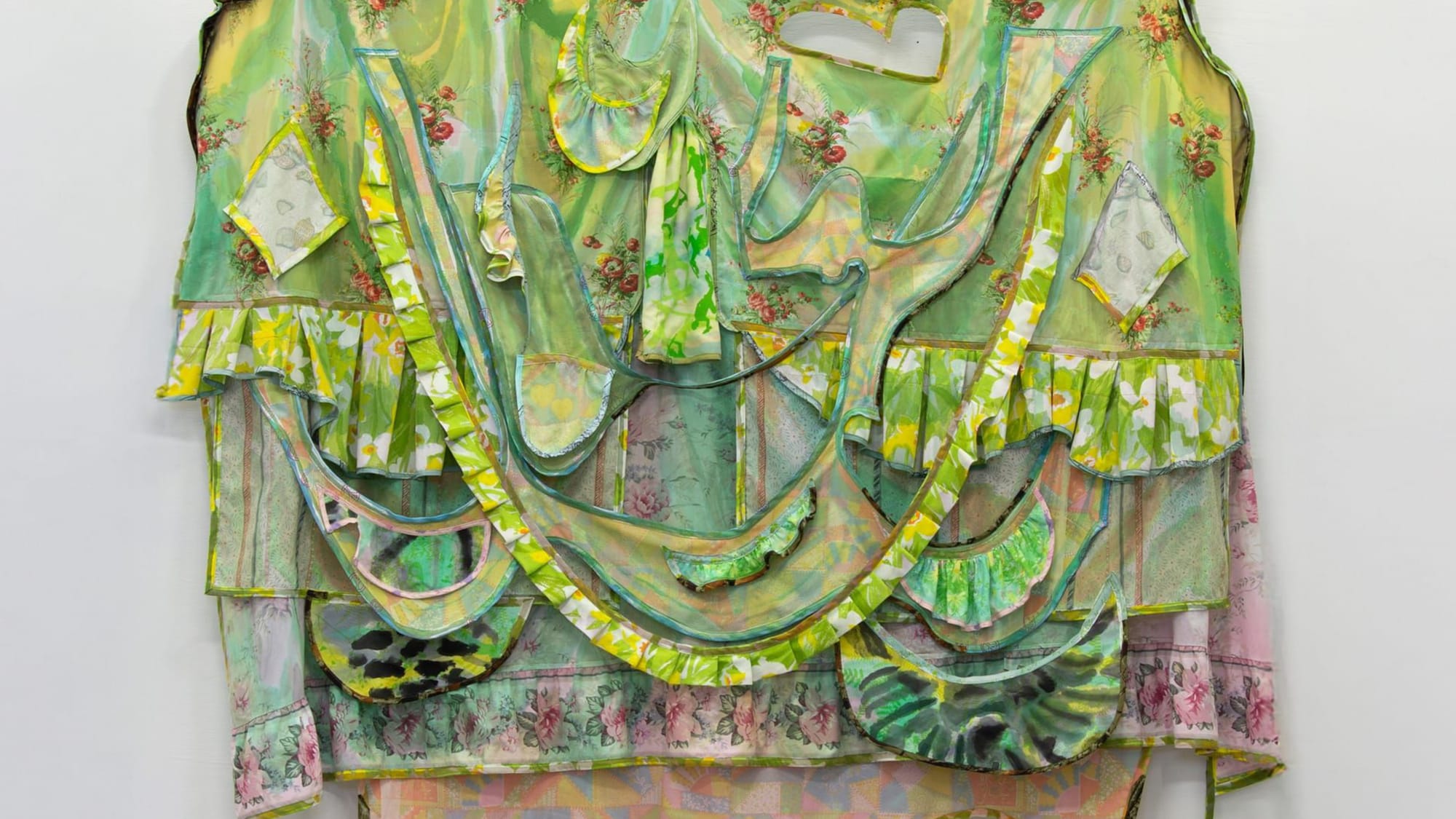
The British Art Show 10 will showcase contemporary art in five UK cities, focusing on empathy and shared imagination during turbulent political times.

fromThe Art Newspaper - International art news and events
5 days agoArtist interview: Sarah Rosalena
I see myself first and foremost as a weaver working at the intersection of craft and technology. As an Angeleno, I grew up learning how to weave in the Wixárika tradition of my matriarchal bloodline by watching my mother and my grandmother.
Arts
Arts
fromThe Art Newspaper - International art news and events
6 days ago'It was my job to create the view': US artist Liza Lou on making colourful works in her windowless warehouse
Liza Lou's artistic journey emphasizes the significance of color and materiality in her work, blending oil painting with glass beads.

London music
fromPinkNews | Latest lesbian, gay, bi and trans news | LGBTQ+ news
1 month agoCatherine Opie on why new exhibition still feels 'radical' for a 'butch d***'
Catherine Opie's photography centers queer bodies and identities through portraiture, making subjects visible and renegotiating the dynamics of seeing and being seen.
London
fromTime Out London
1 month agoThe world's biggest gallery for illustrations will open in London in May - and it's just revealed its first exhibitions
The Quentin Blake Centre for Illustration opens in May 2024 as the world's largest illustration gallery, featuring debut exhibitions on Blake's theatrical influences, LGBTQ+ comics history, and emerging artist Murugiah.
London
fromianVisits
1 month agoFrom Oscar Wilde to Moll Cutpurse: London's most colourful defendants in a new exhibition
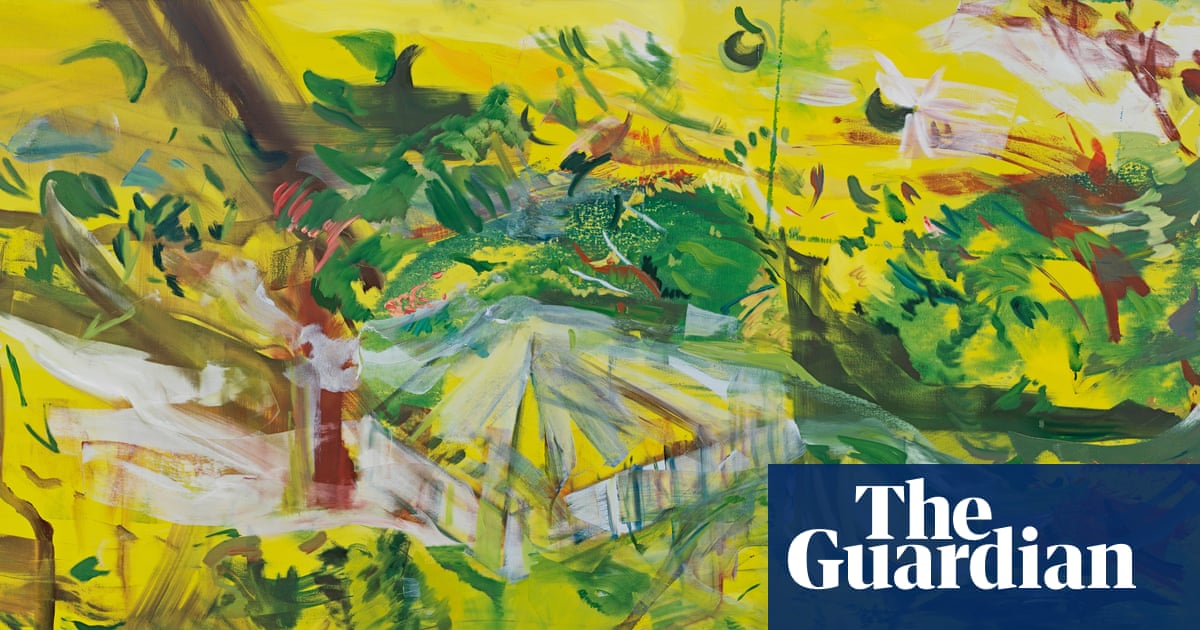
A London Archive exhibition explores seven centuries of crime and punishment through legal records, featuring both famous cases and everyday Londoners who passed through the justice system.

Miscellaneous
fromHi-Fructose Magazine - The New Contemporary Art Magazine
1 month agoPrudence Flint's Paintings Capture Moments of repose that are ripe for interruption - Hi-Fructose Magazine
Large-scale paintings require solitude and internal dialogue management, while working from photographs allows for extended evolution distinct from life drawing.
fromwww.theguardian.com
2 months agoMake your homes weird,' urges an interior designer. Me? I've a stuffed magpie and three pewter goats | Emma Beddington
In the room I'm working in, there's a feather-filled shrine to various dead hens, two candles in the shape of Saint Lucy's eyes, a stuffed Australian magpie, a wig, three pewter goats and a French revolutionary cockade made from a jam pot lid (an illustrative selection; there's much more). Other people are similarly well stocked with weirdness: my father has a lifesize wooden sheep.
Design
Psychology
fromThe Art Newspaper - International art news and events
2 months agoAt London's Freud Museum, the artist Cathie Pilkington has made a ghostly intervention
The Freud Museum preserves Freud’s original study and collections while commissioning contemporary artists to create provocative responses within the historic rooms.
fromwww.theguardian.com
2 months agoIt's dedicated exclusively to female artists, from Frida Kahlo to Tracey Emin': readers' favourite unsung museums in Europe
We visited the Female Artists of the Mougins Museum, in Mougins, a small village on a hill near Cannes. Full of exclusively female artists from Berthe Morisot in the 19th century and Frida Kahlo in the early 20th to contemporary figures such as Tracey Emin it houses an incredible collection of often overlooked art and artists. We visited on a rainy October day and it was remarkably quiet and calm. I particularly enjoyed the abstract works well worth a trip up the hill.
Travel
fromBOOOOOOOM!
2 weeks ago"Idling" by Artist Greta Kresse
"These paintings merge the landscape and the intimacy of windows through the framing of the car, bridging the two realms I've typically explored separately. The car becomes a meditation on transition, on existing simultaneously here and elsewhere."
Arts
Photography
fromThe Art Newspaper - International art news and events
2 months agoDora Maurer, 'towering figure' of the Hungarian art scene, has died aged 88
Dóra Maurer, Hungarian painter, printmaker and filmmaker, died aged 88; her work explored form, time and movement using systematic processes and influenced Central European conceptual art.
Miscellaneous
fromThe Art Newspaper - International art news and events
1 month agoSpot the difference: Bridget Riley work enjoys new green cleaning treatment
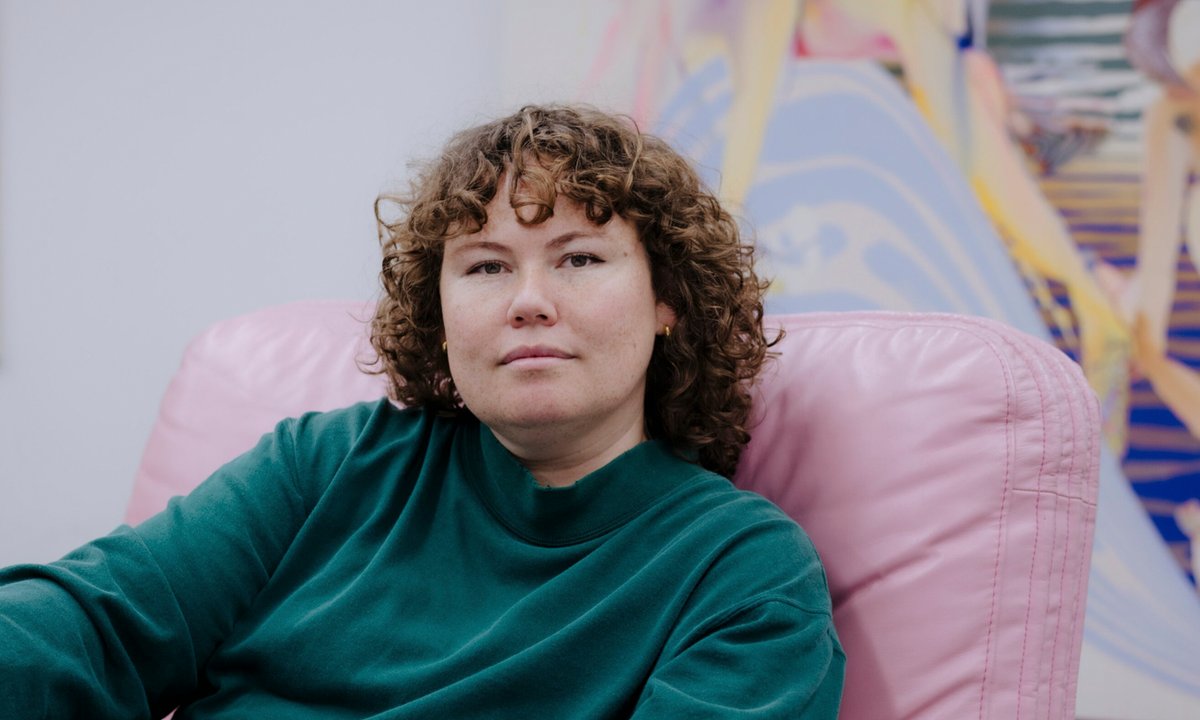
Bridget Riley's 1964 painting Hesitate underwent its first cleaning using pioneering green hydrogel technology developed through the Greenart research programme, avoiding damage to vulnerable house paint surfaces.
#contemporary-painting
Arts
fromJuxtapoz
1 month agoJuxtapoz Magazine - Cathrin Hoffmann "Sill" @ Public Gallery, London
Cathrin Hoffmann's exhibition explores psychological fatigue and information overload through monochromatic paintings and sculptures depicting figures in sustained tension, resistance, and existential weariness.
Arts
fromJuxtapoz
1 month agoJuxtapoz Magazine - Cathrin Hoffmann "Sill" @ Public Gallery, London
Cathrin Hoffmann's exhibition explores psychological fatigue and information overload through monochromatic paintings and sculptures depicting figures in sustained tension, resistance, and existential weariness.
Writing
fromAnOther
1 month agoArtist Rose Wylie: "You Have to Have Self-Belief if You Paint Big"
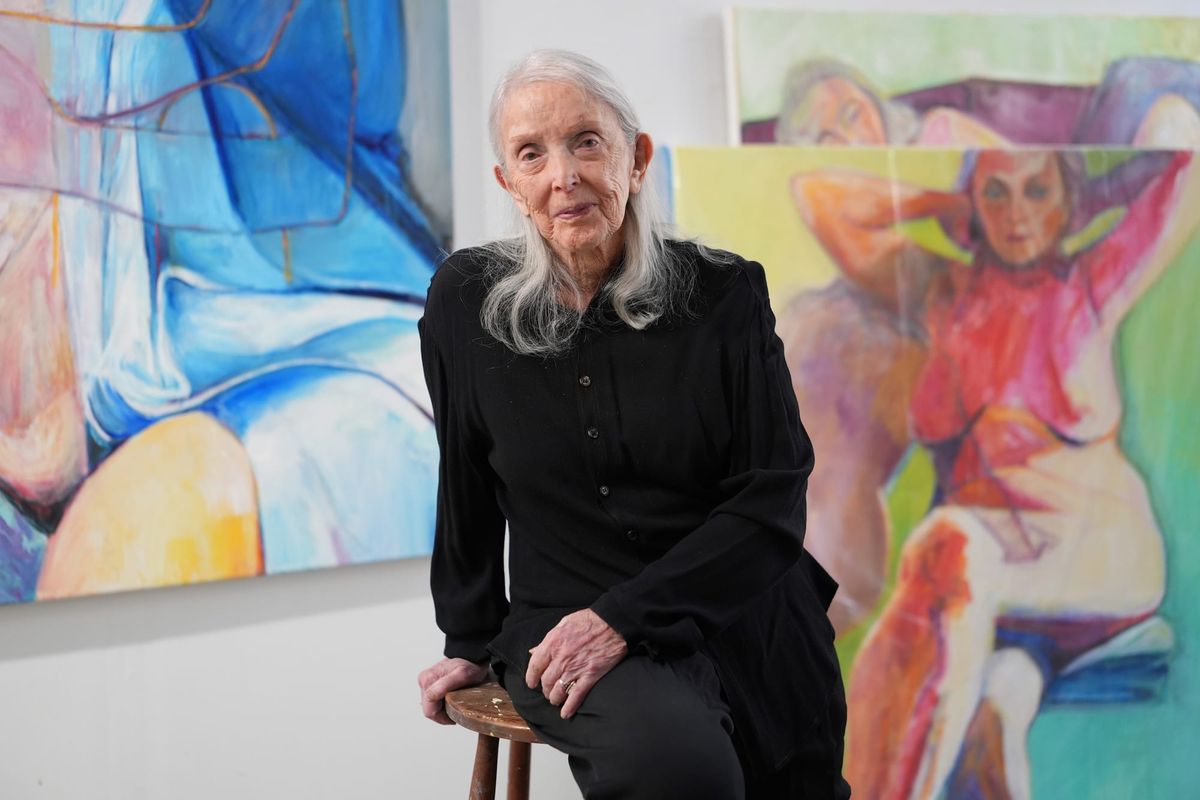
Rose Wylie, at 91, celebrates her largest retrospective at the Royal Academy, featuring 90 paintings spanning her extraordinary career as a late-blooming artist who resumed painting in her fifties after raising children.
fromThe Art Newspaper - International art news and events
4 weeks agoBritish artist Simon Fujiwara tackles Guernica, syphilis and the death of a Japanese pornstar in Luxembourg survey exhibition
This depicts Guernica after the battle. The figures are no longer fighting. They're in a giant pile. They're exhausted and there's a sunrise on a new day behind them. The title of the work is A Whole New World (for Who?). It's asking what's going to happen after the conflicts that we have. Who's going to be taken into that new world?
Arts
fromArtnet News
1 month agoPeter Halley Returns to Austria with First Solo Show in Two Decades
In many ways working in the tradition of Kazimir Malevich and Josef Albers, his compositions employ a language of squares and rectangles known as "Cells" and "Prisons," connected by bold lines called "Conduits." Together, these geometric and linear arrangements tap into the inherent geometry that structure reality, and conceptually refer to the construction of everyday life, both public and private as well as physical and psychological.
Arts
Arts
fromwww.theguardian.com
1 month agoOld masters too': Ghent exhibition celebrates female artists of the baroque
Judith Leyster, a celebrated Dutch Golden Age painter, was forgotten after her death and her works were misattributed to male artists until a 1970s revival restored her recognition alongside other overlooked female baroque artists.
fromArtnet News
1 month agoTate Modern to Mount Its First Monet Show Ever | Artnet News
Tate Modern museum in London announced its slate of 2027 exhibitions, including an opera-inspired installation by David Hockney in the revered Turbine Hall marking the artist's 90th birthday, Algerian artist Baya's debut U.K. solo show, and the first-ever exhibition devoted entirely to French impressionist Claude Monet since the Tate Modern opened 26 years ago.
Arts
Arts
fromThe Art Newspaper - International art news and events
1 month agoTate announces major David Hockney, Edvard Munch and Sonia Boyce exhibitions for 2027
Tate announces its 2027 programme featuring major exhibitions including Lynda Benglis and Edvard Munch at Tate Modern, Sonia Boyce retrospective at Tate Britain, and David Hockney celebrations across multiple sites.
fromHyperallergic
1 month agoArt Problems: How Do I Get Gallery Representation?
Dealers like artists with established sales records because it lowers their already considerable financial exposure. Renting a gallery space in Tribeca costs anywhere between $8,000-30,000 a month on top of staff, marketing, and daily operations. With that kind of overhead, very few business owners can afford to take on the financial risk of untested artists.
Arts
fromHyperallergic
1 month agoEmbracing Friction in the Art World
On Franklin Street in Brooklyn's Greenpoint neighborhood, one non-commercial gallery fosters 'a small, stubbornly human space for friction.' Friction—the ubiquitous buzzword that captures the simultaneous delight and discomfort of doing things the slow way—is at the heart of artists Pap Souleye Fall and Char Jeré's current show at Subtitled NYC. It also reflects the overall spirit of this little exhibition space and of a burgeoning movement to reject our culture of optimization in favor of a bumpier, more intimate, less alienating experience.
Arts
fromArtnet News
2 months agoHow the Mayor Gallery Has Helped Define Contemporary Art for 100 Years
In the story of art history-the art and artists, movements and trends-a select number of galleries have played a defining role in the evolution and trajectory of art itself. Among them, the Mayor Gallery in London is surely one, as it has maintained a position fostering and promoting some of the most significant developments in art for an astounding 100 years.
Arts

fromwww.theguardian.com
1 month agoCatherine Opie: To Be Seen review a queer carousel of tattoos, fake moustaches and toddlers in tutus
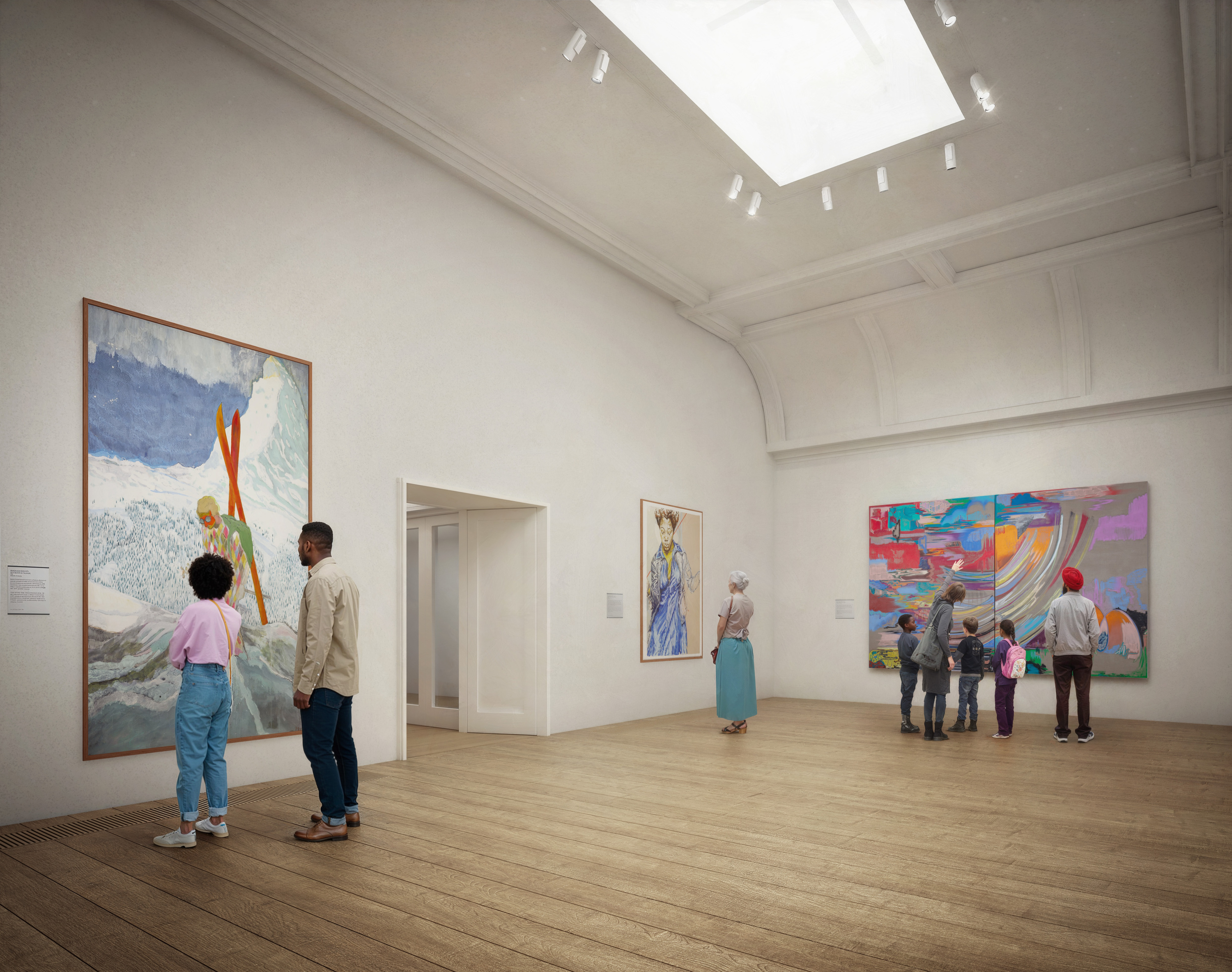
Since she graduated in the late 1980s, amid the Aids crisis, Opie has made portraits of her community, friends and family, adopting unflinching realism, saturated colours, and dramatic tonal contrasts from the 16th-century portrait painters. Many of Opie's most famous portraits included in her new exhibition at the National Portrait Gallery use these devices deliberately, a declaration that these people deserve, as the title of the show underlines, to be seen.
Arts
fromArtforum
2 months agoPunk and Rococo at Condo London 2026
CONDO WEEKEND BEGAN in the same way that all good British rom-coms, or Martin Amis novels, do: walking against the wind, en route to an oversize redbrick Victorian house in Earls Court, a spot that my press invitation had unabashedly advertised as being located in Notting Hill, but is an easy two tube stops away. This was the "standing" dinner to celebrate Arash Nassiri's "A Bug's Life," newly open at Chisenhale Gallery, in a renowned collector's home.
Arts
Arts
fromwww.theguardian.com
2 months agoI box to exorcise the badness': Sue Webster on boozy spats, her thrilling new work and having a baby at 52
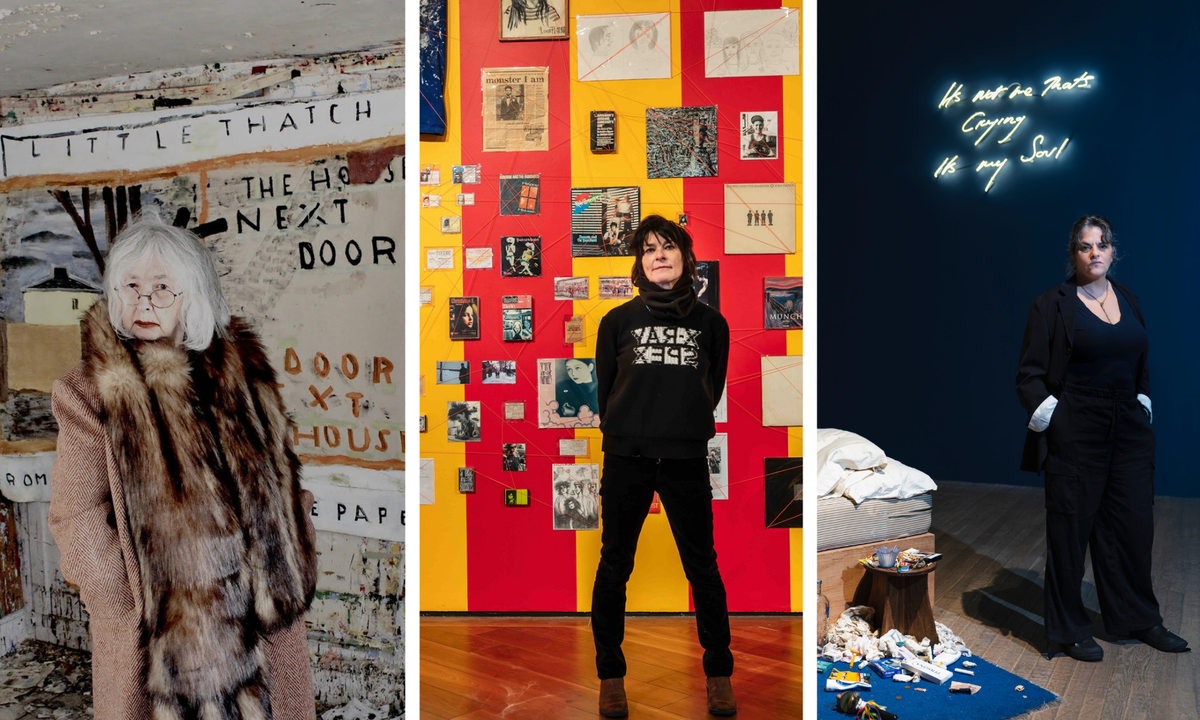
Sue Webster transitioned from a three-decade creative and personal partnership with Tim Noble to a solo practice after major commercial success and an emotional separation.
Arts
fromwww.theguardian.com
1 month agoThe Guardian view on an explosion of solo exhibitions by women: move over old masters | Editorial
Major UK art institutions are finally increasing exhibitions of female artists after decades of severe underrepresentation, marking a significant shift from historical gender disparities in museum programming.
fromwww.theguardian.com
2 months agoBeryl Cook: Pride and Joy review a saucy parade of bouncing bosoms, smirky smokers and a spot of BDSM
Generally, you get two versions of England in art: it's either bucolic vistas, rolling hills, babbling brooks and gambolling sheep or it's downtrodden, browbeaten, grim poverty and misery. But Beryl Cook saw something else in all the drizzle and grey of this damp old country: she saw joy. The thing is, joy doesn't carry the same critical, conceptual heft in art circles as more serious subjects
Arts
Arts
fromHi-Fructose Magazine - The New Contemporary Art Magazine
2 months agoBlack & White, Ceramic, And Totally Personal: The sculptures of Katherine Morling - Hi-Fructose Magazine
Morling's ceramic works transform personal autobiography into universal themes, using metaphor and intimate objects to explore communication, home, stability, and creative process.
fromThe Art Newspaper - International art news and events
1 month agoPost-Fair delivers by keeping it simple
We're still the new kids on the block. But it feels like we're more on the map, more anticipated this year. This year at Post-Fair, his gallery is showing small works by Edgar Ramirez, who won the Frieze Impact Prize in 2023.
Arts
Arts
fromThe Art Newspaper - International art news and events
2 months agoLondon show highlights how drawing was at the heart of Lucian Freud's practice
National Portrait Gallery opens the UK's largest survey of Lucian Freud works on paper, showing 170 drawings, etchings and paintings from the artist's archive.
fromArtnet News
1 month ago'Abstract Expressionists: The Women' Rewrites a Male-Dominated Canon
In 2024, art collector Christian Levett opened Europe's first museum dedicated to women artists in a little town in the south of France. But for those of us who can't make the trip to the Femmes Artistes du Musée de Mougins (Female Artists of the Mougins Museum, or FAMM), the American Federation of the Arts (AFA) has arranged the next best thing: a blockbuster touring exhibition about women artists of the Abstract Expressionist movement, featuring some of the highlights of the FAMM collection.
Arts
Arts
fromwww.theguardian.com
2 months agoIt's about hurling yourself into the unknown': Charmaine Watkiss on turning a UK museum upside down
Charmaine Watkiss connects Caribbean, African and UK botanical knowledge and diaspora histories through portraits and sculpture emphasizing medicinal plants and ancestral herbal traditions.
fromJuxtapoz
2 months agoJuxtapoz Magazine - Left Open: Lily Taylor @ Monya Rowe Gallery, NYC
The paintings are charged with potential discomfort- from middle school angst to family dynamics. The work wrestles with the nebulous nature of memory and piecing together the past. Taylor embraces the power of sentimentality and nostalgia, but also confronts the complexity of misunderstood communication. Even shared experiences can be perceived vastly differently. By looking to the past we can begin to better understand ourselves, and those around us.
Arts
fromwww.theguardian.com
2 months agoSally Tallant appointed as new director of London's Hayward Gallery
Sally Tallant, the former boss of the Liverpool Biennial, has been announced as the new director of the Hayward Gallery and visual arts at London's Southbank Centre. Tallant, who is currently in charge of the Queens Museum in New York, will return to the UK to take over from Ralph Rugoff, who will step down after two decades in charge of the institution, which celebrates its 75th anniversary this year.
Arts
[ Load more ]