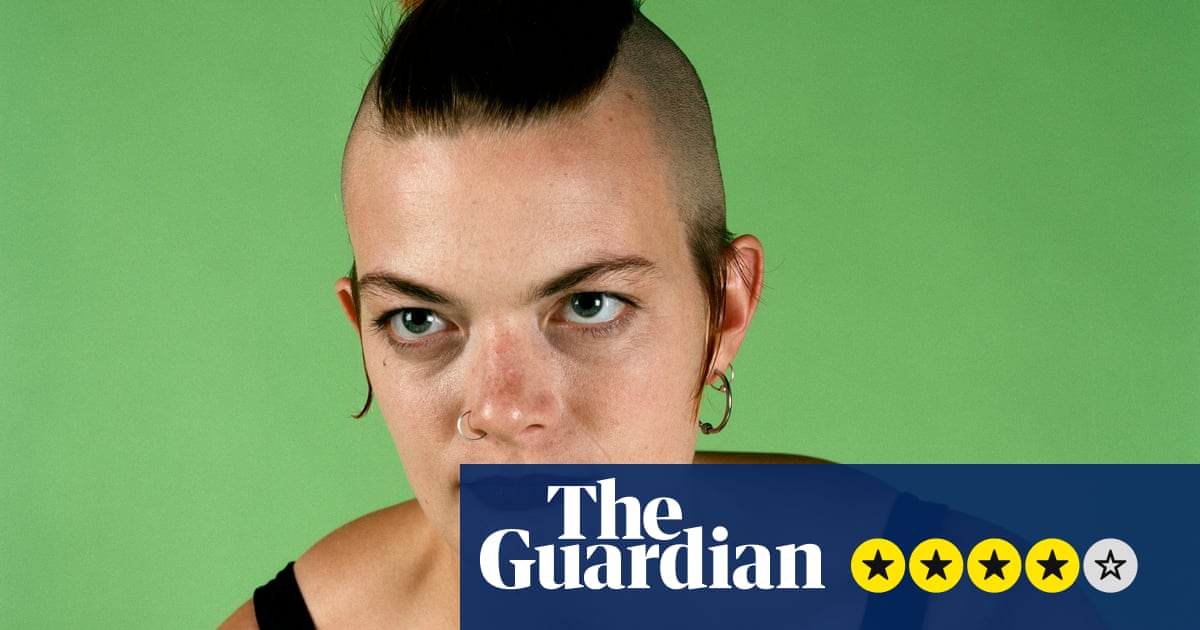
"Since she graduated in the late 1980s, amid the Aids crisis, Opie has made portraits of her community, friends and family, adopting unflinching realism, saturated colours, and dramatic tonal contrasts from the 16th-century portrait painters. Many of Opie's most famous portraits included in her new exhibition at the National Portrait Gallery use these devices deliberately, a declaration that these people deserve, as the title of the show underlines, to be seen."
"In the 1991 series Being and Having, one of the earliest bodies of work in the show and still one of Opie's best known, she has 13 lesbian friends dress up as their masculine alter egos. They don a range of fake moustaches and are photographed close, so their faces fill the frame against an egg-yolk yellow background, the glue attaching the hair to their faces clearly visible."
"Opie has always been interested in construction—how we can be transformed by costume, posture, pose, role-play. This show is a testament to that, and her love of tattoos, piercings and body modifications. She's especially drawn to the performance and presentation of masculinity."
Catherine Opie has established herself as a major portrait artist documenting butch and queer communities since the late 1980s. Drawing inspiration from 16th-century portrait painters like Hans Holbein, she employs saturated colors, dramatic tonal contrasts, and unflinching realism to elevate her subjects. Her work explores construction, performance, and presentation of identity through costume, posture, and body modification. Early series like Being and Having feature lesbian friends in masculine alter egos with fake mustaches, while later work includes high school footballers and baroque-inflected larger-scale portraits. Her exhibition at the National Portrait Gallery demonstrates her commitment to making marginalized communities visible and worthy of artistic attention.
Read at www.theguardian.com
Unable to calculate read time
Collection
[
|
...
]