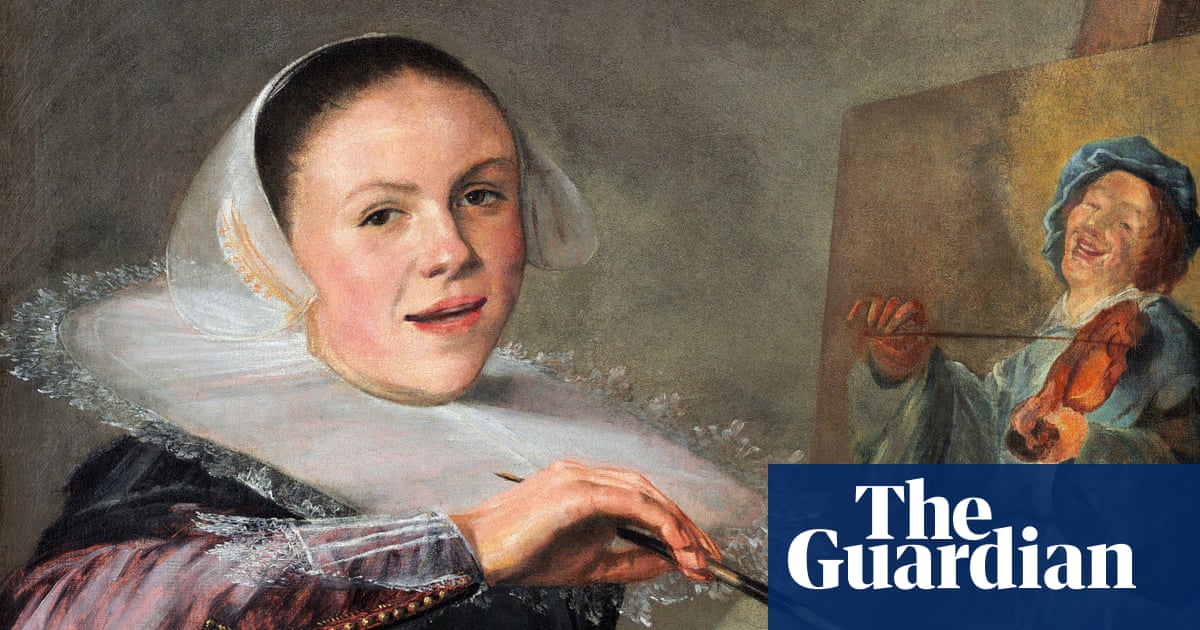
"Clad in shimmering silks and a stiffly starched lace collar, she leans back in her chair, palette and brushes in hand, a painting by her side. This work, completed in the year she was admitted to a painters' guild in Haarlem, proclaimed her arrival as an established artist. It was one of the first self-portraits by an artist in the Dutch republic, a device most male painters did not adopt until years later."
"While celebrated in her lifetime, Leyster was quickly forgotten after her death. A posthumous inventory attributed some of her paintings to the wife of the deceased, referring to her artist husband, Jan Miense Molenaer. Then she disappeared. Her works were attributed to Frans Hals, other male contemporaries, or, simply, unknown master."
"The exhibition seeks to restore women to one of the most feted periods of art history, best known for works by Rembrandt van Rijn, Johannes Vermeer and Anthony van Dyck. As MSK puts it in its slogan: Old masters were women too."
Judith Leyster painted a confident self-portrait around 1630 at age 21, presenting herself as an established artist with palette and brushes in hand. This work coincided with her admission to a painters' guild in Haarlem and was among the first self-portraits by Dutch artists. Despite her celebrated status during her lifetime, Leyster was quickly forgotten after death. Her paintings were attributed to her husband, Frans Hals, other male contemporaries, or labeled as unknown works. Museums sold or stored her pieces in vaults. A major revival beginning in the 1970s has restored her prominence. She now features in an exhibition showcasing over 40 female baroque artists from the Low Countries, challenging the historical dominance of male masters like Rembrandt and Vermeer.
Read at www.theguardian.com
Unable to calculate read time
Collection
[
|
...
]