Public health
fromTasting Table
5 hours agoWhy Americans Aren't Drinking As Much Alcohol Anymore - Tasting Table
Alcohol consumption in the U.S. has declined for three years, with the drinking rate falling to 54%, the lowest since 1939.
Their ordeal comes as malaria cases and deaths surge across Zimbabwe after US funding cuts disrupted key malaria control programmes. Shortly after returning to office for a second term in 2025, US President Donald Trump slashed foreign aid funding, including programmes backed by the United States Agency for International Development (USAID). In Zimbabwe, the cuts disrupted tuberculosis, HIV/AIDS and malaria research, prevention and treatment programmes.
The Hannon Group announced this week that the life-saving equipment outside the store has now been upgraded. In a statement shared online, the group said it was "delighted" to unveil the updated defibrillator, describing it as "another step in looking after our community".
Bonamusa is part of a team of five scientists who visit the miles of shoreline along the ocean, bays, and rivers in New York City to make sure they're safe for swimming. Donning waist-high waders, they plod into open waters and submerge test tubes to take samples, making sure they get a scoop without sediment or debris. The biggest threat to the water quality at some beaches is rain, and the dreaded combined sewer overflow - when excess stormwater mixes with untreated or partially treated sewage, turning a trip to the ocean into an iffy-at-best excursion.
For the first time in CAN's surveys, fewer than five percent smoke regularly in Sweden, according to the 2025 annual report on smoking and snus habits, which means that the political goal for Sweden to be smoke-free by 2025 has been achieved. The proportion of daily smokers dropped from 16 to 4.8 percent between 2003 and 2025, according to the new report.
The guidelines, posted days before former FDA Commissioner Marty Makary resigned, will allow companies to launch certain nicotine-based products before they've been fully vetted by regulators. Some FDA officials tasked with enforcing vaping regulations were not consulted on the changes and only learned of them the night before the document was published earlier this month, according to two staffers who spoke to the AP on condition of anonymity to discuss confidential agency matters. The document's sudden appearance sparked internal confusion about how the policy came about and who authorized it, the staffers said.
So, from the standpoint of a 14- or 15-year-old, this may be background noise. Another reason they don't comply is that there's potential exclusion from a group because most people are not complying. The third is that non-compliers give a certain signal that they're part of the uncool group, and that's not what people want to give.
Over the past century, humanity has achieved extraordinary gains in human health. Advances in water and sanitation, maternal and child care, infectious disease control, vaccinations, and other public health achievements have vastly improved human longevity and quality of life, reducing global child mortality significantly and increasing life expectancy to about 71 years as of 2021 ( WHO, 2024).
Many men need sanitary bins so they can dispose of their used pads discreetly and hygienically - but often these bins are nowhere to be found in men's loose. It's causing men stress and shame and keeping them from going out, heading to work or even doing the things they love.
For decades, gas stoves were the default choice for anyone who took home cooking seriously, mostly because they offered superior responsiveness and temperature control compared to electric. It was like this for so long that it was never really considered a serious debate. But all conventional thinking seems timeless until it suddenly isn't. Now, health concerns are raising questions about the true cost of gas, while technological improvements in top electric ranges have suddenly made them a lot more competitive.
Kaiser Permanente is still trying to determine the source of bacteria responsible for 19 recent cases of Legionella infection identified at a hospital in the San Francisco Bay Area. The 19 infections were linked to Kaiser's medical center in Santa Clara. Most of those who fell sick are recovering at home, Kaiser said in a recent statement. The bacteria were identified through "robust routine internal monitoring processes," according to Kaiser.
Since the 2016 Ebola crisis, the world has suffered five major public health emergencies, including Covid-19, the largest pandemic of this century. In recent years, initiatives and mechanisms have emerged to respond to new health challenges, such as the Pandemic Fund and the WHO Pandemic Arrangement, but the experts acknowledge that we live in a world of greater volatility, uncertainty, fragmentation and interconnected shocks with far-reaching consequences than a decade ago.
The climate crisis should be declared a global public health emergency by the World Health Organization, or millions more people will die unnecessarily, leading international experts have said. The independent pan-European commission on climate and health, which was convened by the WHO, concluded the climate crisis was such a worldwide threat to health that the WHO should declare it a public health emergency of international concern (Pheic). The international spread of vector-borne disease, such as dengue and chikungunya, as well as the health impacts of extreme weather events, global heating, food insecurity and air pollution make a Pheic necessary, said the commission's report.
Dr. Tracy Beth Hoeg will be replaced as FDA's acting drug center director by Dr. Mike Davis, who has been serving as deputy director, according to an email sent to agency staff Friday that was obtained by The Associated Press.
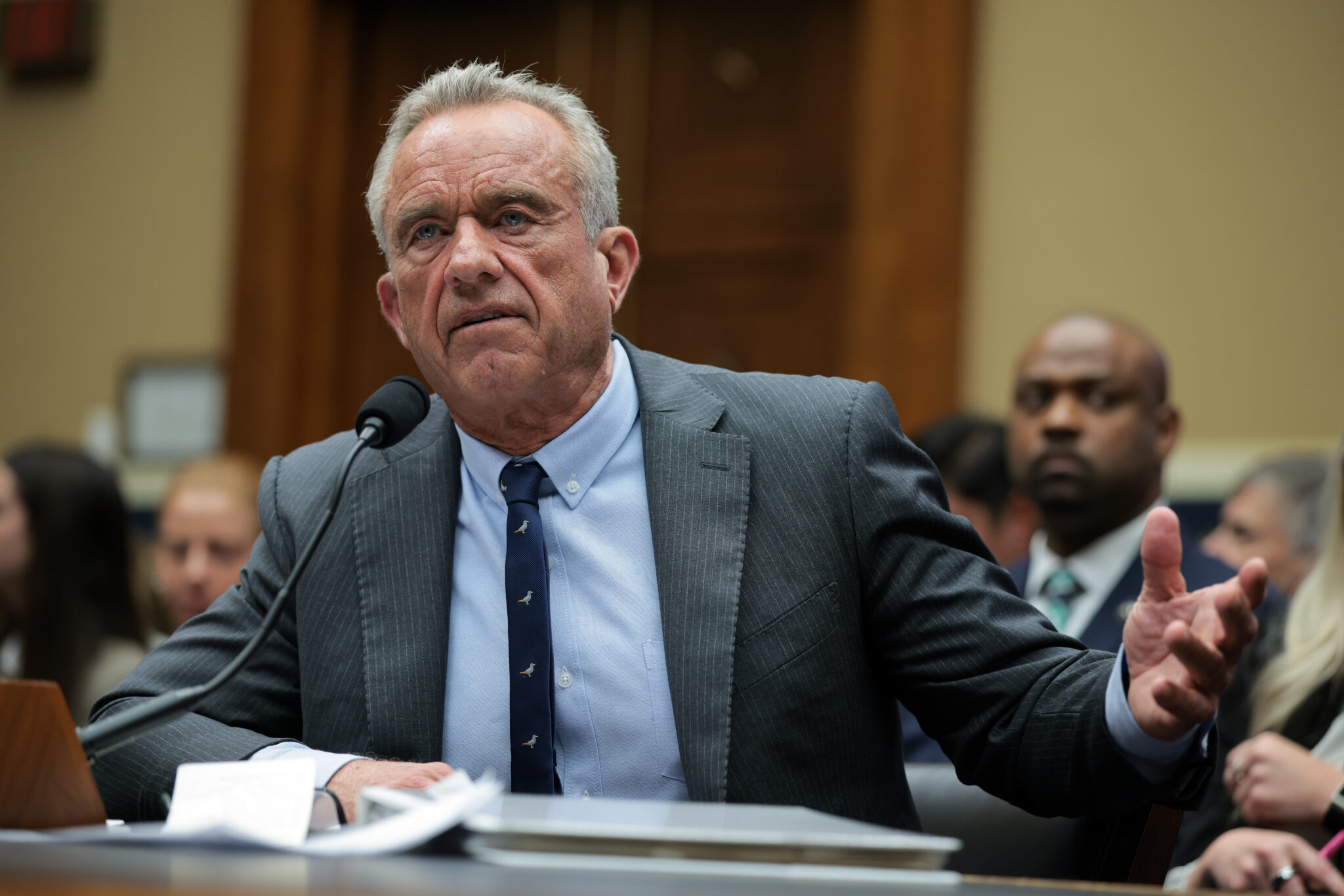
CNN’s Pamela Brown straight up asked Sen. Bill Cassidy (R-LA) Friday if he had buyer's remorse for voting to approve Robert F. Kennedy Jr. for Health and Human Services Secretary. Cassidy, a medical doctor, said last February that he decided to vote in favor of Kennedy after receiving assurances that the nominee would respect the science behind disease-preventing vaccines. Cassidy later denounced Kennedy for reversing course and slashing the childhood vaccine schedule.
The assembly member explained that paraquat is primarily used by fruit growers to prevent weed growth, adding that many other countries have already banned the chemical. More than 70 countries, including the countries where paraquat is manufactured, ban its use, she said. China has banned paraquat for use in its country, yet it is a prime manufacturer of the restricted-use chemical. In 2021, the U.S. Environmental Protection Agency (EPA) decided to keep allowing paraquat in the U.S. despite public concern and studies linking it to health risks.
Meth is meth. Like aspirin is aspirin. What matters is how much is in each dose. Today, Los Angeles does have a hyper-pure methamphetamine problem. It is a major driver of homelessness and mental illness here and in many other parts of the country. But it's not new.