Cancer
Cancer
[ follow ]
#biomedical-research #cancer-risk #ct-scans #radiation-exposure #dna-damage #mainstream-medicine #prostatecancer
Cancer
fromThe New England Journal of Medicine
1 day agoFirst-Line Sunvozertinib in NSCLC with EGFR Exon 20 Insertion Mutations | NEJM
Sunvozertinib first-line therapy improved progression-free survival and objective response versus carboplatin-pemetrexed in advanced EGFR exon 20 insertion NSCLC, with higher grade 3+ adverse events.
fromwww.theguardian.com
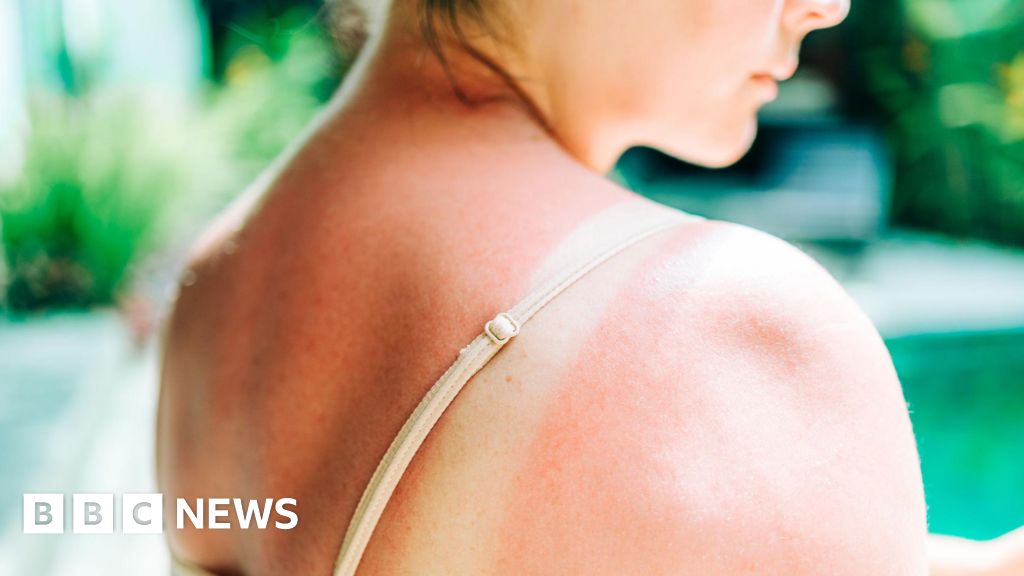
2 days agoSunbed firm in hot seat over false claims that tanned skin protects against sunburn
There's no such thing as safe tanning from UV radiation.. A tan is a sign of skin damage and offers very little protection against the sun. A bit of sun helps our bodies make Vitamin D. But there's no need to sunbathe or risk sunburn to get enough Vitamin D. Too much sun can cause sunburn and increase the risk of skin cancer.
Cancer

fromwww.independent.co.uk
4 days agoKing Charles creates instant bond' with cancer patients at hospital centre visit
The monarch was greeted enthusiastically by both patients and staff as he toured the site, which is soon to open as the Sir Robert Ogden Macmillan Cancer Centre. Among those he met was Lou Rhodes, 49, who lives with stage 4 secondary breast cancer and played a crucial role in the centre's design and development as a patient representative. Ms Rhodes, from Hopgrove in York, said: It was amazing, an absolute honour. A true honour.
Cancer
fromTODAY.com
1 week ago'Danny Go!' Star Daniel Coleman Announces Death of 14-Year-Old Son
“Oh my sweet boy. There's so much I want to say, but I don't know how yet. I already miss you so much, and the pain in my heart is far more than I can process. But looking through thousands of pictures and videos this past week, I'm also filled with tremendous pride,” he captioned the post.
Cancer

fromIrish Independent
1 week agoKerry councillor brands HSE as 'discriminatory' after rejecting free cancer screening pleas
“I find this startling... it is a self-administered test at home so does not require huge input from the HSE,” he said. “It is also a cancer that when caught early, is relatively treatable, but when not caught in time is unfortunately very often fatal...I would go as far as saying that this policy is discriminatory towards those over 70 years of age.”
Cancer
fromIrish Independent
1 week agoRadio station apologises for announcing death of Britain's King Charles
Due to a computer error at our main studio the Death of a Monarch procedure, which all UK stations hold in readiness while hoping not to require, was accidentally activated on Tuesday afternoon (19 May), mistakenly announcing that HRH the King had passed away. Radio Caroline then fell silent as would be required, which alerted us to restore programming and issue an on-air apology.
Cancer
fromHarvard Gazette
1 week agoFighting for what he believes in - Harvard Gazette
Blake Lusty grew up sure of two things: He wanted to serve his country in the Navy, and he would always fight for what he believed in. A late-stage cancer diagnosis at age 20 only steeled his resolve. The first in his family to pursue a college education, Lusty was raised by his mother in St. Petersburg, Florida.
Cancer
fromwww.theguardian.com
1 week agoThis is mine, I own it': how Tracey Emin and Frida Kahlo inspired me to make meaning out of pain
In a photographic self-portrait taken not long after she was diagnosed with squamous cell bladder cancer in 2020, Tracey Emin's iPhone shrouds her right breast as our line of vision descends from her catheter to her urostomy bag to her disposable knickers. Her body is fragile here in this hospital mirror, yet her gaze is anything but. It looks us dead in the eye as if to say: I matter, this matters a sureness that challenges the notion of subjugation in times of ill-health.
Cancer
Cancer
fromwww.cbc.ca
2 weeks agoOntario should lower colon cancer screening age even further, say patients and advocates | CBC News
Ontario lowers colon cancer screening age to 45 from 50 starting July 1.
Earlier screening is linked to higher diagnosis rates in people under 50.
Patients report delayed diagnosis due to being told they were too young.
Advocates seek screening age lowered further than 45.
Cancer
fromwww.businessinsider.com
2 weeks agoMy 29-year-old son had a stomach ache that wouldn't go away. He was diagnosed with stage 4 colon cancer and died 8 months later.
Andrew’s persistent stomach pain led to an emergency exam, revealing stage 4 colon cancer with widespread spread and requiring chemotherapy and a colostomy.
fromIrish Independent
2 weeks ago'I was living a lie' - Singer Tommy Fleming comes out as gay in first interview since marriage break-up
Speaking to Ciara Kelly on The Hard Shoulder on Newstalk, Sligo-born Fleming (55) said "small cracks started to appear" in the marriage, mainly for him, and they were "never mended". The folk and traditional singer revealed publicly for the first time that he is gay, and said that he had been "living a lie", but is now living his "truth". "And with every crack that appeared, there was a new crack and a new crack, and those cracks became a chasm," he said.
Cancer
Cancer
fromwww.businessinsider.com
2 weeks agoNew research suggests cancer may develop earlier than we thought but simple changes can help prevent it
Cancer screening ages may miss early-onset cases, so personalized risk models can guide earlier prevention and detection using lifestyle and medical factors.
Cancer
fromwww.theguardian.com
3 weeks agoThe emerging cancer treatment that's exciting scientists: We've just scratched the surface on what's possible'
CAR T-cell therapy reprograms immune cells to target cancer, with multiple approved options for blood cancers and ongoing efforts to expand to solid tumors.


fromPinkNews | Latest lesbian, gay, bi and trans news | LGBTQ+ news
3 weeks agoDolly Parton cancels Las Vegas residency after health issues
The good news is I'm responding really well to meds and treatments, and I'm improving every day. Now, the bad news is that it's gonna take me a little while before I'm up to stage performance level because some of the meds and treatments make me a little swimmy-headed, as my grandma used to say.
Cancer
fromConsequence
3 weeks agoEx-Metallica Bassist Jason Newsted Reveals Throat Cancer Battle
I decided that this week, as I'm beginning to roll out the promotion for the shows and stuff and let everybody know I'm gonna be back around, and you already know it - you're probably in the 24 people that I told.
Cancer
fromFortune
4 weeks agoMeet 'Green Death': the burial practices for activists worried about climate change and carbon footprint | Fortune
For her, it was a very comforting thought to be able to return to the earth in that kind of way, and to have her final physical act contributing to the life process.
Cancer
Cancer
fromLondon Business News | Londonlovesbusiness.com
4 weeks agoPublic 'playing with fire' on sun exposure as melanoma toll climbs - London Business News | Londonlovesbusiness.com
Public awareness of sun safety is alarmingly low, with many UK adults intentionally burning their skin despite the risks of skin cancer.
Cancer
fromwww.businessinsider.com
1 month agoA 29-year-old man was told his constipation was nothing to worry about. He was diagnosed with colon cancer.
Josh Vintner-Jackson experienced severe constipation and abdominal pain, leading to the discovery of a tumor blocking his colon that required urgent surgery.
[ Load more ]