#reality-bending
#reality-bending
[ follow ]
#technology #virtual-reality #ai #artificial-intelligence #consciousness #imagination #neuroscience #mental-health
#characterai
Artificial intelligence
fromFuturism
1 day agoAI Company Known for Teen Suicides Launches New Feature to Turn Books Into Roleplaying Experiences
Character.AI introduces 'c.ai Books' to create interactive storytelling experiences using classic literature, despite past controversies and a ban on underage users.
Productivity
fromSilicon Canals
2 days agoPsychology says people who need to finish the chapter before they can put the book down aren't obsessive - their brain treats an unfinished narrative the same way it treats an unresolved argument, as an open loop that will consume background processing power until it closes, and that inability to stop mid-chapter isn't about the book, it's about a mind that cannot rest inside something incomplete - Silicon Canals
The brain's need for closure drives the compulsion to finish reading or resolving incomplete tasks.



Mental health
fromSilicon Canals
5 days agoThere's a version of loneliness that only arrives inside a crowded room full of people who like you, and it comes from the slow realization that what they like is a performance you can no longer remember choosing to start - Silicon Canals
Loneliness can persist even in social settings, stemming from a disconnect between one's true self and the persona they project.
Arts
fromdesignboom | architecture & design magazine
5 days agoactivated space: allan kaprow's happenings and their afterlife in immersive environments
Allan Kaprow's 'happening' redefines art as an event involving space, body, and instructions, emphasizing active participation over passive observation.
fromdesignboom | architecture & design magazine
6 days agohow wutopia lab's 'magical realism' turns everyday spaces into ethereal interior atmospheres
Wutopia Lab treats architecture as a medium for constructing parallel realities inside the everyday, spaces where imagination is embedded into ordinary urban life.
UX design
fromThe Verge
3 weeks agoThe man who coined Metaverse now says Meta's glasses are creepy
When I was working at Magic Leap, and people asked me why I thought that was a good idea, I would ask the rhetorical question: "do you really think that twenty years from now everyone is still going to be going around all day staring at little rectangles in their hands?" At the time it seemed obvious to me that the answer was no.
Writing
Berlin music
fromdesignboom | architecture & design magazine
3 weeks agosonar+D 2026 reveals festival lineup on post-AI reality, digital culture and alternative futures
Sónar+D 2026 focuses on technology as a tool for engagement, exploring themes of AI, physicality in digital culture, and alternative futures.

Artificial intelligence
fromPsychology Today
1 month agoReality Splits: Seeing Different Worlds in Mixed Reality
Mixed reality systems create perceptual conflicts when users see different digital objects in shared spaces, reducing collaboration synchrony and increasing mental effort while eroding confidence in joint decisions.

Science
fromPsychology Today
1 month agoThe Unbearable Fear of Psi: When Skepticism Shifts to Denial
Scientific investigation of extraordinary human experiences encounters emotional resistance and dismissal that exceeds standard methodological critique, reflecting deeper discomfort with certain research topics rather than legitimate scientific skepticism.
fromPsychology Today
2 months agoHigher States of Consciousness
A few years ago, I climbed over a gate and found myself gazing down at a valley. After I'd been walking for a few minutes, looking at the fields and the sky, there was a shift in my perception. Everything around me became intensely real. The fields and the bushes and trees and the clouds seemed more vivid, more intricate and beautiful.
Mindfulness
Mental health
fromNature
2 months agoDaily briefing: What people with no 'mind's eye' can tell us about consciousness
Vividness of mental imagery, handwriting practices, psychiatric-diagnostic revisions, and emerging brain–computer interfaces shape memory, creativity, education, mental-health classification, and technology development.
fromMail Online
2 months agoFuturistic chair puts you in an 'altered state of mind' within minutes
Each of the individual parts - the headrest, arms, backrest, and seat - move along individual horizontal paths so that they aren't accelerated by gravity like a swinging rocking chair. At the same time, very smooth bearings cut resistance and friction to a minimum, allowing the chair to follow your body's natural movements. Dr David Wickett, the designer of the chair and co-founder of DavidHugh Ltd, says this system is so sensitive that 'even breathing can lift the entire body'.
Mindfulness
fromFast Company
2 months agoA play with no actors on stage? That's the bet behind the world's first play in mixed reality
When a stranger smiles at you, you smile back. That is why, when Sir Ian McKellen ( The Lord of the Rings, X-Men, Amadeus) walked on the stage in front of me, looked me straight in the eye, and smiled at me, I smiled back. It was the polite thing to do. It was also completely unnecessary, because McKellen was not actually on the stage in front of me. He smiled at me through a pair of special glasses.
Arts
Psychology
fromSilicon Canals
1 month agoWhy some of us build entire worlds inside our heads and then feel homesick for places that never existed - Silicon Canals
Elaborate inner worlds built through imagination are common cognitive features that fulfill emotional needs, characterized by specific details and consistent logic that can persist for decades.
fromPsychology Today
1 month agoAccomplishment Hallucination: When the Tool Uses You
Accomplishment Hallucination is a cognitive state in which speed feels like competence, output feels like accomplishment, and work feels done when the actual work-the thinking-through, the failure-mode analysis, the sitting with uncertainty until the problem reveals its structure-hasn't happened at all. Physics need not apply. AI can create a similar state in waking life—literally, as your very words assume form before your eyes like a conjuring sorcerer. But, like real life, the code may be buggier than we realize.
Artificial intelligence
fromPsychology Today
1 month agoHyperphantasia: When Imagination Is as Vivid as Real Life
Close your eyes and picture an apple. Most people see something-a faint, slightly blurry image, less vivid than a real apple. A few, however, will see it as clearly as if it were sitting right in front of them. This ability is called hyperphantasia. Hyperphantasia, literally meaning "beyond imagination," refers to exceptionally vivid mental imagery. It is often described as the opposite of aphantasia, a condition in which people report little or no ability to form mental images.
Psychology
Artificial intelligence
fromArs Technica
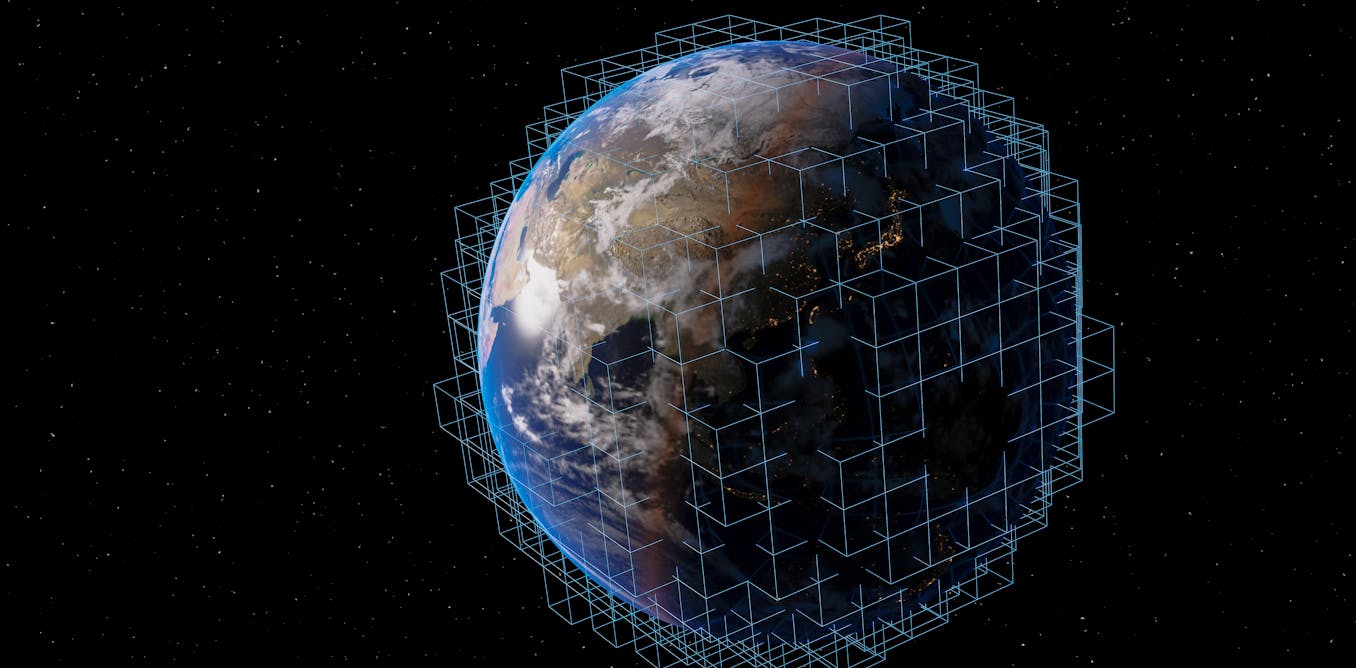
2 months agoGoogle Project Genie lets you create interactive worlds from a photo or prompt
Project Genie is a Google research prototype that generates short, remixable 60-second interactive AI video worlds with limitations, content restrictions, and a high subscription cost.
fromHarvard Gazette
2 months agoCognitive scientist explains how we 'see' what isn't real - Harvard Gazette
Yes and no, says cognitive scientist Tomer Ullman, the Morris Kahn Associate Professor of Psychology, who with Halely Balaban recently published a paper titled "The Capacity Limits of Moving Objects in the Imagination." If you're like most people, you probably thought about some of these things, but not others. People build mental imagery hierarchically, starting with the ideas of "person," "room," "ball," and "table," then placing them in relation to one another in space, and only later filling in details like color.
Psychology
fromPsychology Today
2 months agoThe Curious Geometry of the Lived Experience
This story is about complexity, advanced math, cognition, and machine computation. But hold on. For this exercise, my task is to take this complex idea and reduce it-to simplify it into something less daunting and (I hope) a bit easier to understand. So, let's take a step back. My bet is that most of us learned our first piece of geometry with two letters: x and y.
Philosophy
[ Load more ]