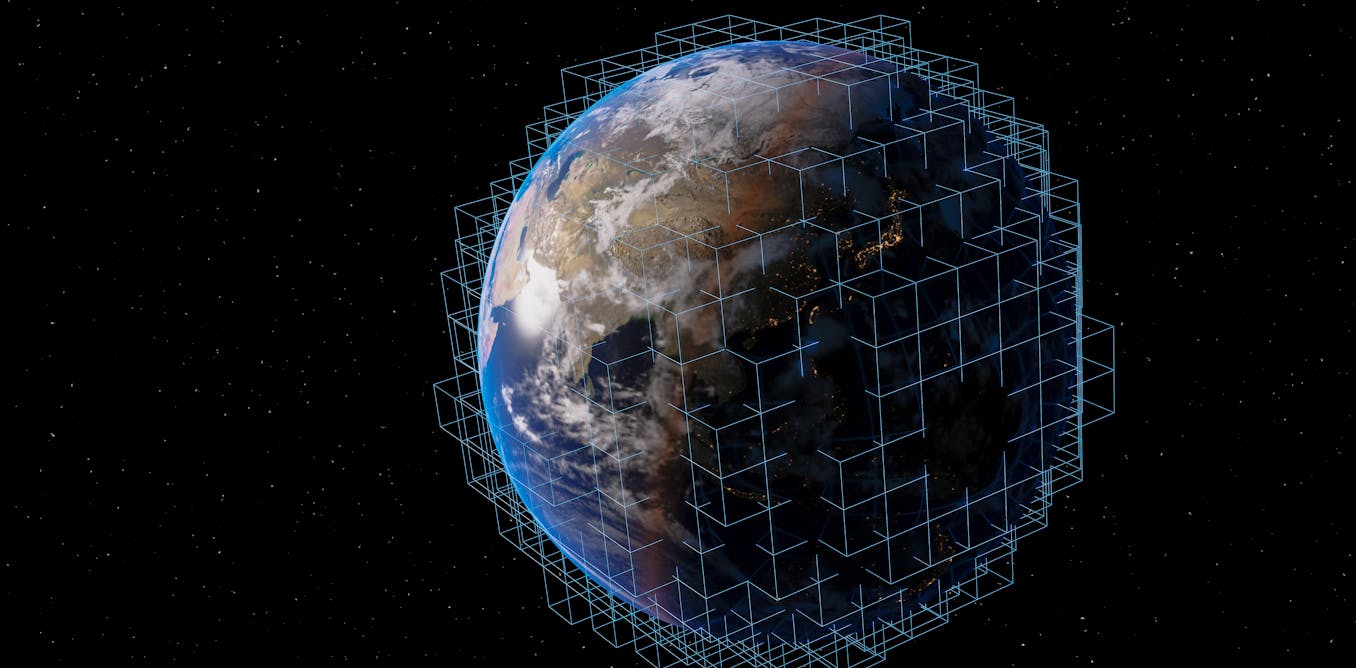
Human perception and information sources can be unreliable: direct senses, mirrors, cameras, teachers, books, scientific instruments, and calculations can all be mistaken. Philosophical reflections across cultures questioned whether waking life differs from dreams or shadows of reality, citing Zhuangzi's butterfly dream and Plato's cave. The simulation hypothesis uses technological trends—rapid improvements in video games, virtual reality, and artificial intelligence—to argue that advanced civilizations could create detailed simulations, making it possible that current existence is an artificial simulation resembling a complex video game or cinematic illusion.
"As a physicist, I use sensitive scientific instruments and complicated math to try to figure out what's real and what's not. But none of these sources of information is entirely reliable: Scientific measurements can be wrong, my calculations can have errors, even your eyes can deceive you, like the dress that broke the internet because nobody could agree on what colors it was."
"If you can't trust anything, are you sure you're awake? Thousands of years ago, Chinese philosopher Zhuangzi dreamed he was a butterfly and realized that he might actually be a butterfly dreaming he was a human. Plato wondered whether all we see could just be shadows of true objects. Maybe the world we live in our whole lives inside isn't the real one, maybe it's more like a big video game, or the movie "The Matrix.""
"The simulation hypothesis is a modern attempt to use logic and observations about technology to finally answer these questions and prove that we're probably living in something like a giant video game. Twenty years ago, a philosopher named Nick Bostrom made such an argument based on the fact that video games, virtual reality and artificial intelligence were improving rapidly. That trend has continued."
Read at The Conversation
Unable to calculate read time
Collection
[
|
...
]