#knowledge-dissemination
#knowledge-dissemination
[ follow ]
#higher-education #ai-in-education #education #learning-and-development #academic-integrity #ai #leadership
#higher-education

Higher education
fromInside Higher Ed | Higher Education News, Events and Jobs
1 week agoWe Preach Free Inquiry-but Don't Teach That Way (opinion)
Higher education faces internal threats to free inquiry that must be addressed alongside external pressures from legislation and funding restrictions.
Higher education
fromInside Higher Ed | Higher Education News, Events and Jobs
3 weeks agoWhat History, Evidence, Competing Views Say About AI, Higher Ed
A significant shift in higher education is occurring, influenced by technology, requiring a balance between historical understanding and present innovation.

Higher education
fromInside Higher Ed | Higher Education News, Events and Jobs
3 weeks agoWhat History, Evidence, Competing Views Say About AI, Higher Ed
A significant shift in higher education is occurring, influenced by technology, requiring a balance between historical understanding and present innovation.
Intellectual property law
fromInside Higher Ed | Higher Education News, Events and Jobs
5 days agoLawmakers Question Publish-or-Perish Culture of Research
Federal lawmakers are addressing research fraud and integrity issues in scientific publishing, highlighting the flawed incentive structures in the industry.

#ai-in-education

Artificial intelligence
fromeLearning Industry
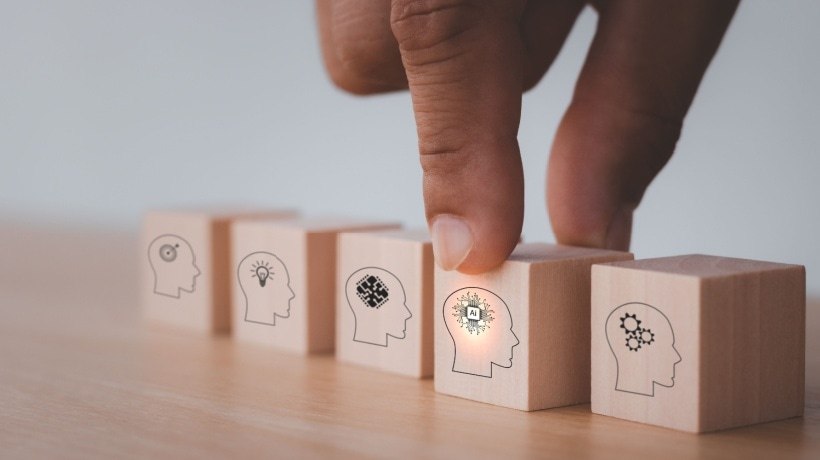
1 week agoA 4-Step Framework For Using AI Transparently In Educational Content
EdTech companies should transparently disclose their AI usage to build trust and ensure responsible content creation.
Online learning
fromeLearning Industry
6 days agoRethinking Education With AI: Create More Engaging Learning Experiences With AI-Powered Learning Design
AI can enhance learning design by personalizing experiences and improving relevance, but risks of generic content and diminished critical thinking remain.
Online learning
fromeLearning Industry
6 days agoRethinking Education With AI: Create More Engaging Learning Experiences With AI-Powered Learning Design
AI can enhance learning design by personalizing experiences and improving relevance, but risks of generic content and diminished critical thinking remain.
Intellectual property law
fromIPWatchdog.com | Patents & Intellectual Property Law
6 days agoEnhancing Transparency in SEPs: The Sisvel-WIPO PATENTSCOPE Initiative
Transparency is crucial for a functional standard-essential patent ecosystem, as demonstrated by Sisvel's compliance with FRAND obligations and collaboration with WIPO.
fromNature
3 weeks agoNow is the time for scientific societies to guide global research
Modern scientific societies are increasingly vulnerable due to their dependence on membership fees and journal subscriptions, which are being challenged by the rise of virtual networking and open-access publishing.
Science

Philosophy
fromWarpweftandway
1 month agoTwo Collaborative Learning () Events This Week
The 四海为学 Collaborative Learning Project hosts two free public events: Louise Edwards discussing childhood and gender in China on March 19, and Peter Hershock exploring AI and agency from a Buddhist perspective on March 20.
Privacy professionals
fromFast Company
1 month agoChatGPT Edu feature reveals researchers' project metadata across universities (exclusive)
ChatGPT Edu's Codex Cloud Environments expose repository metadata and user activity information to thousands of colleagues at universities, revealing project details and interaction patterns without exposing actual private code.
Privacy technologies
fromInside Higher Ed | Higher Education News, Events and Jobs
1 month agoNo, I Don't Want My Article Turned into a Podcast (opinion)
Academia.edu converts user papers into Spotify podcasts without explicit permission, raising concerns about AI use, attribution accuracy, and the platform's for-profit business model disguised as educational.
Artificial intelligence
fromwww.theguardian.com
1 month agoI've taught thousands of people how to use AI here's what I've learned
Success with AI depends on curiosity and critical thinking rather than technical ability, treating AI as a learnable skill requiring clear direction and proper context rather than a magic solution.
fromNieman Lab
2 months agoJournalism lost its culture of sharing. Here's how we rebuild it
If you've worked in a technical role in news for long enough, you likely remember when the "show your work" spirit was everywhere. Newsroom nerds shared code on GitHub, swapped tips on social media and unfurled long blogs guiding others on how to get things done. You might also have a vague sense that - like reaction GIFs, demotivational posters, and that guy who sang "Chocolate Rain" - you're seeing less of it these days.
Media industry
fromNature
2 months agoWhat can I do if my idea has been plagiarized?
A few years ago, I put together what I felt was a truly innovative concept, which I presented in a conference poster at an international meeting in my field. After the presentation, I spoke to another early-career scientist about my work and how it might apply to their findings. Two years later, they scooped me by publishing a preprint paper that presented my idea, with many of the same verbal formulations and an identical flow of ideas, without any acknowledgement or attribution to my work.
Intellectual property law
Artificial intelligence
fromeLearning Industry
2 months agoThe Promise Of Personalized AI Education In A Country With Many Cultures
AI-driven learning platforms personalize instruction in Indian schools by analyzing student interactions to provide individualized support and expand equitable access to tailored education.
Education
fromeLearning Industry
2 months agoThe Education Industry: Shaping Economies, Skills, And The Future Of Learning
Modern education has evolved into a technology-enabled, flexible, and resilient ecosystem that expands access, aligns learning with workforce needs, and drives societal and economic development.
Higher education
fromInside Higher Ed | Higher Education News, Events and Jobs
1 month agoWill There Be a Second Compact?
The Trump administration is developing a revised higher education compact after universities rejected the initial version, with ongoing discussions aimed at implementing accountability measures and reforms across institutions.
Higher education
fromInside Higher Ed | Higher Education News, Events and Jobs
2 months agoHelping faculty build channels to audiences that matter
Higher-education communicators should enable faculty to publish directly via platforms like Substack and LinkedIn newsletters to expand reach, engagement, and institutional narratives.
fromInside Higher Ed | Higher Education News, Events and Jobs
1 month agoThe Case for Centers for Teaching and Learning (opinion)
This is a striking decision at a moment when public confidence in higher education is eroding. It is also puzzling because rigorous research and evaluation have demonstrated, over and over, the value of the work of centers for teaching and learning, including positive impacts on student learning outcomes, institutional effectiveness and faculty development.
Higher education
Higher education
fromCornell Chronicle
2 months agoResearch Matters' video podcast debuts, translating ideas into impact | Cornell Chronicle
Cornell's Research Matters podcast translates campus research into accessible conversations showing real-world impacts across public safety, health, food systems, climate, and technology.
fromInside Higher Ed | Higher Education News, Events and Jobs
2 months agoStrategies for Supporting International Scholars (opinion)
While everyone is subject to their individual situations, for many, the process begins with an F-1 student visa, which they hold as they complete a Ph.D. over five to six years. After graduation, they may choose to transition to Optional Practical Training (OPT), which provides a year of work authorization, with a two-year extension for STEM graduates. Some may then transition to a H-1B temporary work visa, which provides for three years of work authorization and is renewable for another three years.
Higher education
Higher education
fromInside Higher Ed | Higher Education News, Events and Jobs
1 month ago3 Questions for 2U's Jihan Quail
Jihan Quail returned to 2U as global head of growth after observing how universities evolved their partnership needs and recognizing the company's steady, disciplined leadership during higher education turbulence.
[ Load more ]