#knitting--crocheting
#knitting--crocheting
[ follow ]
#sustainable-fashion #sustainability #upcycling #knitting #environmental-impact #textile-art #needlepoint
#sustainable-fashion


Fashion & style
fromYanko Design - Modern Industrial Design News
1 month agoOld Clothes Never Die, They Just Become Flower Pots - Yanko Design
ByBye is a countertop machine that transforms worn clothing into usable flower pots through grinding, compression, and heat, reframing garment disposal as a system of reform rather than waste.
Fashion & style
fromBusiness Matters
1 month agoWhy Sustainable Fashion is More Than Just a Trend: Clothing, Bags, and Accessories for a Better Future
Sustainable fashion has moved from niche to mainstream as consumers increasingly demand transparency about production, labor practices, and environmental impact of clothing and accessories.
Fashion & style
fromYanko Design - Modern Industrial Design News
1 month agoOld Clothes Never Die, They Just Become Flower Pots - Yanko Design
ByBye is a countertop machine that transforms worn clothing into usable flower pots through grinding, compression, and heat, reframing garment disposal as a system of reform rather than waste.
fromChrbutler
2 weeks agoCraft is Untouchable - Christopher Butler
Craft is often defined as skill in making things by hand, but this interpretation is being challenged by AI. Craft transcends physical interaction; historical figures like Mozart and Beethoven exemplify mastery without traditional methods.
Intellectual property law
fromConde Nast Traveler
1 week agoIn Rural Ireland, Textile Weavers Offer a Glimpse of a Craft's Past and Future
"We met with linen and wool weavers and were blown away by the exceptional quality and beauty of the cloth they produced, as well as the depth of [textile] history in Ireland. We were in equal measure concerned by the decline in the number of weavers. They mentioned that they were losing out to cheaper cloth from abroad and that Irish buyers were few and far between."
Fashion & style
#needlepoint

Graphic design
fromwww.businessinsider.com
2 weeks agoI'm a 62-year-old paralegal who turned my needlepoint hobby into a side hustle. Gen Z are some of my best customers.
Kevin Lustik monetizes his needlepoint hobby, selling art influenced by climate issues, with growing interest from younger generations despite challenges in the fiber art market.
Portland
fromMetro Silicon Valley | Silicon Valley's Leading Weekly
1 month agoJeremy Frey: Woven at Stanford | Metro Silicon Valley | Silicon Valley's Leading Weekly
Wabanaki baskets, crafted by Jeremy Frey, showcase a 13,000-year tradition and innovative techniques, now featured in a significant exhibition at the Cantor Arts Center.

fromThe Art Newspaper - International art news and events
1 month agoTextiles weave tales of Palestine's rich but troubled history
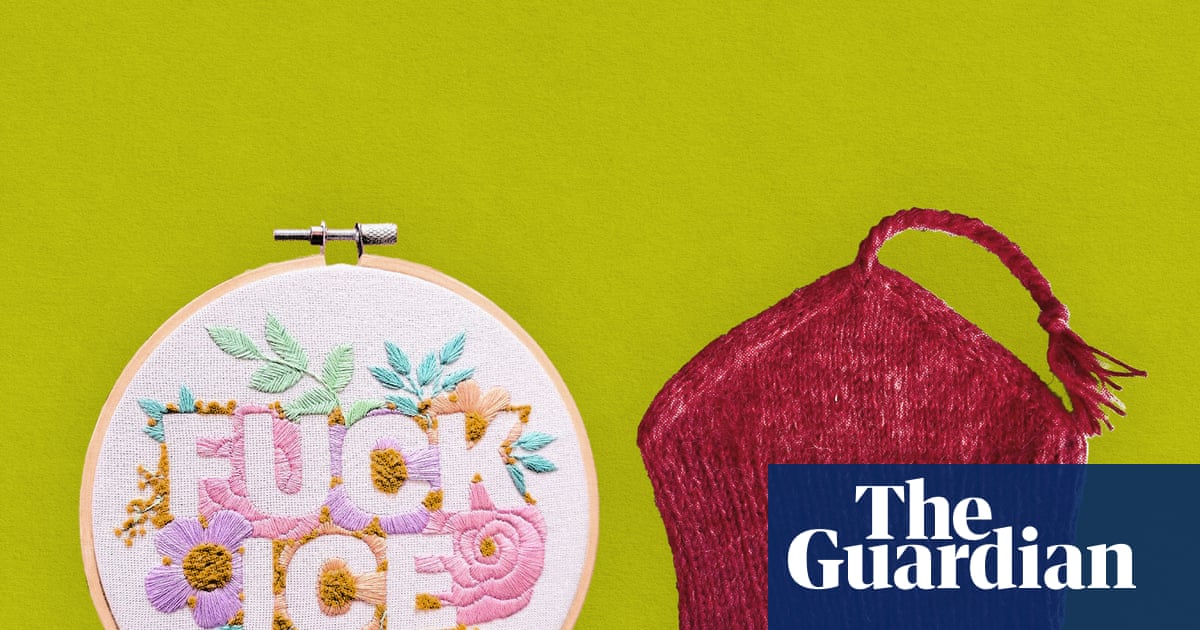
Textiles are a window into the communities that created them, with every motif and line signalling a different memory, tradition or identity. Often seen as folk art, these pieces of embroidery and weaving bring together dozens of narrative threads, from Japan to South America. But nowhere is it more fraught with meaning than in Palestine.
Arts
fromdesignboom | architecture & design magazine
1 month agohand-felted sheep wool forms the library of vibrant nudibranchs depicting marine life
Each nudibranch in this archive is three inches long, grown-up size, as the artist puts it, and each one is a faithful replica of a real species. The cerata, those finger-like projections on a nudibranch's back that serve as gills and defensive organs, are recreated individually in wool, each in the right shape and color for its species.
Miscellaneous

fromMindful
1 month agoClothing Designer Eileen Fisher Models Mindfulness
Despite having to haul a dozen dumpster-loads of damaged goods out of the offices and the nearby Lab Store, to the tune of $1.5 million, Eileen said at the time, 'It was just stuff.' You can only imagine the emotions that might arise in a chief executive if they saw their sewage-soaked products floating by. Eileen and her staff did not linger there. They mobilized quickly-organizing carpools, impromptu meeting spaces, and arranging interest-free loans for staff needing cash during the crisis.
Women
History
fromOpen Culture
2 months agoThe Ingenious Engineering of Silk: How the 2,000-Year-Old Pattern Loom Powered the Silk Road and the Wealth of Ancient China
The Silk Road was a vast trade network spanning from the second century BC to the fifteenth century AD, named over 400 years after its decline, with silk being the most glamorous and visible commodity despite not being the highest-volume item traded.
Remodel
fromApartment Therapy
2 months agoMy Mom Swapped Her Heavy Wool Rug for This Supersoft Washable Find, and I'm Obsessed
The Releany Medallion Washable Rug is an affordable, machine-washable, vintage-inspired floral medallion rug available in 21 colors and 42 sizes, noted for its softness and versatility.
Arts
fromHyperallergic
1 month agoMerging Craft Practices and New Media at the Museum of Craft and Design
Video Craft exhibition explores how video, film, and early moving image technologies share formal and technical properties with traditional craft media like ceramics, textiles, and glass through encoding, looping, and sampling.
Agriculture
fromRemodelista
2 months agoObject of Desire: Rustic Woolens from Isabella Rossellini's Mama Farm - Remodelista
Isabella Rossellini founded Mama Farm to conserve heritage breeds and produces heritage-sheep wool textiles—ponchos, blankets, carpets—in collaboration with textile artist Mimi Prober.
fromdesignboom | architecture & design magazine
2 months agorecontextualizing human hair waste as potential raw material for design
This research-based design project by Laura Oliveira investigates discarded as a potential raw material for sustainable design applications. Human hair is produced continuously and in large quantities through everyday grooming practices, yet it is almost always treated as waste once separated from the body and typically disposed of in landfills. Despite its material properties, strength, flexibility, and durability as a keratin-based protein fiber, its remains uncommon within design and research contexts.
Design
fromFuncheap
2 months agoSF Well-Crafted: Free Painted Paper Weaving (Habibi's Birria)
Enjoy free craft workshops that are the perfect artsy excuse to explore bars and restaurants in Mid-Market. Join us at Jay's Grill to explore the art of watercolor, The Beer Hall make your own one-of-a-kind beaded coasters, and Habibi's Birria to try your hand at painted paper weaving. Grab a craft beer, savor hand-crafted eats, and socialize with fellow crafters while making festive creations.
Arts
fromQueerty
1 month agoAbs, yarn, & attitude: Meet Caleb Channing, the man making crochet seriously sexy - Queerty
Crocheting started as a pandemic hobby. My background is all creative. I have several design degrees and yearned for a creative outlet that was away from a computer screen.
Fashion & style
fromwww.architecturaldigest.com
2 months agoWhat in the World Is a Cuddle Blanket?
At first glance, the faux fur treasures all look similar, but each has its own distinct perk. For instance, the Lola Blankets pick has a stretchy construction that's perfect for wrapping, while the Cozy Earth bubble blanket is the ultimate reading-in-bed accessory thanks to its heftier weight and tailored look. Since these are quite fluffy, I like to style my faux fur blankets in two ways, depending on my mood. For all-season decor, you can't go wrong draping it against woven upholstery.
Design
fromColossal
1 month agoDive into Wool Creature Lab's World of Vibrant Felted Nudibranchs
I was surrounded by 200 marine biologists and students living and working together on a small island. That summer changed everything. It was there that I first learned about nudibranchs-these impossibly colorful sea slugs with shapes and patterns that looked like they came from another planet.
Arts
Arts
fromdesignboom | architecture & design magazine
2 months agolight sculptures preserve ancestral designs through antique doilies and lace textile
Kinship transforms heirloom doilies and stockings into LED-lit stainless steel sculptures that preserve textiles and project lace-like shadows and layered histories.
fromRemodelista
1 month ago12 Pojagi-Style Patchwork Curtains in a Range of Styles and Prices
Making pojagi was a way of "economizing resources," and also "an act of affection," explains artist-fashion designer Christina Kim of Remodelista longtime favorite Dosa. Shown here: Dosa's cotton and silk Pojagi Scarves are "both a reminder of Christina's childhood in Korea and a beautiful expression of traditional recycling"-and would work well on a wall or in a doorway.
Fashion & style
fromColossal
2 months agoIn Collaboration with Indigenous Artisans Around the World, PET Lamp Emphasizes Sustainability
Tons upon tons of these single-use plastics end up in landfills or even floating in the ocean. Spanish design firm PET Lamp set out give another purpose to these otherwise short-lived materials. Partnering with artisans in communities from Chile to Ethiopia to Australia, the company celebrates both Indigeneity and sustainability, drawing upon time-honored global craft traditions while supporting local economies and recycling discarded materials.
Arts
Fashion & style
fromElite Traveler
1 month agoNot All Cashmere Is Equal - These Four Brands Get It Right
Emerging luxury cashmere brands like Cutler and Extreme Cashmere distinguish themselves through superior materials, innovative production techniques, and distinctive design approaches that justify premium pricing.
fromArchitectural Digest
2 months agoThe Freezing Season Calls for Luxury Throw Blankets
In this freezing season, we're thinking warm thoughts. Hot chocolate, '90s rom-coms, purring kittens, and the best luxury throw blankets. "Feels like -6 degrees" day after day has us dreaming up cozy blankets speciated for sophisticated lounging. We're talking thick wool that's not scratchy, cashmere not prone to pilling, oversized throws as soft as your favorite sweater. High-quality textiles are of the highest import, and we'll even pay the dry cleaning fee for this level of comfort.
Fashion & style
Fashion & style
fromKALTBLUT Magazine
2 months agoPOET-LAB Fall/Winter 2026 - Inside the Lab - KALTBLUT Magazine
Poet-Lab's FW26 collection presents genderless luxury streetwear emphasizing poetic minimalism, architectural restraint, and sustainability through repurposed deadstock fabrics, rejecting binary identities and prescribed gender roles.
fromDocumentjournal
2 months agoOnce upon a time, fashion got dirty
In the show, "dirty" extends to anything that breaks fashion's pact with propriety. Here are clothes caked in grime, blotted with makeup, stiffened by salt, pieced from trash, frayed, and faded. The garments span decades, from the 1980s through the mid-2000s, when the likes of Vivienne Westwood and Jean Paul Gaultier built their fame on defying convention, to today, when corporatization has made such daring increasingly rare. But forgoing practicality frees certain designers from the demands that the body be polite-and thereby policed.
Fashion & style
[ Load more ]