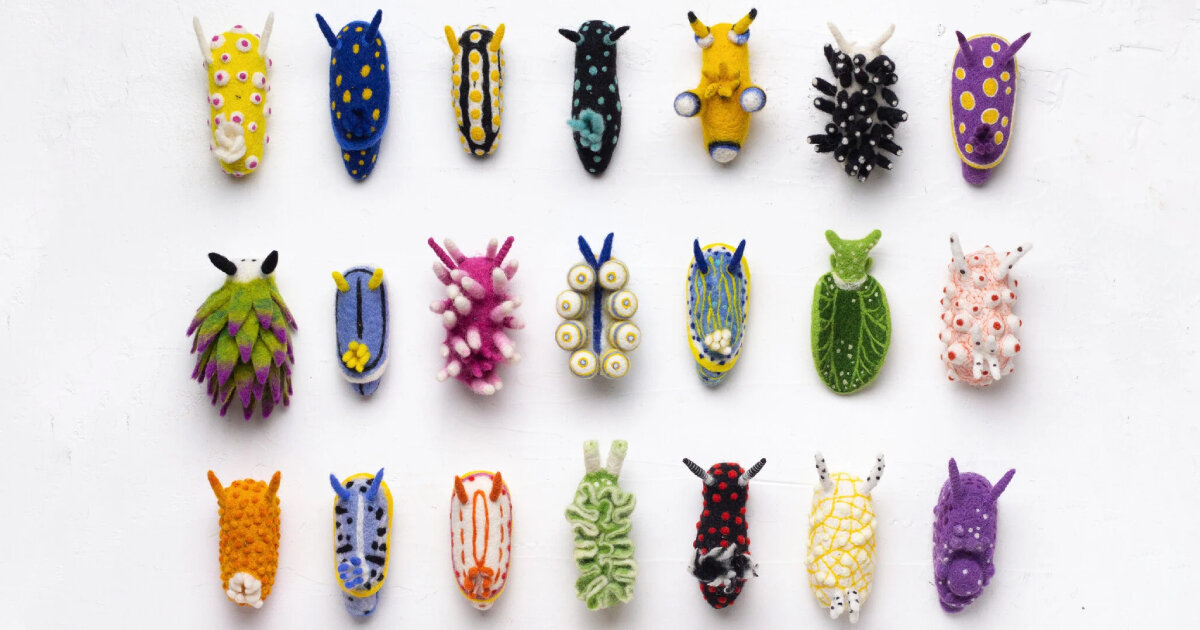
"Each nudibranch in this archive is three inches long, grown-up size, as the artist puts it, and each one is a faithful replica of a real species. The cerata, those finger-like projections on a nudibranch's back that serve as gills and defensive organs, are recreated individually in wool, each in the right shape and color for its species."
"Nudibranchs are a type of marine gastropod mollusk that lost their shells through evolution. In exchange, they developed some of the most intense colors in the natural world, serving as warnings to predators. Scientists call this aposematism, or defensive color signaling. There are over 3,000 known species, found in oceans, and each one looks different."
"The material used to recreate them here is 100 percent sheep wool, as the artist says, worked entirely by hand using a technique called needle felting. Across her collection, bright bodies with ringed spots and scattered dots appear alongside creatures with fronds fanning out like a leaf or lattice patterns around their surfaces."
Arina Bo creates hand-felted sculptures of nudibranchs, shell-less marine mollusks, using 100 percent sheep wool and needle felting techniques. Each three-inch sculpture accurately replicates a real nudibranch species, including anatomical features like cerata (gill-like projections), rhinophores (sensory horns), spotted patterns, and color outlines. Nudibranchs evolved to lose their shells and developed intense colors as defensive warnings to predators, a phenomenon called aposematism. Over 3,000 known species exist, each with unique appearances ranging from feathery gill plumes to raised bumps and ridges. Bo's collection translates these natural forms into soft sculptures, with bright bodies featuring ringed spots, scattered dots, fronds, and lattice patterns, all constructed layer by layer through individual needle pushes.
Read at designboom | architecture & design magazine
Unable to calculate read time
Collection
[
|
...
]