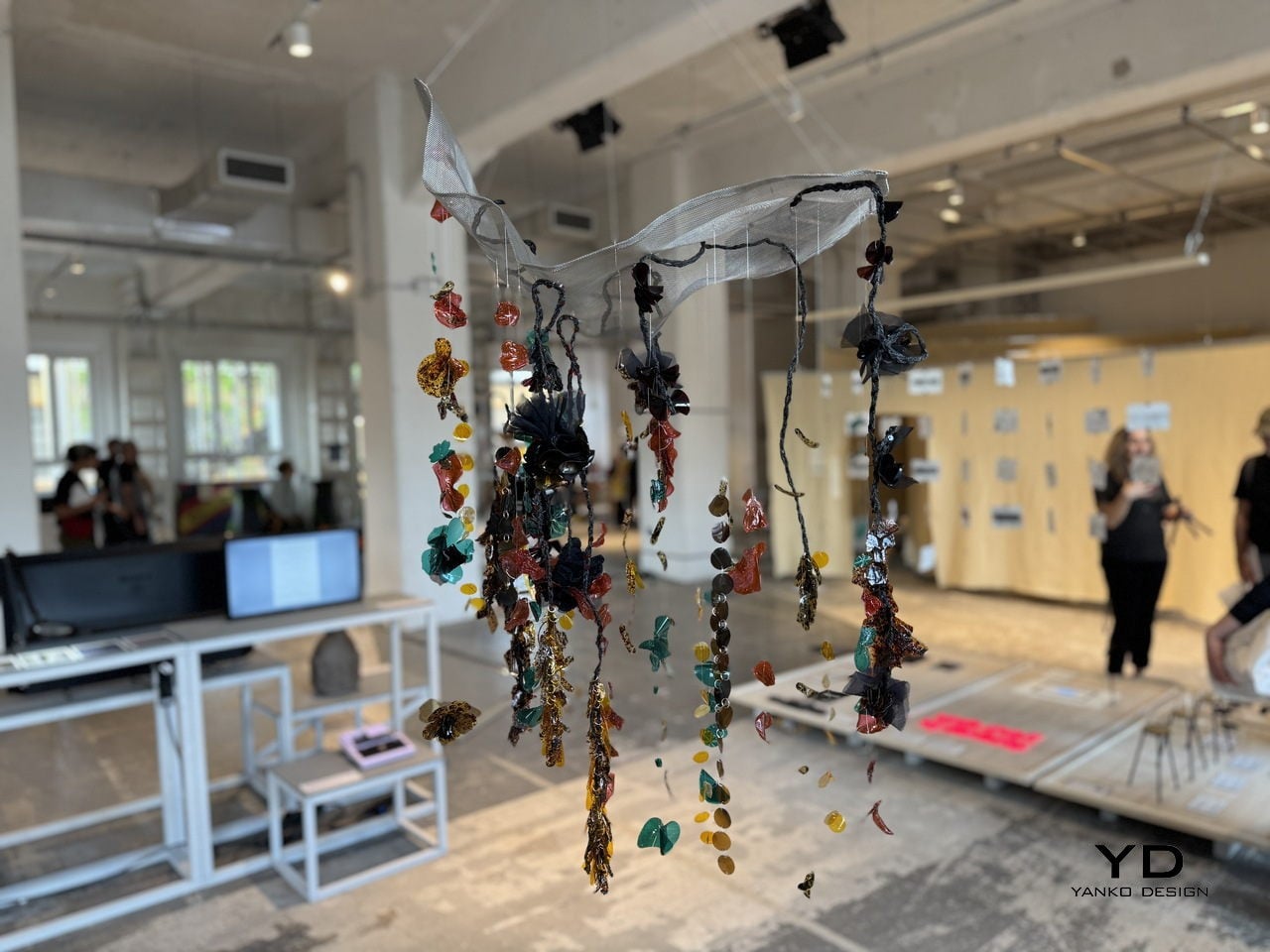
"Dyeing fabric is one of the most chemically intensive steps in garment production, and the wastewater that comes out of that process carries synthetic dyes, heavy metals, and other pollutants that routinely end up in rivers and soil."
"The process starts by running textile-dye wastewater through a detox capture system that uses food waste to pull out the contaminants. Once the water is cleaned and separated, the leftover sludge doesn't get thrown away."
"What makes the material particularly clever is how far it extends the concept of nothing wasted. It handles both synthetic-dye and natural-dye wastewater, keeping the synthetic version from ever reaching waterways."
"The sequins and embellishment pieces come out in deep blacks, jewel-like teals, warm ambers, rich reds, and tortoiseshell-patterned fragments that carry a high-shine finish."
The fashion industry faces significant pollution from dyeing fabrics, which releases harmful chemicals into the environment. CQ Studio has developed Detox Bio-Embellishments, transforming textile dye wastewater into sequins. This process cleans the wastewater using food waste, creating bio-based, biodegradable sheets that are die-cut into sequins. The method prevents synthetic dyes from contaminating waterways and allows natural dyes to be composted. The sequins produced are visually appealing, available in various colors, and do not rely on virgin plastic, showcasing a sustainable approach to fashion embellishments.
Read at Yanko Design - Modern Industrial Design News
Unable to calculate read time
Collection
[
|
...
]