#cancercare
#cancercare
[ follow ]
#breast-cancer #cancer #immunotherapy #health #cancer-research #healthcare #autoimmune-diseases #lung-cancer
fromwww.scientificamerican.com
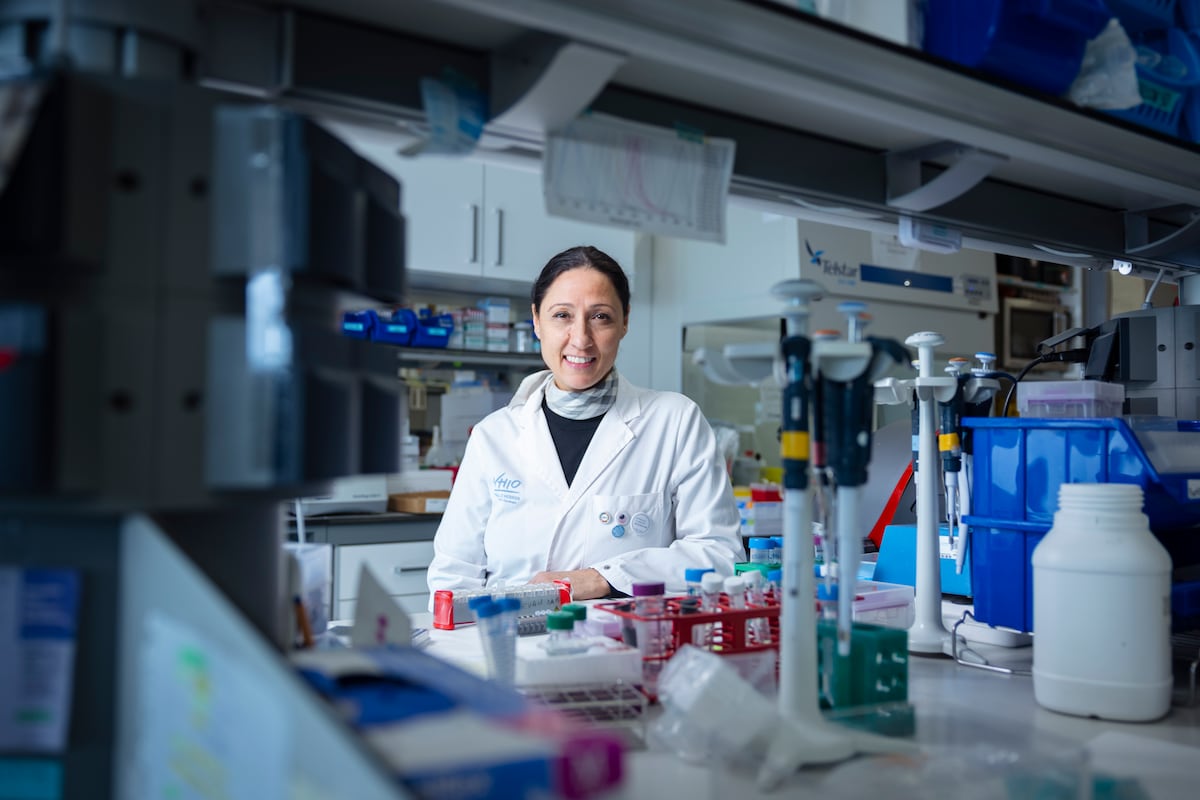
1 day agoElizabeth Roboz Einsteinthe determined genius behind a multiple sclerosis breakthrough
Elizabeth Roboz Einstein's journey began on May 15, 1940, when she boarded the Conte di Savoia, an Italian steamliner, leaving behind her family in Hungary as World War II escalated. This voyage was not a luxury cruise but a desperate evacuation for many, including 600 Central European refugees fleeing the advancing German troops.
History
fromJezebel
3 days agoICE Is Ignoring Woman's Life-Threatening Ovarian Cyst-and Her Condition Is Getting Worse
For over a month, my office has been going back and forth with ICE officials about Andrea's condition. We have been ignored, put off, and frankly, lied to about the treatment she has received while in detention.
US politics
fromPsychology Today
4 days agoHow Community-Based Healthcare Builds Engagement
Most people leave doctor visits with prescriptions, but still feel unsure—instructions make sense, but no one asks about their life. In contrast, when a provider knows your name, remembers your story, and explains care in a way that fits you, the experience feels different—and that difference matters.
Healthcare
fromPadailypost
4 hours agoStanford gets a green light for its plan for cancer hospital that could be 10 stories tall
Resident Mike Morris expressed that the project will burden the community, citing existing congestion on local roads. He stated, 'This is the wrong neighborhood for such a massive project.'
Cancer
fromWashingtonian - The website that Washington lives by.
3 weeks agoMeet the Leaders Helping to Create a World Without Blood Cancer - Washingtonian
The funds raised through Visionaries of the Year are used for research to advance lifesaving therapies like immunotherapy, genomics and personalized medicine, which are saving lives today.
Fundraising
fromIndependent
3 days ago'Living with a rare disease like Hurler syndrome hasn't held me back - it's given me the best life'
One in every 17 people has a rare disease - I'm one of those people. I have mucopolysaccharidosis type I. It's more commonly known as 'Hurler syndrome', but even when I use that term, no one I meet has ever heard of it.
Medicine
Social justice
fromTruthout
1 month agoFighting Cancer Has Given Me New Insights on the Anti-Fascist Challenge We Face
A cancer diagnosis at 15 prompted protective health decisions that ultimately led to discovering community organizing as a transformative path toward collective power and social justice work.




fromwww.dw.com
4 days agoMerck's Keytruda: A lifesaving drug, a global divide
Keytruda, first approved in 2014, belongs to a class of immunotherapy drugs that enable the immune system to attack cancer cells, extending survival for millions and transforming fatal diagnoses into manageable conditions.
Cancer
fromHoodline
1 month agoH+H's New Coney Island Cancer Center Could Double Patients
The revamped outpatient space folds in more infusion stations, extra exam rooms and added specialty clinics, which officials and neighborhood advocates hope will shrink travel times and long waits for patients across southern Brooklyn. The center now stretches South Brooklyn Health's outpatient cancer footprint with additional infusion bays, more exam rooms and extra clinical staff.
Miscellaneous
OMG science
fromHarvard Gazette
2 months agoWhy did that cancer cell become drug-resistant? - Harvard Gazette
TimeVault records and stores cellular gene-expression history inside living cells, enabling retrieval of past gene-activity information to study differentiation, stress responses, adaptation, and drug resistance.
fromHarvard Gazette
2 months agoAmericans living longer after cancer diagnosis - Harvard Gazette
New findings on cancer survival rates offer hope for the more than 2 million Americans diagnosed each year. Seven out of 10 Americans diagnosed with cancer now survive five years or more, according to the American Cancer Society, a 7 percent increase since the mid-1990s, when the rate stood at 63 percent. The survival rate data - from patients diagnosed with cancer between 2015 and 2021 - showed, significantly, that those with high-mortality cancers and advanced diagnoses had the largest gains.
Public health
Cancer
fromNonprofit Quarterly | Civic News. Empowering Nonprofits. Advancing Justice.
1 week agoThe Birth Control Pill and Cancer: What Are the Risks? | Nonprofit Quarterly | Civic News. Empowering Nonprofits. Advancing Justice.
Hormonal birth control pills can increase cancer risk but also decrease it; the WHO's classification as a carcinogen is nuanced and not new.
Medicine
fromSlate Magazine
1 month agoAt 42, With Three Young Kids, I Got a Diagnosis That Would Have Me Dead in a Year. That Was Somehow Just the Beginning.
A 42-year-old man was diagnosed with cholangiocarcinoma, a rare and aggressive bile duct cancer with a 10% five-year survival rate, after initially presenting with jaundice symptoms.
fromwww.scientificamerican.com
2 months agoLung cancer hijacks the brain to trick the immune system
For years, scientists have viewed cancer as a localized glitch in which cells refuse to stop dividing. But a new study suggests that, in certain organs, tumors actively communicate with the brain to trick it into protecting them. Scientists have long known that nerves grow into some tumors and that tumors containing lots of nerves usually lead to a worse prognosis.
Science
#lung-cancer
Cancer
fromwww.theguardian.com
3 weeks agoI have stage four cancer there will be no cure, but death isn't necessarily imminent: this is how it feels to live in the long middle
Stage four lung cancer transforms breath into a finite currency, dictating daily life and relationships amidst medical advancements that extend survival.
fromNature
2 months agoDaily briefing: More than one-third of cancer cases are preventable
Nearly 40% of new cancer cases worldwide are potentially preventable, according to a new analysis. The study found that in 2022, smoking tobacco was the leading contributor to cancer cases, followed by infections and drinking alcohol. Reducing such risk factors is "one of the most powerful ways that we can potentially reduce the future cancer burden", says cancer epidemiologist and study co-author Hanna Fink.
Public health
Cancer
fromBusiness Insider
1 month agoStop ignoring subtle signs of cancer. A doctor explains when to get medical help.
Early cancer symptoms are often subtle and easily missed, including unexplained fatigue, persistent pain, and digestive changes; persistent symptoms lasting over a week warrant medical evaluation.
fromwww.bbc.com
1 month agoPolice probe breast cancer treatment allegations
A report last year found unnecessary surgeries were carried out, cancers were missed and poor standards of care were delivered at the University Hospital of North Durham and Darlington Memorial Hospital. CDDTF said it wanted to support the patients it had let down, including by offering access to psychological support, and to ensure they knew how to make a claim or raise concerns with police.
Cancer
fromenglish.elpais.com
3 months agoA vaccine to prevent colon cancer shows promising results
Eduardo Vilar-Sanchez has spent more than 10 years pursuing a goal that seemed very distant, but which he now sees as a little closer: to develop a preventive vaccine against cancer. The physician and researcher is leading a study that presented the first promising results of a colon cancer vaccine in a small group of patients suffering from a rare disease that makes them 17 times more likely to develop colon cancer than the general population.
Medicine
Medicine
fromwww.theguardian.com
2 months agoSimple blood test can predict which breast cancer treatment will work best, study finds
A blood test measuring circulating tumour DNA predicts breast cancer treatment response before or within four weeks, enabling alternative therapies and avoiding ineffective drugs.
Cancer
fromwww.theguardian.com
1 month agoThe Guardian view on cancer survival rates: there is good news about healthcare amid the gloom | Editorial
Cancer mortality in the UK has dropped 29% over 40 years, though recent progress has slowed with rising deaths from certain cancers and persistent treatment delays.
[ Load more ]