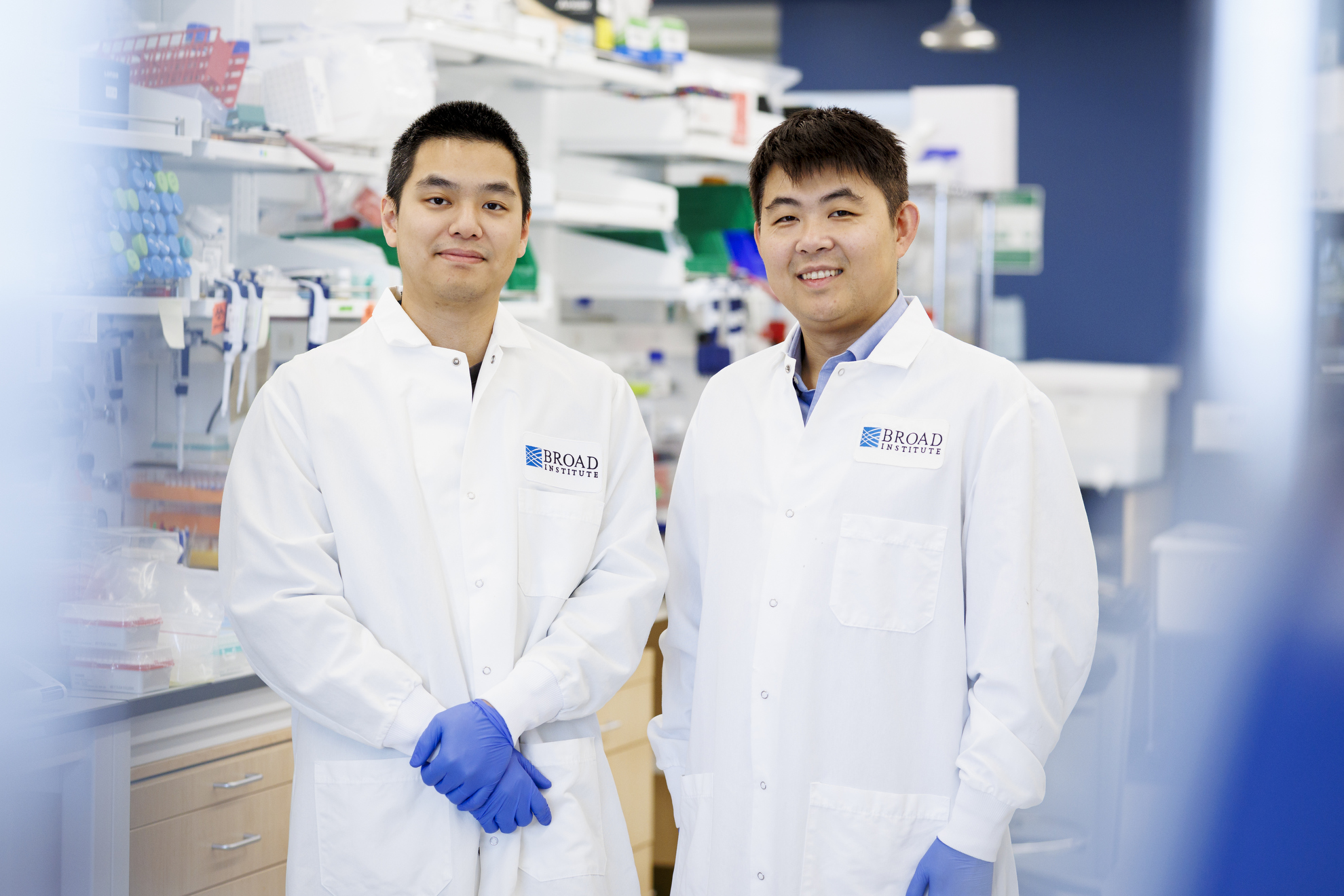
""It's like a time machine for the cell," said Fei Chen, associate professor of stem cell and regenerative biology and a core member of the Broad Institute of MIT and Harvard, who led the new study. "You can look at a cell now to see how its past influences the present - for example, what genes were turned on in the past to cause a cancer cell to become resistant to drugs.""
""Dubbed "TimeVault," the new technique was published Jan. 15 in Science. It aims to surmount a longstanding limitation in cell research and offer a new tool for studying topics such as cell differentiation, response to stress, adaptation, or drug resistance. Biologists have long sought methods to study the life history of cells and the molecular changes that unfold during processes such as development and disease.""
TimeVault creates intracellular time capsules that permanently record gene expression events inside living cells for later retrieval. The technique preserves an archival record of gene activity that survives beyond transient RNA signals and allows retrospective analysis of how past gene activation influenced present cell state, including differentiation, stress response, adaptation, or drug resistance. Conventional RNA sequencing provides only destructive snapshots and cannot capture temporal histories. Early attempts using bacterial encapsulin proteins underperformed, prompting exploration of naturally occurring vault structures as a storage medium for encoded molecular records within cells. Recovered records enable investigation of life-history influences on disease progression and treatment outcomes.
Read at Harvard Gazette
Unable to calculate read time
Collection
[
|
...
]