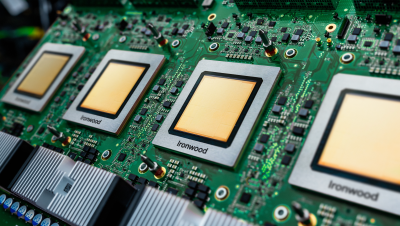
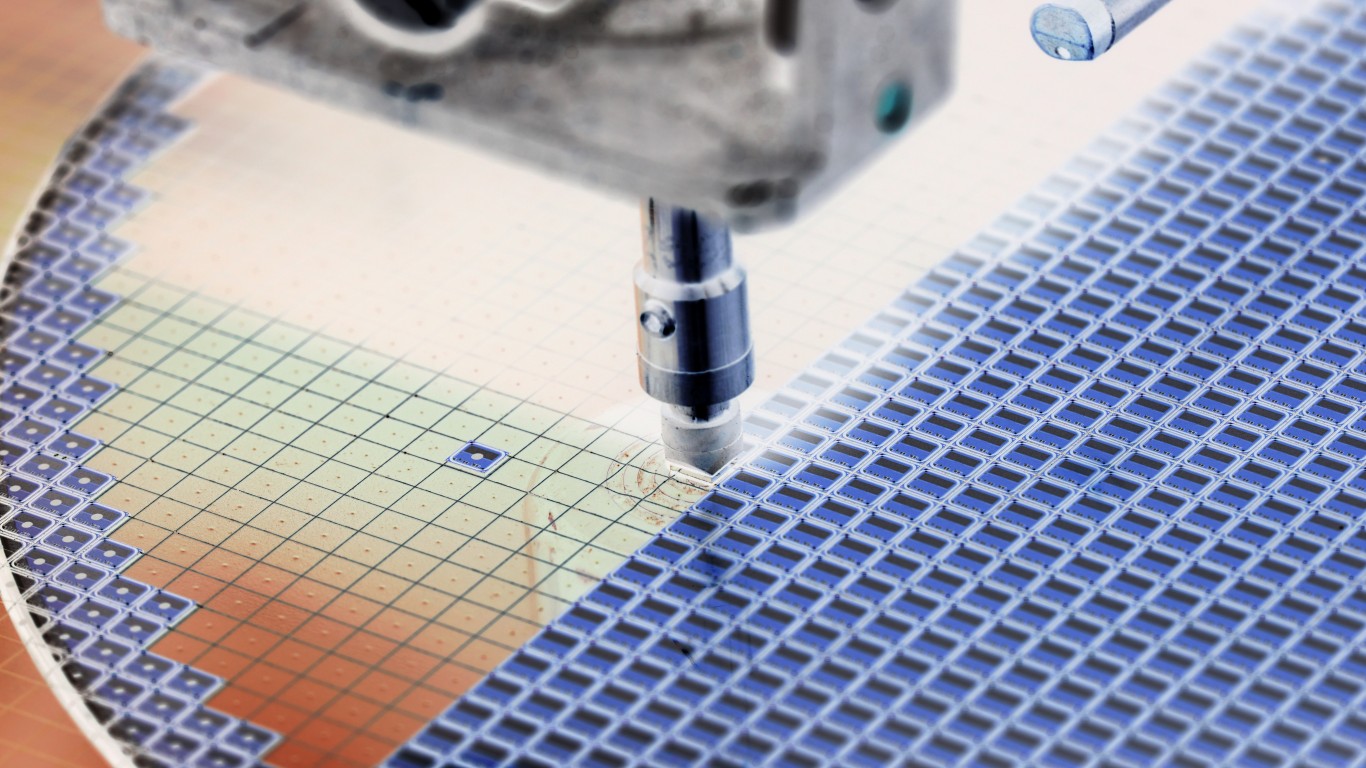
Alphabet ( NASDAQ:GOOG )( NASDAQ:GOOGL ) has reportedly reduced its 2026 production target for Tensor Processing Units from around 4 million to 3 million units. According to a report by Korea Economic Daily, this adjustment stems from limited access to Taiwan Semiconductor's CoWoS advanced packaging capacity, which Nvidia ( NASDAQ:NVDA ) secured through priority allocations. CoWoS integrates processors with high-bandwidth memory on a silicon interposer, essential for high-performance AI accelerators. Without sufficient capacity, finished chips cannot deploy at scale. Other outlets have reported on production caps previously.
Marvell ( NASDAQ:MRVL) is one of the hidden gems that is about to get more spotlight. The custom AI chipmaker's stock is down by more than 20% year-to-date, but its revenue and earnings have soared during this time. This mismatch, combined with insatiable demand for AI chips, suggests Marvell is an underrated AI stock. Marvell is one of the companies that produces custom AI chips for big tech. These chips can't handle every task under the sun like Nvidia's GPUs, but they address specific workloads at a much lower price.
All three are riding the AI megatrend and have strong revenue visibility beyond 2026. These companies are on the "frontline" when it comes to AI hardware. Data centers are being built out at a record pace, and is not the only company that is benefiting from it. The market is starting to move past NVDA stock and is pouring into other satellite AI beneficiaries who are seeing explosive upward momentum one after the other.
The stock market is quickly waking up to the fact that is the leading AI software company today. It has overtaken and is less than $200 billion away from overtaking as the world's second-largest company. Overtaking the AI hardware leader, will take a bit more work, as it has a $755 billion lead over Google. Fortuitously for Google, that number is a drop in the bucket these days for Wall Street.
The AI stock boom has lost a lot of momentum in recent weeks due, in part, to worries that so-called hyperscalers aren't correctly accounting for the depreciation in the hoard of chips they've purchased to power chatbots. Michael Burry-the investor of Big Short fame who famously predicted the 2008 housing collapse-sounded the alarm last month when he warned AI-era profits are built on "one of the most common frauds in the modern era," namely stretching the depreciation schedule.
Tiiny AI, a US-based deep-tech startup, has unveiled the Pocket Lab, officially verified as the "world's smallest personal AI supercomputer." This palm-sized device, no larger than a typical power bank, is capable of running large language models (LLMs) with up to 120 billion parameters entirely on-device, without relying on cloud servers or external GPUs. Designer: Tiiny AI At its core, the Pocket Lab aims to make advanced artificial intelligence both personal and private.
Interview Naveen Rao founded AI businesses and sold them to Intel and Databricks. He's now turned his attention to satisfying AI's thirst for power and believes his new company, Unconventional AI, can do it by building chips inspired by nature. On Monday, Rao revealed Unconventional AI raised $475 million in seed funding from Andreessen Horowitz, Lightspeed, Jeff Bezos, and others, to answer the question.
Apple just lost a top design talent. Meta has hired Alan Dye, who was the head of Apple's human interface design team. The company is filling his position with Stephen Lemay, who CEO Tim Cook told Bloomberg "has played a key role in the design of every major Apple interface since 1999." Before being poached by Meta to become its chief design officer, Dye worked at Apple since 2006, where he oversaw projects including Liquid Glass and Vision Pro.
But they are wrong. These arguments assume that China cannot succeed in AI without access to these advanced AI chips, which is not the case. Advanced AI chips simply reduce the cost of AI. Today's state-of-the-art AI models require a large number of AI chips to build and run. An advanced chip has higher performance; therefore, fewer are needed to achieve the same AI performance.
The price of some cloud services will have to rise by five to ten percent by mid-2026, maybe sooner, according to Octave Klaba, CEO of French cloud OVH. In a weekend post to his X account, Klaba opened with the observation that the price of RAM and NVMe drives will increase significantly in around six months. The CEO attributed that increase to demand for AI hardware, which he said has seen memory-makers shift production to the HBM memory used in GPUs.
Google parent Alphabet ( NASDAQ:GOOG )( NASDAQ:GOOGL ) is often seen as a core tech giant focused on search, advertising, and cloud computing. Yet beneath its main operations lies a quieter side: a venture arm that invests in promising companies in areas like space tech, geospatial data, and semiconductors. These bets target innovations adjacent to Alphabet's ecosystem, such as enhanced connectivity for Android devices, Earth observation for AI-driven mapping in Google Earth, and efficient chip designs for data centers powering Google Cloud.
In recent years, though, my dictaphone collection has taken on a new, less physical form. Google's Pixel phones have been a revelation for journalists, offering real-time, on-device transcription through the Recorder app. I've often found myself bringing a Pixel along to a press event even if I wasn't actively using it as a phone at the time-the ability to get an automatic transcript once your recording is done has been an incredible timesaver.
Valuations further differentiate the periods: dotcom tech stocks often traded at 150 to 180 times trailing earnings, while current AI frontrunners average around 40 times. Some AI hardware purchasers have reported improved return on ivested capital (ROIC), but results vary across the industry. This solid groundwork distinguishes AI from historical bubbles and primes leading companies like Nvidia for substantial expansion.