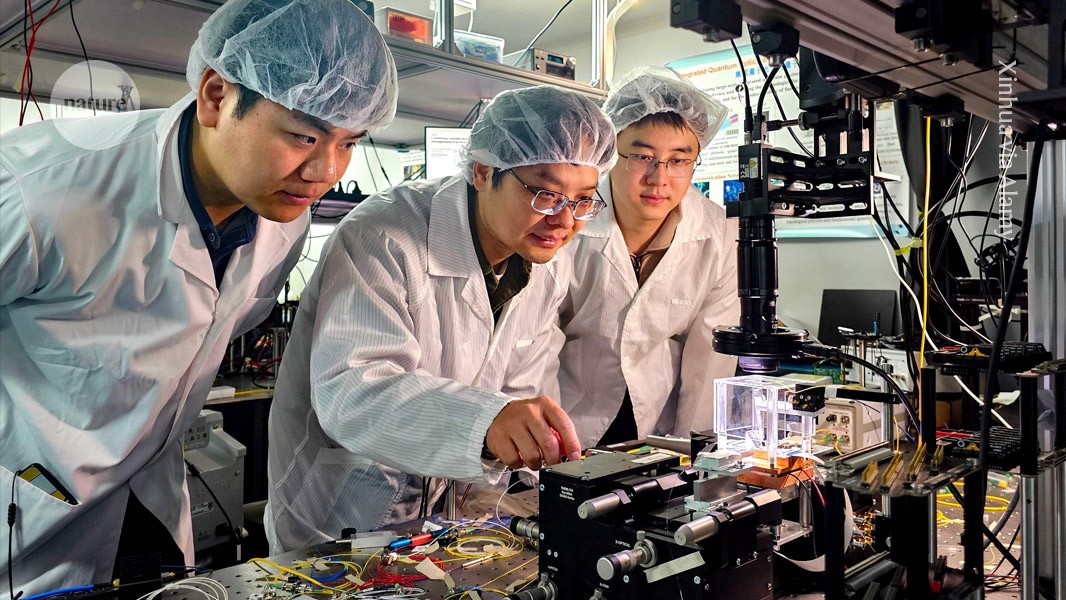
"As generative artificial-intelligence models become more sophisticated and eat up more energy to produce images and videos, the electronic chips that power them are reaching their limits of speed and efficiency. Optical chips - semiconductor chips that run on light rather than electricity - could solve these problems, say researchers working in the field. Such chips, also called photonic chips, are still years away from being integrated into consumer computers and are unlikely to wholly replace electronic chips."
""China has for the past decade invested strategically in infrastructure, capability and talent" in this field, says Ben Eggleton, a physicist at the University of Sydney, Australia. Eggleton, who was the editor-in-chief of APL Photonics for more than a decade until his tenure ended in December 2025, says that he has seen an increase in the number of high-quality publications on photonic chips from China."
Generative AI models increasingly consume large amounts of energy for image and video production, pushing electronic chips to limits of speed and efficiency. Photonic chips, which use light instead of electricity, offer a potential path to higher performance and energy efficiency but remain years from consumer integration and are unlikely to fully replace electronic chips. Research in photonic chips has expanded rapidly over the past five years, with China leading growth. Chinese-authored papers on optical chips grew tenfold between 2017 and 2025, with 476 papers published last year. US output more than doubled in the same period. US export controls on advanced electronic chips and manufacturing equipment have increased incentives to pursue optical computing for high-performance AI.
Read at Nature
Unable to calculate read time
Collection
[
|
...
]