The life insurance industry has always found itself between a rock and a hard place.On the one hand, they naturally want the bereaved families to benefit from the policyholder's life insurance.
Shortly after Elon Musk purchased Twitter, in 2022, he claimed that "removing child exploitation is priority #1." It was certainly a noble goal-social-media sites had become havens for distributing abusive materials, including child pornography and revenge porn, and there was perhaps no major platform as openly hospitable to such content as Twitter. Unlike Facebook, Instagram, and TikTok, which restricted nudity and pornographic videos, Twitter allowed users to post violent and "consensually produced adult content" to their feeds without consequence.
While the holiday season typically drives stronger demand, the surge in late 2025 was further amplified by emerging memory shortages that led buyers and brands to secure inventory ahead of anticipated price increases in 2026,
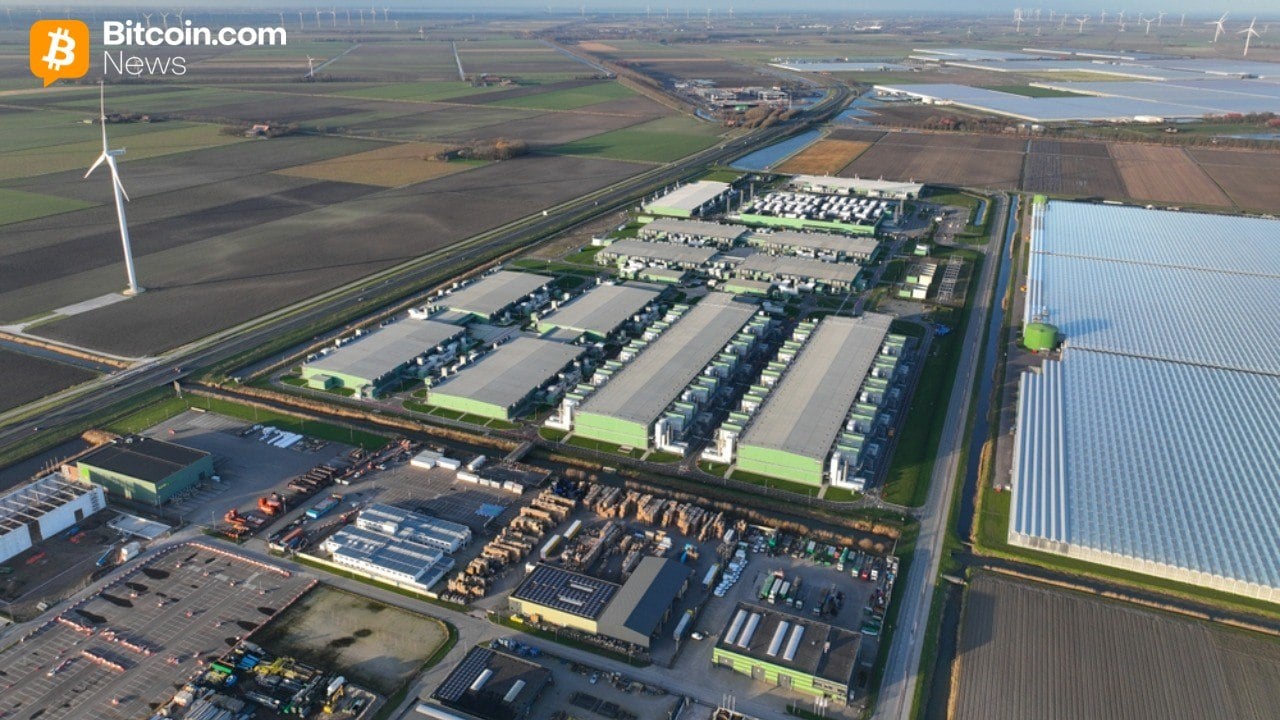
On Tuesday, Microsoft promised to take the "steps needed to be a good neighbor in the communities where we build, own, and operate our data centers." That includes, according to the company, its plans to "pay its own way" to ensure that local electricity bills don't go through the roof in the places where it builds. Specifically, the company says it will work with local utility companies to ensure that the rates it pays cover its full share of its burden on the local grid.
Memory makers just can't churn out their DRAM fast enough. On the heels of an AI-driven shortage, SK Hynix on Tuesday announced a new 19 trillion Korean won (about $13 billion) advanced packaging and test facility in South Korea that could offer some relief - just not for consumer products like laptops and phones. The South Korean memory giant unveiled the new site, dubbed P&T7, which will be located at the Cheongju Technopolis Industrial Park in Chungbuk, South Korea.
Just weeks after raising the price of its RAM modules, Framework has announced that it's also increasing the price of its desktop PC in response to the global memory shortage. The Framework Desktop with 32GB of RAM and an AMD Ryzen AI Max 385 chip now starts at $1,139, instead of $1,099. "We held off on it for as long as we could, but we had to update our Framework Desktop pricing today to account for the massive increase in LPDDR5x pricing from our suppliers," Framework says in a post on X.
Linux Mint 22.3 Zena is a classic point release. There's nothing earth‑shattering in this release, but it boasts polish, quality‑of‑life fixes, and Cinnamon desktop refinements. This update makes Mint, once more, one of the best desktops for people who just want their PC to work. If you liked Mint 22.1 and 22.2, 22.3 feels like the next logical distro you'll want to live in until Mint 22.x is no longer supported in 2029.
Chinese authorities have signalled they'll likely probe Meta's planned acquisition of made-in-China AI platform Manus. Meta announced the acquisition on December 29, 2025, and said Manus will become part of its consumer and business products. On Thursday, a spokesperson for China's Ministry of Commerce said Beijing intends to investigate the acquisition to ensure it won't infringe China's export controls or foreign investment laws.
The memory chip stocks have been really heating up to start the year, thanks in part to the AI-driven RAM shortage, which could last well into the year's end and perhaps beyond. Undoubtedly, AI demand is showing no signs of slowing down, and as the high-performance memory needs continue to blast off, questions linger as to how the top memory players can step up to meet the needs of this unprecedented boom.
It seems that until now, Minecraft has generated its baby animals by scaling down the body size of their adult forms, but keeping the heads the same. And that's good. That's worked. But there was room for improvement. In the next update, due in the spring, all the game's younger animals will receive bespoke designs, complete with all-new animations, sound effects, and the cutest iddle widdle eyes you've ever seen.
Cisco aims to "build high-fidelity quantum networks to unlock the potential for large-scale quantum data centers," Kompella told Telecompetitor in an interview. The company is working closely with IBM on the research, with IBM's role focused primarily on the computing side, while Cisco tackles the networking side. Quantum computers use concepts of quantum physics. They're more powerful than traditional non-quantum computers, known in quantum jargon as "classical" computers. But, as of today, there is no way to network quantum computers.
The move suggests the two companies, while partners today, could start taking each others' business. Faculty was founded in the UK by New Zealand-born physicist Marc Warner in 2014, ostensibly to make AI useful to the world and "safely deliver the AI revolution." The company works with customers on AI strategy, design, infrastructure, development, and operations and creates a computational twin of an organization to simulate and refine business decisions.
Uber's line of robotaxis that are set to hit the road in San Francisco sometime later this year made their big public debut at the Consumer Electronics Show in Las Vegas on Monday. We first heard about Uber's revived autonomous taxi project back in October, with the plan revealed involving a partnership with Lucid Motors, and self-driving tech startup Nuro. The first prototype was seen in images at TechCrunch Disrupt, and the companies revealed plans to have the robotaxis begin serving customers in San Francisco by late 2026.
The game was first spotted by reverse engineer Alessandro Paluzzi, who often finds unreleased features while they're still under development. Paluzzi shared a screenshot of the basketball game, which appears to let users virtually shoot hoops by swiping their finger. The idea behind the game is likely to allow friends to compete to see who can score the most baskets, similar to other mobile basketball games.
Elon Musk's AI chatbot Grok has been accused of generating non-consensual sexualized images of real people, including children. Over the past week, X has been flooded with manipulated photos that remove people's clothes, dress them in bikinis, or rearrange them into sexually suggestive positions. The nonconsensual images have left some women feeling violated. Meanwhile, their creation using Grok and their presence on X may land Musk's company in significant legal trouble in several countries around the world.