#william-b-coley
#william-b-coley
[ follow ]
#cancer-research #breast-cancer #immunotherapy #pancreatic-cancer #oncogenes #mitochondria #car-t-cell-therapy

fromWashingtonian - The website that Washington lives by.
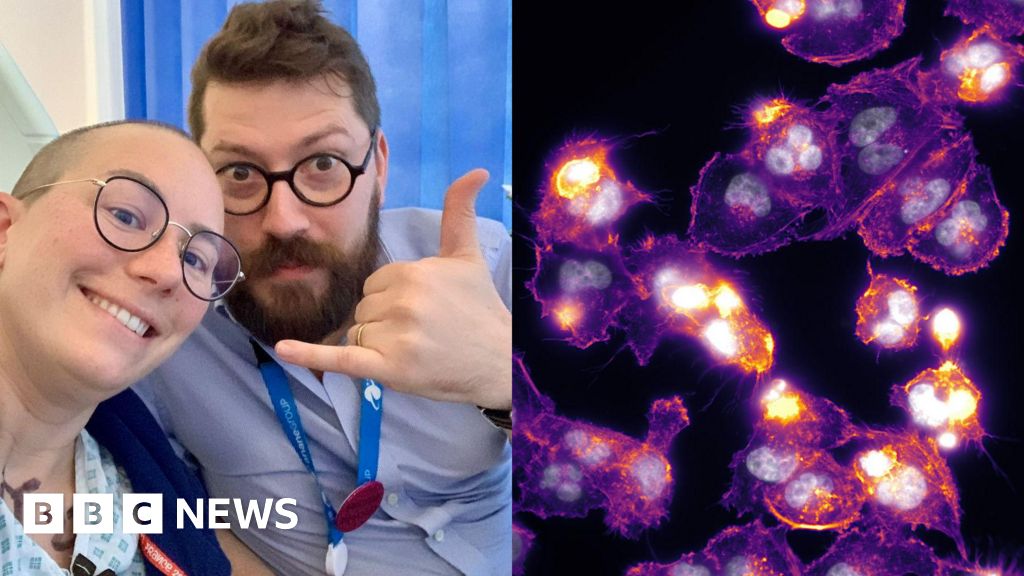
3 weeks agoMeet the Leaders Helping to Create a World Without Blood Cancer - Washingtonian
The funds raised through Visionaries of the Year are used for research to advance lifesaving therapies like immunotherapy, genomics and personalized medicine, which are saving lives today.
Fundraising
fromNature
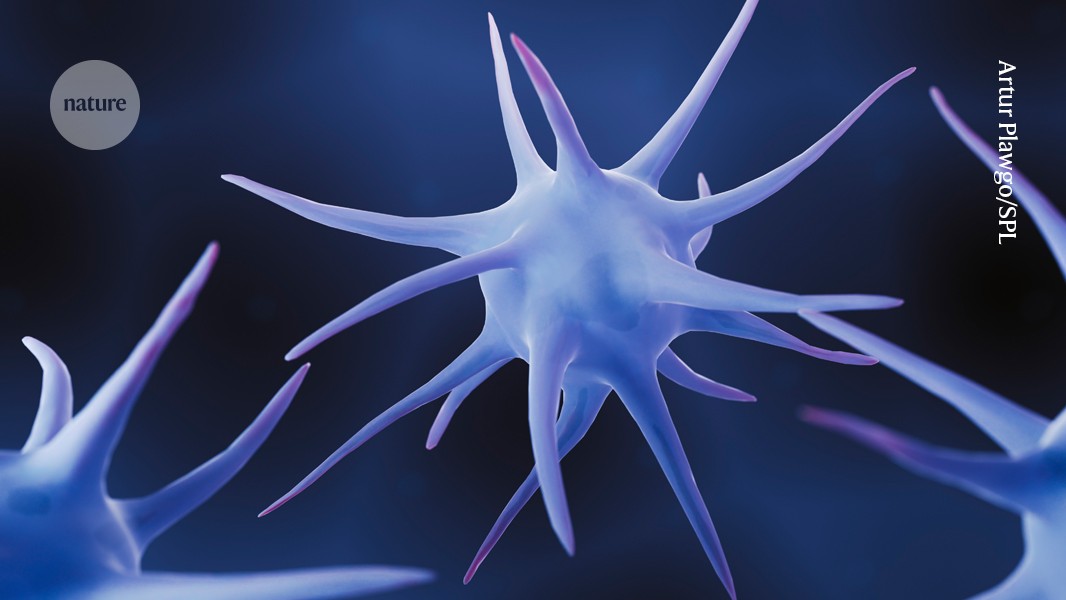
1 month agoMasked mitochondria slip into cells to treat disease in mice
When mitochondria are exposed to tissue or blood, they lose the electrical gradient across their outer membrane. Mitochondria that lack such a gradient are recognized by a cell's internal machinery as damaged and quickly destroyed. The vast majority of previous studies involved injecting 'naked' mitochondria directly into the bloodstream or tissue sites, but the approach isn't very efficient, so researchers often have to use 'ridiculous' doses of mitochondria.
Medicine
fromThe Washington Post
3 weeks agoJ. Michael Bishop, who illuminated genetic roots of cancer, dies at 90
Dr. Bishop and Varmus showed that oncogenes - genes that cause cancer - are not foreign genes introduced into the body by viruses, as was widely believed at the time. Instead, normal versions of oncogenes are present in healthy cells, where they help regulate normal growth.
Cancer

OMG science
fromHarvard Gazette
2 months agoWhy did that cancer cell become drug-resistant? - Harvard Gazette
TimeVault records and stores cellular gene-expression history inside living cells, enabling retrieval of past gene-activity information to study differentiation, stress responses, adaptation, and drug resistance.
fromHoodline
1 month agoH+H's New Coney Island Cancer Center Could Double Patients
The revamped outpatient space folds in more infusion stations, extra exam rooms and added specialty clinics, which officials and neighborhood advocates hope will shrink travel times and long waits for patients across southern Brooklyn. The center now stretches South Brooklyn Health's outpatient cancer footprint with additional infusion bays, more exam rooms and extra clinical staff.
Miscellaneous
fromHarvard Gazette
2 months agoAmericans living longer after cancer diagnosis - Harvard Gazette
New findings on cancer survival rates offer hope for the more than 2 million Americans diagnosed each year. Seven out of 10 Americans diagnosed with cancer now survive five years or more, according to the American Cancer Society, a 7 percent increase since the mid-1990s, when the rate stood at 63 percent. The survival rate data - from patients diagnosed with cancer between 2015 and 2021 - showed, significantly, that those with high-mortality cancers and advanced diagnoses had the largest gains.
Public health
fromArs Technica
2 months agoNIH head, still angry about COVID, wants a second scientific revolution
At the end of January, Washington, DC, saw an extremely unusual event. The MAHA Institute, which was set up to advocate for some of the most profoundly unscientific ideas of our time, hosted leaders of the best-funded scientific organization on the planet, the National Institutes of Health. Instead of a hostile reception, however, Jay Bhattacharya, the head of the NIH, was greeted as a hero by the audience, receiving a partial standing ovation when he rose to speak.
US politics
fromwww.scientificamerican.com
2 months agoLung cancer hijacks the brain to trick the immune system
For years, scientists have viewed cancer as a localized glitch in which cells refuse to stop dividing. But a new study suggests that, in certain organs, tumors actively communicate with the brain to trick it into protecting them. Scientists have long known that nerves grow into some tumors and that tumors containing lots of nerves usually lead to a worse prognosis.
Science
fromwww.nature.com
2 months agoAuthor Correction: The genomic landscape of response to EGFR blockade in colorectal cancer
In Extended Data Fig. 8 of this article, a micrograph shown in the left column (panel AZD) was inadvertently duplicated during figure preparation. The intended image was meant to show phospho-ERK (P-ERK) levels in a MAP2K1-mutant patient-derived xenograft (PDX) exposed to the MEK inhibitor AZD6244 (AZD). However, this image was accidentally overlaid with a micrograph from Extended Data Fig. 10 (left column, panel PAN), which displays P-ERK levels in an EGFR-mutant PDX exposed to panitumumab (PAN).
fromenglish.elpais.com
3 months agoA vaccine to prevent colon cancer shows promising results
Eduardo Vilar-Sanchez has spent more than 10 years pursuing a goal that seemed very distant, but which he now sees as a little closer: to develop a preventive vaccine against cancer. The physician and researcher is leading a study that presented the first promising results of a colon cancer vaccine in a small group of patients suffering from a rare disease that makes them 17 times more likely to develop colon cancer than the general population.
Medicine
fromBrooklyn Eagle
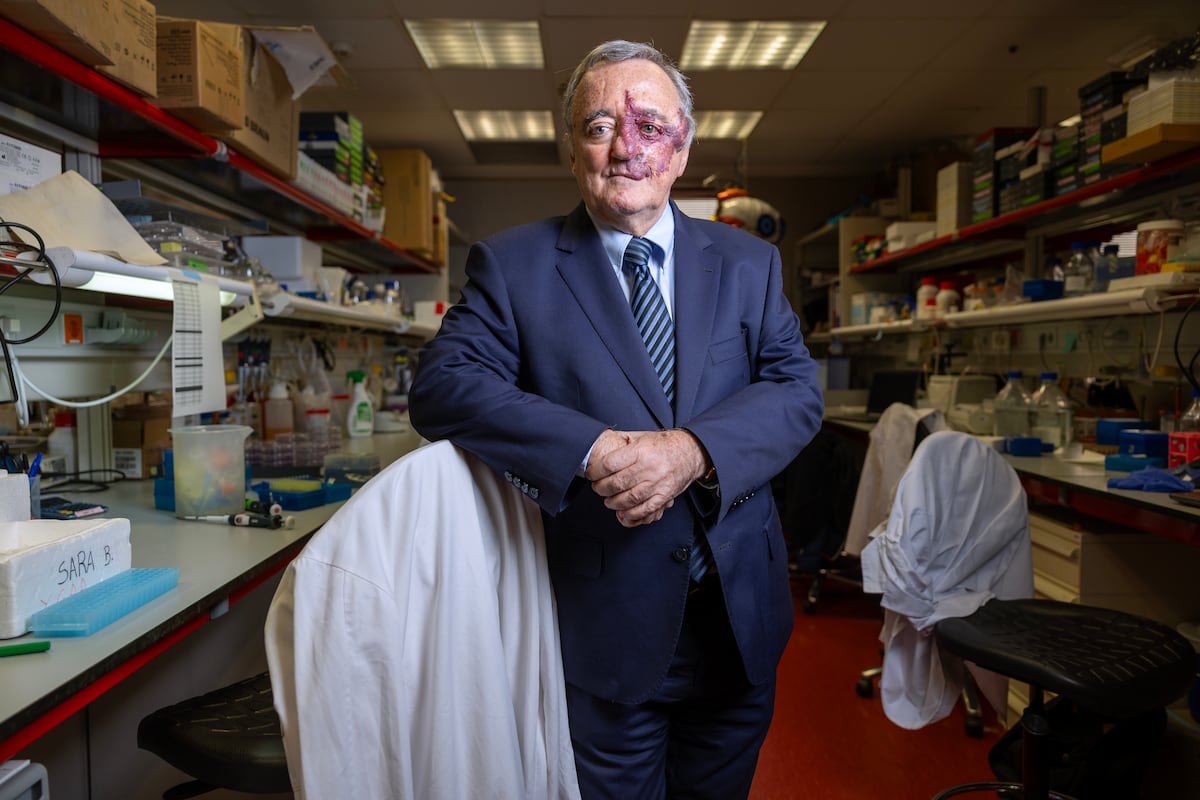
2 months agoDr. Anirban Maitra brings extensive GI oncology leadership as new director of Perlmutter Cancer Center
CITYWIDE - NYU LANGONE HEALTH HAS APPOINTED DR. ANIRBAN MAITRA, a leader in gastrointestinal oncology, as the new director of its Laura and Isaac Perlmutter Cancer Center, an NCI-designated Comprehensive Cancer Center. Dr. Maitra is a preeminent physician-scientist whose work has widely influenced the field of pancreatic cancer research. As the inaugural scientific director of the Pancreatic Cancer Research Center at the University of Texas MD Anderson Cancer Center in Houston, Dr. Maitra focused his work on early detection and biomarker development, considered two key avenues for effective cancer treatments.
Medicine
Cancer
fromenglish.elpais.com
1 month agoDouglas Hanahan, biologist: We don't necessarily need a cure, what we really need is cancer without disease'
Cancer cells acquire hallmarks: uncontrolled proliferation, evasion of growth barriers, resistance to programmed death, and relative immortality, driving tumor diversity and treatment variability.
fromLGBTQ Nation
1 month agoA cure for HIV is in sight. Here's what scientists are working on. - LGBTQ Nation
I'm certainly confident that we're going to have a breakthrough within my career, and I have a good 10 to 15 years left. While antiretroviral (ARV) therapies are extending lives and keeping HIV at bay, and PrEP has the potential to effectively halt transmission of the virus, a cure has remained elusive. That's because the HIV virus itself is elusive, both co-opting the immune system and hiding from it.
Medicine
[ Load more ]