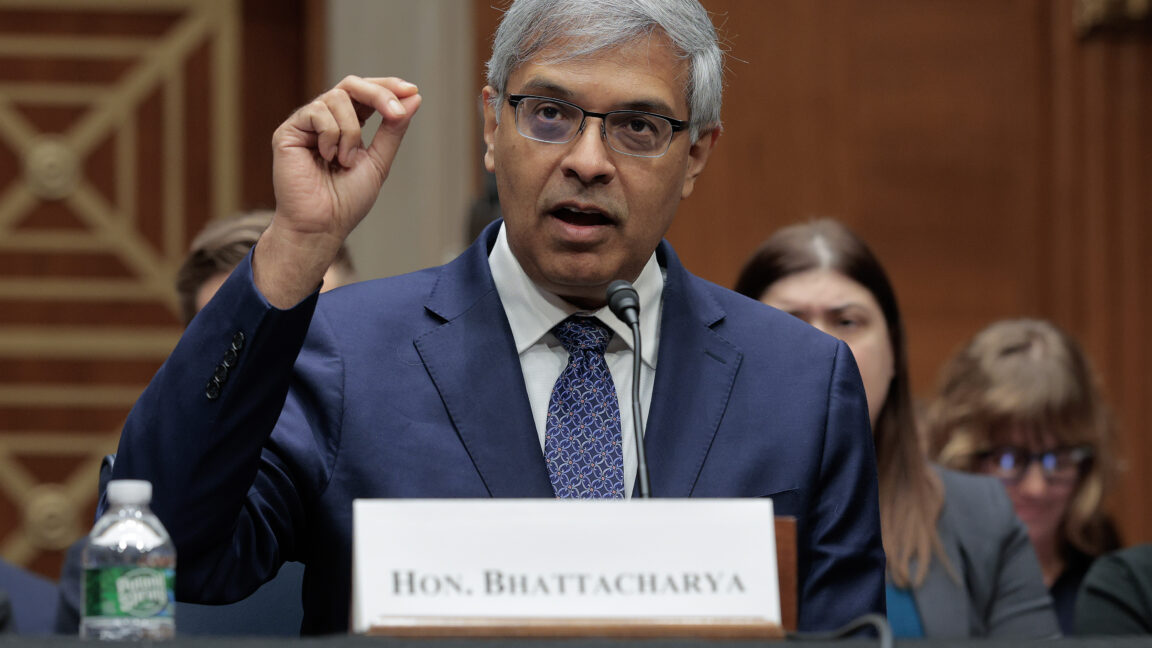
"At the end of January, Washington, DC, saw an extremely unusual event. The MAHA Institute, which was set up to advocate for some of the most profoundly unscientific ideas of our time, hosted leaders of the best-funded scientific organization on the planet, the National Institutes of Health. Instead of a hostile reception, however, Jay Bhattacharya, the head of the NIH, was greeted as a hero by the audience, receiving a partial standing ovation when he rose to speak."
"Over the ensuing five hours, the NIH leadership and MAHA Institute moderators found many areas of common ground: anger over pandemic-era decisions, a focus on the failures of the health care system, the idea that we might eat our way out of some health issues, the sense that science had lost people's trust, and so on. And Bhattacharya and others clearly shaped their messages to resonate with their audience."
Leaders of the National Institutes of Health attended a MAHA Institute event and received an unexpectedly positive reception, including a partial standing ovation for Jay Bhattacharya. NIH participants and MAHA moderators found common ground on anger about pandemic-era decisions, criticisms of health-care system failures, dietary approaches to health, and public distrust of science. Bhattacharya proposed a "second scientific revolution" containing some constructive ideas that fall short of transformative change. His motivation appears tied to lingering pandemic anger and to emulating prior political disruptions of research, producing inconsistencies between claims and reality and signaling potential tensions in NIH direction.
Read at Ars Technica
Unable to calculate read time
Collection
[
|
...
]