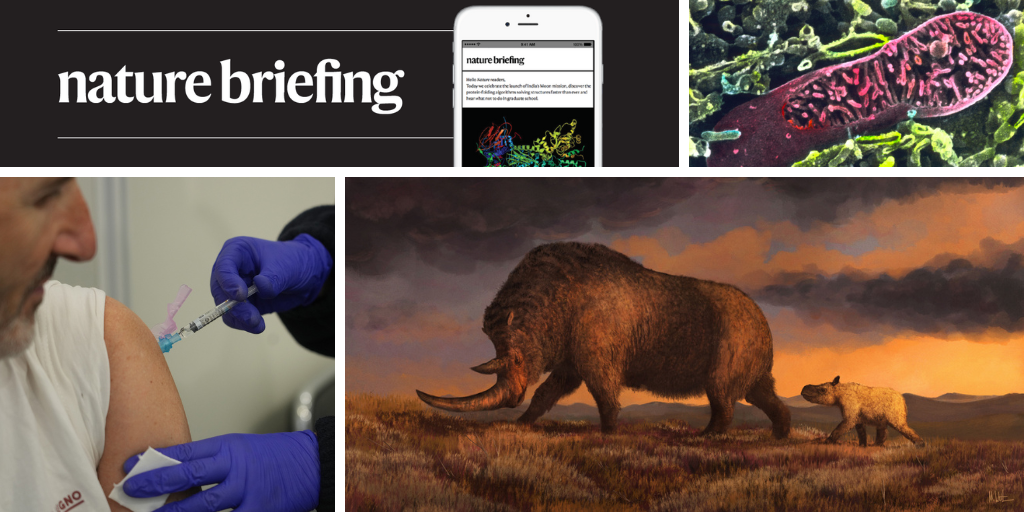
Some cancer cells steal mitochondria from immune cells, which both weakens those immune cells and triggers a metabolic pathway in cancer cells that promotes immune evasion and invasion of lymph nodes. That pathway can be activated even when the stolen mitochondria cannot produce ATP, indicating mechanisms beyond simple energy transfer. Genomic analysis of a ~14,400-year-old woolly rhino recovered from an ice-age wolf stomach shows no evidence of inbreeding compared with older samples, suggesting a rapid population collapse likely driven by warming-driven habitat loss. The 2025–26 influenza season began early and accelerated, with H3N2 mutations differing from vaccine strains.
"Cancer cells use mitochondria stolen from immune cells to escape detection and spread. Researchers found that when cancer cells take on these mitochondria in mice, it both weakens the immune cells and triggers a molecular pathway in the cancer cells that help them fly under the immune system's radar and invade lymph nodes. This beneficial molecular pathway was activated even when researchers disrupted the mitochondria's ability to produce the energy-carrying molecule ATP."
"A genomic analysis of around 14,400-year-old woolly rhino ( Coelodonta antiquitatis) tissue - recovered from the stomach of an ice age wolf ( Canis lupis) - has revealed clues as to the cause of the species' rapid extinction around 14,000 years ago. Researchers compared the animal's genetic diversity to genomes belonging to older woolly rhino samples and found no evidence of inbreeding, which suggests the species' downfall was not a long, gradual process."
Read at Nature
Unable to calculate read time
Collection
[
|
...
]