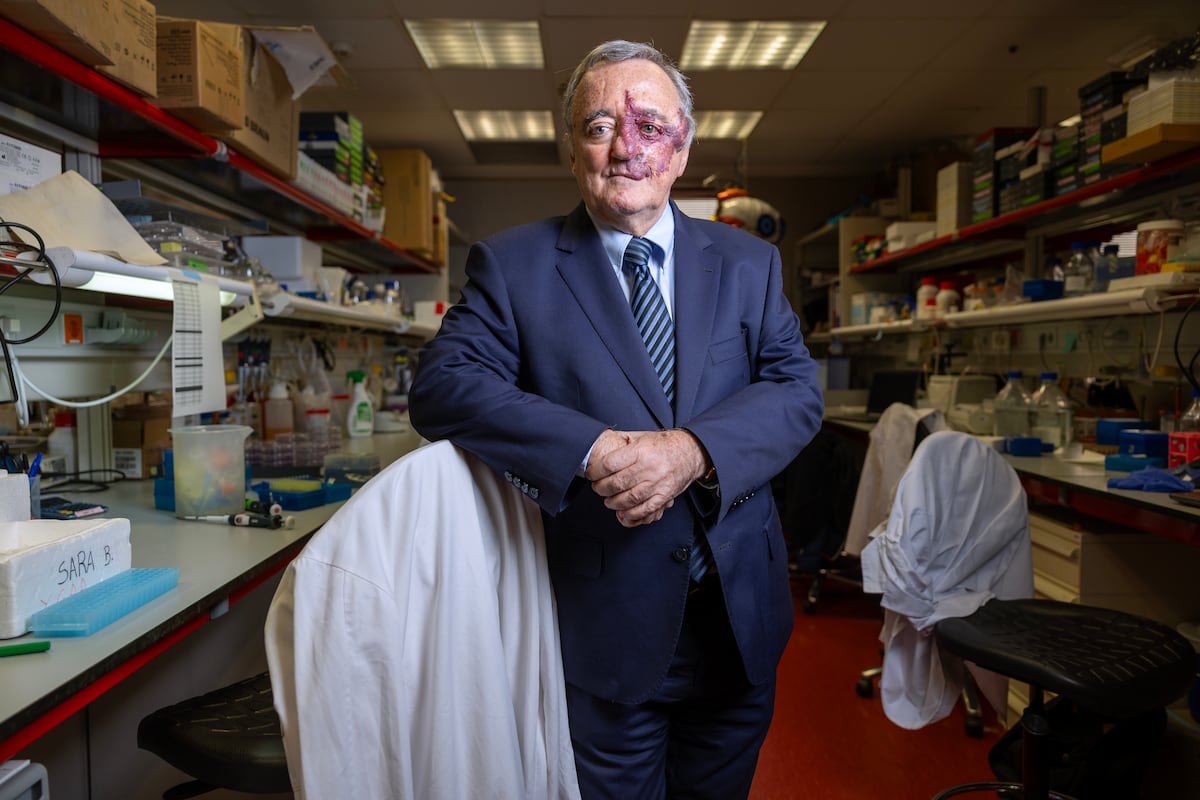
"The biochemist revealed his results on February 2 on Spain's most-watched television program, El Hormiguero. The host, Pablo Motos, proclaimed: It's a miracle. Colleagues at his own center criticize Barbacid for not better explaining his conflict of interest. He and his colleagues Carmen Guerra and Vasiliki Liaki have applied for a patent for the commercial exploitation of their experimental therapy, should it ever become a reality."
"The three of them, along with other partners, founded a company, Vega Oncotargets, in April 2024 to develop the treatment in animals. The company prominently displayed on its websiteuntil this past Fridaythat they had achieved the first effective therapy against pancreatic cancer, but the slogan falls short of the truth. After being rejected by the prestigious journal Nature, they published their study on December 2 in PNAS, the journal of the U.S. National Academy of Sciences."
"Because Barbacid is an academic, he has the right to publish his work through an expedited process, with a slightly less stringent peer review. That study with 45 cured mice went unnoticed for almost two months, until the scientist organized a massive news conference on January 27 in collaboration with the private CRIS Cancer Foundation. Then it became world news. One of the most widely read newspapers, The Times of India, ran the headline: Spanish scientist finds cure for pancreatic cancer in major medical breakthrough."
Mariano Barbacid presented results claiming an experimental therapy cured 45 mice of pancreatic cancer. More than a hundred patients contacted the CNIO and some visited the center seeking help. Barbacid revealed results on national television, where the host called it "a miracle." Colleagues criticized insufficient disclosure of conflicts of interest. Barbacid, Carmen Guerra and Vasiliki Liaki applied for a patent and founded Vega Oncotargets in April 2024 to develop the treatment in animals. The study was rejected by Nature and published in PNAS via an expedited academic process. A high-profile news conference in late January triggered major international coverage.
Read at english.elpais.com
Unable to calculate read time
Collection
[
|
...
]