Right-wing politics
fromTruthout
1 day agoNo Kings Must Mean No War: Foreign Policy Is Least Democratic Space in Politics
The majority of Iranian Americans oppose the war on Iran, despite media portrayal of pro-monarchy sentiments.
In her latest book, Indignity, Ypi blends archival material with a fictionalized account of her grandmother's childhood in Thessaloniki and her arrival in Albania, exploring themes of memory and dignity.
Burke's was a broadside that not only excoriated the social upheavals effected by the French revolutionaries and (by extension) commended by Marx, but the continual economic and social instability prized by modern liberal economic philosophy and practice. Against a new class of elites-mainly, an alliance between ideological progressive theorists and a rising financial oligarchy-Burke urged protection of the stability, tradition, and social continuities vital for the flourishing of ordinary people.
Once upon a time, adding official to an announcement served a purpose. It distinguished fact from rumour, press release from pub chat. Sensible. Helpful. Civilised. But in recent years, the word has gone rogue. Nothing can simply happen anymore. It must be officially announced.
What most leaders label as a content problem is actually a presence problem. Leaders often assume credibility rises and falls based on wording alone. In reality, credibility is shaped by executive presence, which reflects the signals leaders send about confidence, clarity, and authority before their ideas are fully heard.
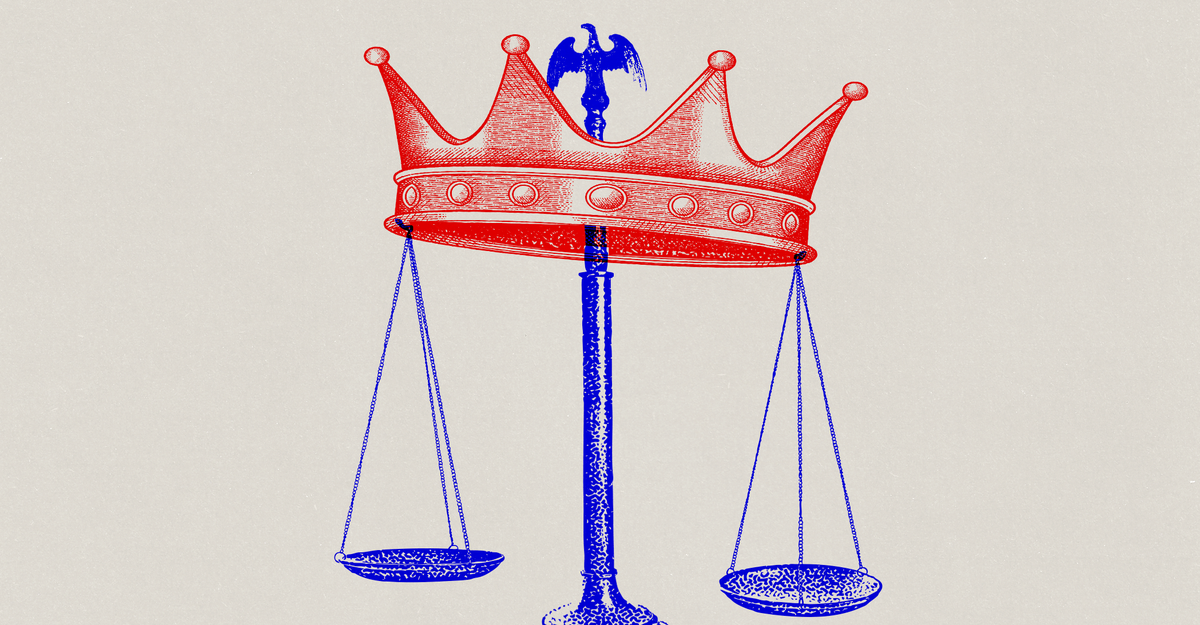
The real Führer is always a judge. Out of Führerdom flows judgeship. One who wants to separate the two from each other or puts them in opposition to each other would have the judge be either the leader of the opposition or the tool of the opposition and is trying to unhinge the state with the help of the judiciary.
The very same European leaders and anointed members of the Blob expressing outrage about Greenland were largely silent or supportive as Trump bombed Iran and Nigeria, abducted Maduro, and continued to aid and abet Israel's genocide in Gaza.
The same deep forces that afflict many Western nations have wrenched us apart: the transition to a postindustrial economy and the attendant erosion of working-class security, the demographic shift toward a "majority minority" nation, the cultural upheaval that has dethroned men, and especially white men, from their age-old dominance - and the rise of entrepreneurs of outrage eager to exploit all that free-floating anger.
Like us, you may feel paralyzed in the face of the relentless images of violence we see every day. Suffering children, military occupations, the devastated neighborhoods, the cries of parents mourning their dead-these scenes haunt us. Whether it is happening in Palestine or Minneapolis, we are witnesses to suffering, and that witnessing takes a heavy toll. Clearly, the devastating situations in the West Bank and Gaza and in Minneapolis differ
Any lingering doubts about the true motives behind the 2003 invasion of Iraq were dispelled when looters were ransacking Baghdad, carrying off millennia-old artifacts from the Iraqi capital's archaeological museum, while U.S. troops fortified the Ministry of Oilthe only government building left untouched and from which not a single document emerged. The disastrous and illegal invasion, spearheaded by the United States with military support from the United Kingdom
Research finds that relying on regulations to determine your policies and procedures can result in ethical blindspots, or situations where people might think if there is not a rule for something, that it's permissible. After years of shifting towards values and culture-based compliance, leadership might be heading the opposite direction.
There's a particular kind of guilt that visits me when I open my feed reader after a few days away. It's not the guilt of having done something wrong, exactly. It's more like the feeling of walking into a room where people have been waiting for you, except when you look around, the room is empty. There's no one there. There never was.
In the early 20th century, sociologist Max Weber noted that sweeping industrialization would transform how societies worked. As small, informal operations gave way to large, complex organizations with clearly defined roles and responsibilities, leaders would need to rely less on tradition and charisma, and more on organization and rationality. He also foresaw that jobs would need to be broken down into specialized tasks and governed by a system of hierarchy,
The readings in my last series led me to see the genuine hatred conservatives have for what they call variously liberal hegemony, liberal ideology, left-wing ideology, and other names. David Brooks, newly ensconced at Yale and The Atlantic, is just sure it was liberals who caused Trump's wins, with their snotty "knowledge", and "refined tastes". I mocked this nonsense, but apparently Brooks was serious about the super bad feelings his people have about such things.
I am using the word pragmatism in a specific sense. I am not speaking about being pragmatic as a political tactic; deciding what issues should be given priority and what battles to choose, or a willingness to compromise, or a recognition that there are limits to what can be accomplished at any time. I am writing now about pragmatism in a meaning closer to its philosophical origin in the writings of William James-that truth is not found in abstract principles or beliefs,
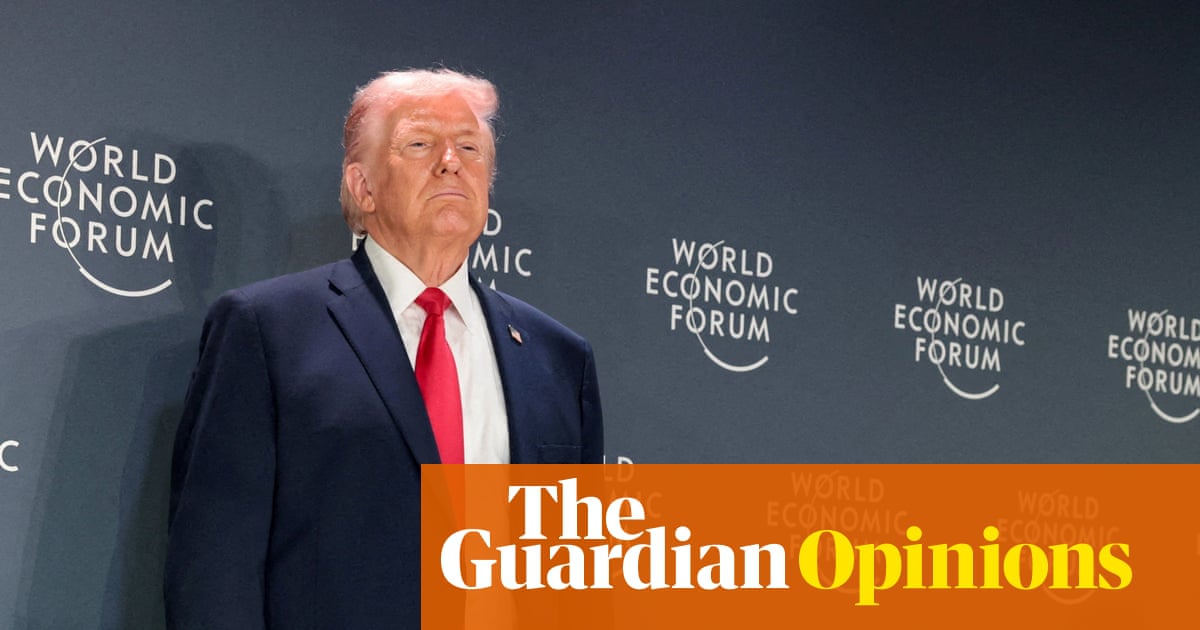
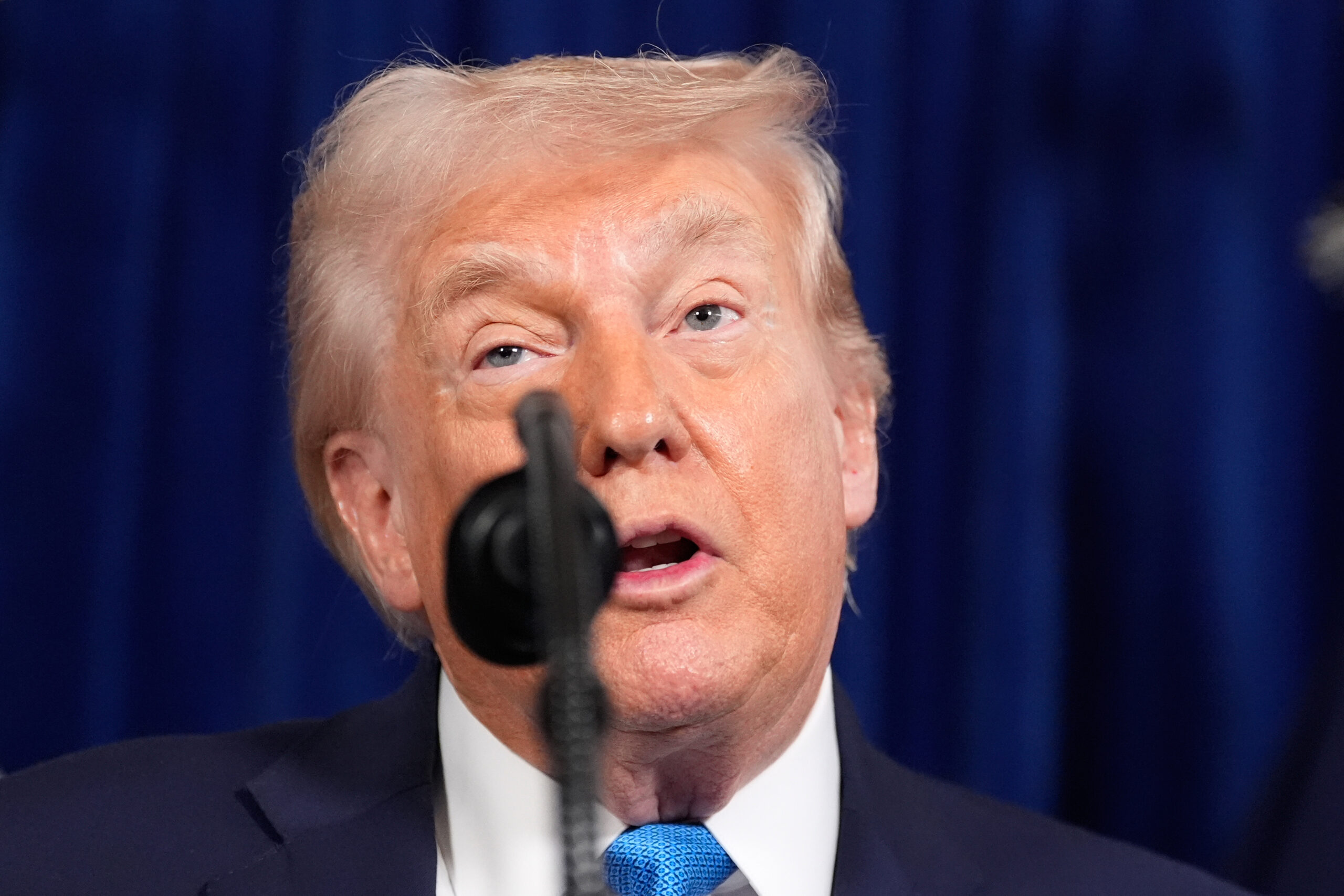
the only constraint to his power as president of the US is my own morality, my own mind. It's the only thing that can stop me, Trump said, adding: I'm not looking to hurt people. He went on to concede I do in regards to whether his administration needed to adhere to international law, but said: It depends on what your definition of international law is.
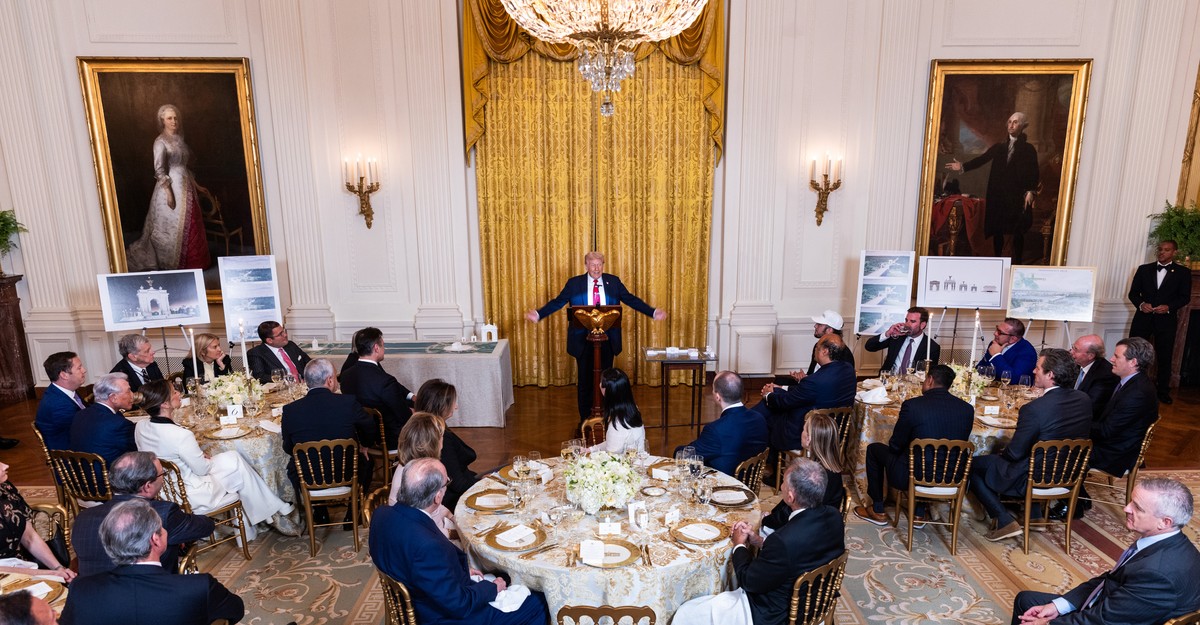
These "levees," as they were called, were not loose occasions. Washington stood by the fireplace in a dining room cleared of its chairs. Dressed in a black velvet suit, hair powdered, hat in hand, he greeted guests with a formal bow. Handshakes, familiar and egalitarian, were prohibited. Conversation was sparse. The president, per Alexander Hamilton's instructions, might talk "cursorily on indifferent subjects," but nothing more.
This script is based on a theory proposed by Bruce Ackerman, Sterling Professor of Law and Political Science at Yale Law School. Ackerman's idea is laid out in his 1991 book We The People: Foundations, and is discussed in the second of his Oliver Wendell Holmes Lectures of 2006. It's gained prominence since the 2024 election and the wholesale assault on our governmental system by Trump.
Left-leaning regions of the United States and elsewhere in the world among the richest? When Japan and South Korea sought to become economic powerhouses in the later 20th century, they adopted Leftist policies such as strong public education, universal healthcare and increased gender equality - if countries seeking to compete in capitalist arenas adopt broadly Leftist policies, then how do we explain why Leftists are always talking about overthrowing capitalism?
When a president says his authority is limited only by his own morality, the Constitution has already been violated. The oath of office binds the president to law, not conscience, not instinct, not personal judgment. Claiming otherwise is a declaration that constitutional limits are optional. This is not rhetoric. It is an imminent danger. A president who believes only he restrains himself is asserting personal sovereignty. That is the definition of autocracy.