"Partly, public intellectuals exist to give voice and articulation to as-yet unformed ideas in public, the populace. And hopefully to compare and contrast. It never works ideally. Usually public intellectuals, like everyone else, are partisan - sometimes rancidly partisan. But in democratic cultures they do help people understand their encoded impulses and desires and see them or hear them represented in public life."
"Despite the longtime stereotype of the U.S. as an anti-intellectual nation, the country has historically produced many public intellectuals across ideological traditions. That would include, for instance, representatives of the so-called New York Intellectuals (such as Lionel Trilling, Clement Greenberg), Harlem Renaissance (W.E.B. Dubois, Alain Locke), Cold War liberals (Arthur Schlesinger Jr., Richard Hofstadter), conservatives (William F. Buckley, James Burnham), and individual writers like Hannah Arendt and Susan Sontag."
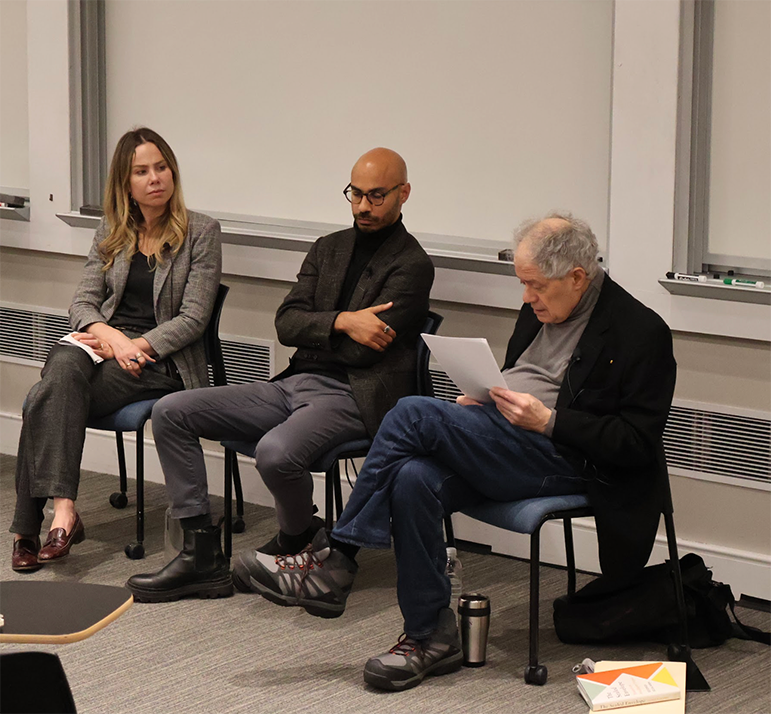
A panel featuring George Scialabba, Professor Jesse McCarthy, and Anastasia Berg discussed the evolving role of public intellectuals in American democracy. Scialabba emphasized that public intellectuals serve to give voice to emerging ideas and help people understand their encoded impulses and desires through public representation. Despite America's stereotype as anti-intellectual, the country has historically produced significant public intellectuals across ideological traditions, including figures from the New York Intellectuals, Harlem Renaissance, Cold War liberals, and conservative movements. However, the conditions that once supported great intellectual thinking are deteriorating, with the erosion of urban gathering spaces and flexible employment opportunities that previously provided time and space for intellectual work.
#public-intellectuals #democratic-culture #intellectual-life-in-america #social-and-economic-change #public-discourse
Read at Harvard Gazette
Unable to calculate read time
Collection
[
|
...
]