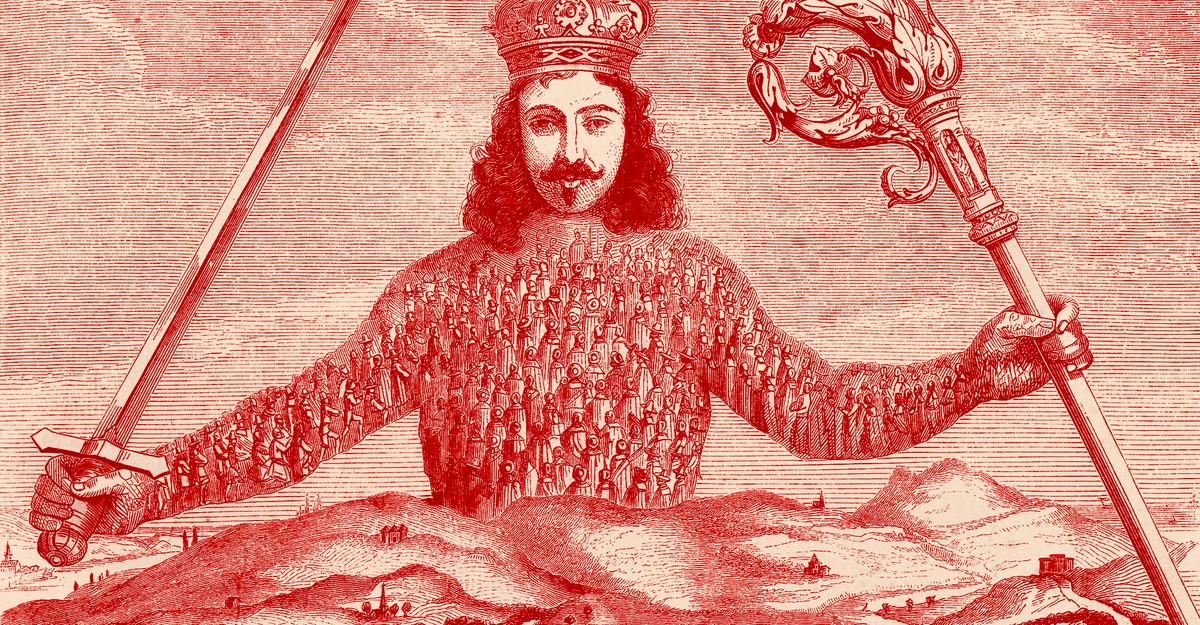
"If you want to know a political leader's governing philosophy, you could cut through a lot of bluster by just asking them who their guy is: John Locke or Thomas Hobbes? Anyone who's taken Poli Sci 101 will understand what this means. The 17th-century philosophers each offered a picture of human nature in its rawest form, and they came to different conclusions. Locke, whose ideas were central to the birth of modern democracy, thought that people were capable of reason and moral judgment."
"Miller might have been Hobbes in a skinny tie as he confidently articulated what he understood to be the "iron laws of the world since the beginning of time." His monologue was like something out of the English philosopher's 1651 political treatise, Leviathan: "We live in a world, in the real world," he said, "that is governed by strength, that is governed by force, that is governed by power.""
John Locke and Thomas Hobbes presented opposing views of human nature and the basis of political authority. Locke held that people are capable of reason and moral judgment, supporting democratic governance built on informed citizens. Hobbes held that humans are vicious and require protection by a powerful sovereign to avoid chaos. Contemporary U.S. politics revives that divide: Barack Obama embodied Lockean confidence that citizens given accurate information will seek the common good, while Donald Trump and allied officials have articulated a Hobbesian view emphasizing strength, force, and centralized power.
Read at The Atlantic
Unable to calculate read time
Collection
[
|
...
]