#social-psychology

[ follow ]
Productivity
fromFast Company
1 day ago

Why your best ideas get ignored during meetings

Being right too early in group settings undermines influence because people resist ideas imposed on them rather than discovered collaboratively, and groups rely on social shortcuts instead of evaluating substance.
Books
fromFuncheap
3 days ago

After Hours: The Tension That Divides Us with Claude M. Steele

Trust building mitigates tensions between people with different identities and power levels through psychological understanding of historical wariness rather than bias alone.
Psychology
fromSilicon Canals
3 days ago

There's a particular kind of exhaustion that belongs to people who are everyone's second choice. Not disliked. Not excluded. Just perpetually almost enough to be someone's first call, and aware of the gap every single time. - Silicon Canals

Being consistently chosen second creates deeper psychological harm than outright rejection because the threat detection system never fully activates or resolves.
US news
fromThe Washington Post
1 week ago

Most Americans think their fellow citizens are bad people, survey says

53% of American adults view their fellow citizens as morally or ethically bad, making the U.S. unique among 25 surveyed countries where majorities hold positive views of their countrymen.
Psychology
fromPsychology Today
1 week ago

Why Can't the Generations Be Friends?

Generational stereotypes lack scientific basis and oversimplify diverse individuals into negative labels, yet people can relate across age groups as individuals rather than archetypes.
Psychology
fromSilicon Canals
1 week ago

Psychologists explain that the reason some people can forgive enormous betrayals but struggle to forgive small slights is that small slights feel chosen. The big wounds can be blamed on circumstance, but someone choosing not to save you a seat reveals exactly where you stand - Silicon Canals

Small social slights often cause more emotional pain than major betrayals because they send unambiguous signals about social exclusion without mitigating context.
Miscellaneous
fromPsychology Today
1 week ago

An Avalanche Catastrophe as a Psychological Event

Avalanche tragedies result from social psychological factors and bad decisions rather than natural forces alone, as demonstrated by the Castle Peak ski tragedy involving nine fatalities.
Psychology
fromSilicon Canals
1 week ago

Why the most emotionally mature people you know often have the smallest social circles and the least dramatic lives - Silicon Canals

Emotionally mature people maintain fewer close relationships with higher satisfaction by strategically investing emotional energy where it matters most.
#human-behavior
fromSilicon Canals
1 week ago
London

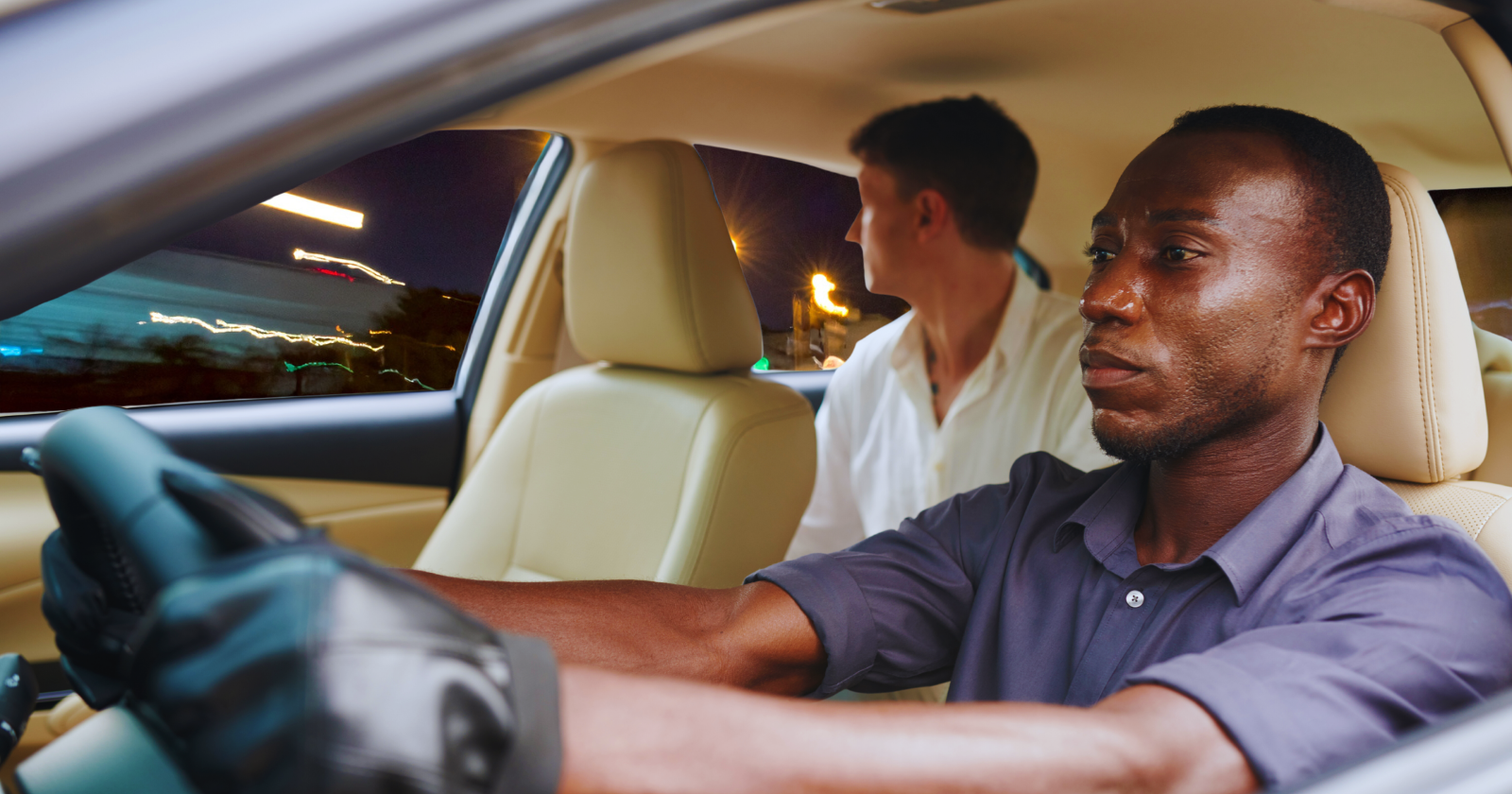
Taxi drivers who work night shifts say the conversations they have between midnight and 4 AM reveal these 7 things about people that daylight never does - Silicon Canals

fromSilicon Canals
1 week ago
London

Taxi drivers who work night shifts say the conversations they have between midnight and 4 AM reveal these 7 things about people that daylight never does - Silicon Canals

fromSilicon Canals
2 weeks ago

There is a specific kind of loneliness that comes from being surrounded by people who only know the version of you that keeps everything together - Silicon Canals

The better you are at managing your emotions, the less emotional support people offer you. It's not cruelty. It's perceptual bias. People take your composure at face value because it's efficient for them to do so. A study published in the Journal of Personality and Social Psychology found that people consistently underestimate the emotional needs of those they perceive as high copers.
Psychology
Psychology
fromSilicon Canals
2 weeks ago

Psychology says people who need to be alone after socializing aren't antisocial, they're returning to the version of themselves that got buried under everyone else's energy - Silicon Canals

The self is fluid and context-dependent, constantly recalibrating based on perceived social judgment, and solitude allows identity reclamation from the fragmentation that occurs during social performance.
Psychology
fromSilicon Canals
2 weeks ago

The specific loneliness of being well-liked but deeply unknown - Silicon Canals

High self-monitors develop shallow social networks by constantly adapting their personality to others, creating loneliness despite widespread popularity and social success.
fromSilicon Canals
3 weeks ago

People who have dozens of acquaintances but no one they can call at 2 am usually display these 7 quiet traits, according to psychology - Silicon Canals

You know that feeling when your phone buzzes with party invites, your LinkedIn connections hit four digits, and your calendar stays packed with coffee dates and networking events? Yet when life throws you a curveball at 2 am-maybe you're stranded with a dead car battery, or anxiety has you wide awake-you scroll through your contacts and realize there's no one you can actually call. If this hits close to home, you're not alone.
Psychology
Relationships
fromMail Online
1 month ago

Best time to text someone after date - playing it cool can backfire

Send a message the morning after a first date; same-night texts seem needy and waiting two days reduces interest in pursuing a relationship.
Mental health
fromSilicon Canals
1 month ago

7 signs someone is a narcissist pretending to be humble, according to psychologists - Silicon Canals

Some people mask narcissistic needs with faux humility, using humble-brags, downplaying compliments, and backdoor boasts to seek admiration and control.
fromSilicon Canals
1 month ago

Goodbye to awkward silences: the question that gets any dinner party talking - Silicon Canals

Picture this: the wine glasses are half-empty, the main course plates have been cleared, and suddenly the conversation hits that dreaded wall. You can hear the forks scraping against dessert plates, someone clearing their throat, the uncomfortable shuffle of feet under the table. We've all been there, watching a lively dinner party deflate like a punctured balloon, everyone suddenly fascinated by their napkins or reaching for their phones.
Psychology
Mental health
fromSilicon Canals
1 month ago

Psychology says people who fade into the background in groups usually possess these 8 hidden strengths that others completely miss - Silicon Canals

Quiet or background people possess important, measurable strengths—acute observation, social insight, and stabilizing influence—that often go unnoticed yet support groups and relationships.
Relationships
fromSilicon Canals
1 month ago

Psychology says if you prefer quality over quantity in friendships, you display these 9 rare strengths - Silicon Canals

Choosing a few deep friendships reflects emotional intelligence and psychological strengths, often stronger than having many superficial acquaintances.
Relationships
fromSilicon Canals
1 month ago

Psychology says if you struggle to make friends as an adult, you're probably doing these 8 things unconsciously - Silicon Canals

Adults often unconsciously sabotage forming close friendships through guarded, transactional behaviors, but recognizing and changing eight specific patterns can improve connection.
US politics
fromPsychology Today
1 month ago

What a 1939 Experiment Teaches Us About Political Leadership

Democratic leadership produces sustainable productivity, creativity, cooperation, and resilience, whereas authoritarian and laissez-faire styles undermine commitment and functioning.
Science
fromwww.theguardian.com
2 months ago

Cracker jokes and custard chemistry: ways to smuggle science into Christmas

Home sensory tests reveal flavour depends chiefly on smell, and social context strongly influences whether people laugh at jokes.
Psychology
fromPsychology Today
2 months ago

How Benjamin Franklin Turned His Enemies Into Friends

Doing someone a favor can increase your liking of them via cognitive dissonance, a phenomenon called the Ben Franklin effect.
Books
fromPsychology Today
2 months ago

Deep Insights Into Paradoxical Human-Animal Relationships

Human-animal relationships reveal identity, blend affection and dominance, and are shaped by culture, empathy, personality, and political beliefs.
Psychology
fromwww.theguardian.com
3 months ago

This month's best paperbacks: Emmanuel Carrere, Mary Trump and more

Cynicism harms individuals’ cognition, health, relationships, and society, while trust correlates with markedly better wellbeing and social outcomes.
Psychology
fromFast Company
4 months ago

The discovery that linked signature size to narcissism

Large, bold signatures correlate with higher status and stronger self-regard; Donald Trump's signature exemplifies this pattern.
fromPsychology Today
5 months ago

The Art of the Subtle Put-Down

Closer to home, I once visited my beloved grandmother-in-law in the senior home where she resided. I stayed for dinner, choosing the turkey option. "What!" Grandma exclaimed, "You don't like the chicken?!" The emotional vibes reverberating in this episode are ambivalent and textured. There is an element of care, benevolence, and interest, but there is also the sting of reproach and the claim of the high ground in a power game.
Humor
Psychology
fromPsychology Today
5 months ago

Why Politics Makes Us Bend Our Own Values

Cognitive dissonance causes people to act against stated values, producing hypocrisy in politics and offering opportunities for growth if acknowledged.
fromBig Think
5 months ago

The sci-fi hypothesis that explains why you click with certain people

Sometimes, you can be talking to someone for hours, and it feels like only a few minutes. You natter and natter without ever having to think of what to say or cringe through any awkward silence. There's a gentle sway to things - you listen, they speak, they listen, you speak. The chat dances to the easy and comfortable rhythm of the conversational tide.
philosophy
US politics
fromPsychology Today
5 months ago

Remaking the Culture of American Politics

Culture change requires diagnosing invisible social dynamics and using the Culture Cycle to map ideas, institutions, interactions, and incentives to trigger reinforcing positive feedback.
Relationships
fromwww.theguardian.com
6 months ago

I stopped telling little white lies' for two weeks. This is what I learned

People often lie to avoid discomfort, protect others' feelings, and simplify social interactions, even when honesty is valued.
fromwww.independent.co.uk
6 months ago

The surprising trick that could help you tackle your daily chores

From reproductive rights to climate change to Big Tech, The Independent is on the ground when the story is developing. Whether it's investigating the financials of Elon Musk's pro-Trump PAC or producing our latest documentary, 'The A Word', which shines a light on the American women fighting for reproductive rights, we know how important it is to parse out the facts from the messaging.
US politics
fromPsychology Today
6 months ago

Do You Know How Attractive You Are?

Individuals who are less attractive tend to overestimate their level of attractiveness, while more attractive individuals generally underestimate theirs, creating a discrepancy between self-perception and observer ratings.
Psychology
Relationships
fromPsychology Today
6 months ago

The Right Way and Wrong Way to Offer Help

Understanding emotions improves the advice-giving process and increases compliance.
Reactance theory explains reactions to unsolicited advice and its implications for relationships.
fromApaonline
7 months ago

Can We Blame Rioters?

"We start walking up to the Capitol, and we get the news that Pence betrayed us. He had way more power, and he wasn't willing to exercise it. And when Pence betrayed us is when we decided to storm the Capitol. (...) We just pushed and pushed and pushed and pushed, and yelled 'Go!' and yelled 'Charge!' And on and on and on, we just pushed and pushed and pushed-and we got in." (Jenny Cudd, recorded live video)
philosophy
fromwww.npr.org
7 months ago

If compliments make you feel super awkward, this comic is for you

Responding positively to compliments not only improves self-esteem but also enhances the social connection between the individuals involved, fostering a more rewarding interaction overall.
Mindfulness
Women
fromBusiness Insider
8 months ago

Why being a parent could give your career a boost

The traditional motherhood penalty may be outdated; being a parent could actually enhance workplace evaluations.
Mindfulness
fromPsychology Today
8 months ago

Keeping an Open Mind in an Increasingly Opinionated World

Empathy reduces confirmation bias and opens us to opposing viewpoints.
Polarization flourishes in echo chambers but can be confronted through curiosity.
Open-mindedness demands strength, not weakness, in times of division.
fromPsychology Today
9 months ago

How 'Sure' Can You Be About Anything?

Being right is kind of like a drug—once you get the buzz of such confirmation, you want it again and again.
Parenting
fromHarvard Gazette
9 months ago

Social media fueled divisions. Teaming up may help heal. - Harvard Gazette

"It's really the opposite of the nasty, divisive posting you find on social media," offered Tango co-creator Joshua D. Greene '97, reflecting on the positive impact of the quiz game.
Board games
fromNature
9 months ago

Gripping account of psychology's cautionary tale is marred by flawed assumptions

In the rapidly evolving landscape of social psychology, findings that initially seem groundbreaking may lead to significant setbacks, as evidenced by the failure to replicate key priming results.
Psychology
fromPsychology Today
9 months ago

Lessons in Heroic Resistance

Even when faced with overwhelming group pressure, around one in four individuals maintain their independent judgment, showcasing the importance of inner resolve and moral clarity.
Social justice
Mindfulness
fromHarvard Gazette
9 months ago

Excerpt from 'The Ideological Brain' by Leor Zmigrod - Harvard Gazette

Ideologies are not abstract concepts; they inhabit individual minds and influence personal thinking and behavior.
Cocktails
fromBon Appetit
9 months ago

Bartenders Are Tired of the "Girly Glass" Discourse

Individual preferences in drink orders often reflect deeper societal notions of masculinity and femininity.
UK politics
fromwww.theguardian.com
9 months ago

Swipe right: dating app users prefer Reform voters to Tories, research suggests

Dating app users prefer profiles of those with similar political views, particularly favoring Reform voters over Conservative or left-leaning parties.
NYC music
fromwww.nytimes.com
10 months ago

Opinion | I Was Sure I Knew Why New Yorkers Blast Their Music. I Was Wrong.

Playing music from cellphones in public reflects a clash of personal expression versus communal annoyance.
Our perceptions of public music play can shift based on individual experiences and cultural contexts.
Environment
fromThe Nation
10 months ago

The Game-Changing Truth That Could Save the Planet

Informing people about widespread support for climate action can increase charitable donations to renewable energy initiatives.
Relationships
fromArs Technica
10 months ago

Women rely partly on smell when choosing friends

Participants' ratings of friendship potential were influenced by scent, indicating that olfactory cues play a role in interpersonal attraction.
philosophy
fromThe Conversation
10 months ago

Claims of 'anti-Christian bias' sound to some voters like a message about race, not just religion

Claims of anti-Christian discrimination are often politically motivated and may reflect broader societal issues regarding race and identity.
[ Load more ]