#harry-lynch
#harry-lynch
[ follow ]
#art #contemporary-art #photography #art-exhibition #marcel-duchamp #biography #exhibition #creativity #new-york
fromMetro Silicon Valley | Silicon Valley's Leading Weekly
4 hours agoMiguel Novelo: Inframundo in San Jose | Metro Silicon Valley | Silicon Valley's Leading Weekly
Inframundo invites visitors to look inward and become a rock, drawing on the landscape shaped by cenotes, which are thought to be portals to the Maya underworld.
Silicon Valley
Photography
fromwww.theguardian.com
16 hours agoThey accomplished so much, even as they were dying': the groundbreaking gay art of Peter Hujar and Paul Thek
The Wonderful World That Almost Was chronicles the lives and friendship of artists Peter Hujar and Paul Thek, highlighting their contributions before and during the AIDS crisis.



fromAnOther
2 months agoInside a New Exhibition of David Lynch's Paintings and Photographs
Before he was a filmmaker, David Lynch was a painter and, if you're familiar with his esoteric filmmaking practice - peppered as it is with some of cinema's most indelible imagery - it all makes a lot of sense. A year after the auteur's passing, a newly opened show at Pace Gallery's Berlin space, Die Tankestelle, foregrounds Lynch's career-spanning fine art practice and its inextricable link to his cinematic oeuvre.
Film
fromHyperallergic
5 days agoDavid Novros's Portable Murals
Seeing the Alhambra in Granada was an extraordinary experience for me. It was the first time that I understood painting as something other than an object hanging on a wall. I thought that paintings could be in a fixed place, made for that place, made for the light of the place, experienced kinesthetically.
Arts
Photography
fromThe New Yorker
1 month agoStephen Shore, Ryan McGinley's Xeroxes in "Hard Copy New York"
Photocopied photographs at the International Center of Photography exhibition demonstrate immediacy and contemporary relevance through a deliberately low-tech aesthetic, featuring work by prominent photographers including Stephen Shore, John Divola, and Daniel Arnold.
Fashion & style
fromJuxtapoz
2 months agoJuxtapoz Magazine - Glenn Hardy Jr. "Building Identities Through Style" @ Charlie James Gallery, Los Angeles
Style and presentation function as social shorthand that both enables belonging and exposes conditional acceptance, especially for Black bodies navigating judgment and aspiration.
fromHyperallergic
1 month agoArt Problems: How Do I Get Gallery Representation?
Dealers like artists with established sales records because it lowers their already considerable financial exposure. Renting a gallery space in Tribeca costs anywhere between $8,000-30,000 a month on top of staff, marketing, and daily operations. With that kind of overhead, very few business owners can afford to take on the financial risk of untested artists.
Arts
fromHyperallergic
1 month agoEmbracing Friction in the Art World
On Franklin Street in Brooklyn's Greenpoint neighborhood, one non-commercial gallery fosters 'a small, stubbornly human space for friction.' Friction—the ubiquitous buzzword that captures the simultaneous delight and discomfort of doing things the slow way—is at the heart of artists Pap Souleye Fall and Char Jeré's current show at Subtitled NYC. It also reflects the overall spirit of this little exhibition space and of a burgeoning movement to reject our culture of optimization in favor of a bumpier, more intimate, less alienating experience.
Arts
Arts
fromArtnet News
1 month agoBlink and You'll Miss It! 3 New York Shows With Painfully Short Runs | Artnet News
Gallery exhibition runs have lengthened from weeks to five or six weeks due to increased competition and high mounting costs, though a countermovement of brief, limited-time shows is emerging.
fromColossal
2 months agoDrawn to Synbols, Michael McGrath Conjures Uncanny Narratives
Disembodied heads, eyes, and hands meet spindly trees, dragonflies, and vibrant blossoms in the folk-art inspired works of Michael McGrath. Based in Rhinebeck, New York, McGrath melds a variety of media-most pieces contain a mixture of graphite, ink, and oil and acrylic paints-into dynamic compositions suffuse with mystery. Recurring symbols and objects lend themself to a distinctive visual language that captures both the wondrous and puzzling.
Arts
Arts
fromdesignyoutrust.com
2 months agoArtist Paints Smoky Lounges And Quiet Strangers, Letting Halffinished Details Turn Viewers Into Coauthors Of The Scene
A wide-ranging visual roundup showcases creative reinterpretations, vintage design, activist art, photography, illustration, and humorous cultural works spanning contemporary and historical styles.
fromHyperallergic
1 month agoThe Sticky Politics of Wall Texts
In 2024, I made a vow to never base my art criticism on wall labels. My decision came after reading reactions to that year's Whitney Biennial. "If every label in 'Even Better Than the Real Thing,' the 81st installment of the Whitney Biennial, were peeled off the walls and tossed into the Hudson, what would happen?" asked Jackson Arn in the New Yorker. (He went on to suggest that the overall show would have been much better.)
Arts
fromHyperallergic
2 months agoA View From the Easel
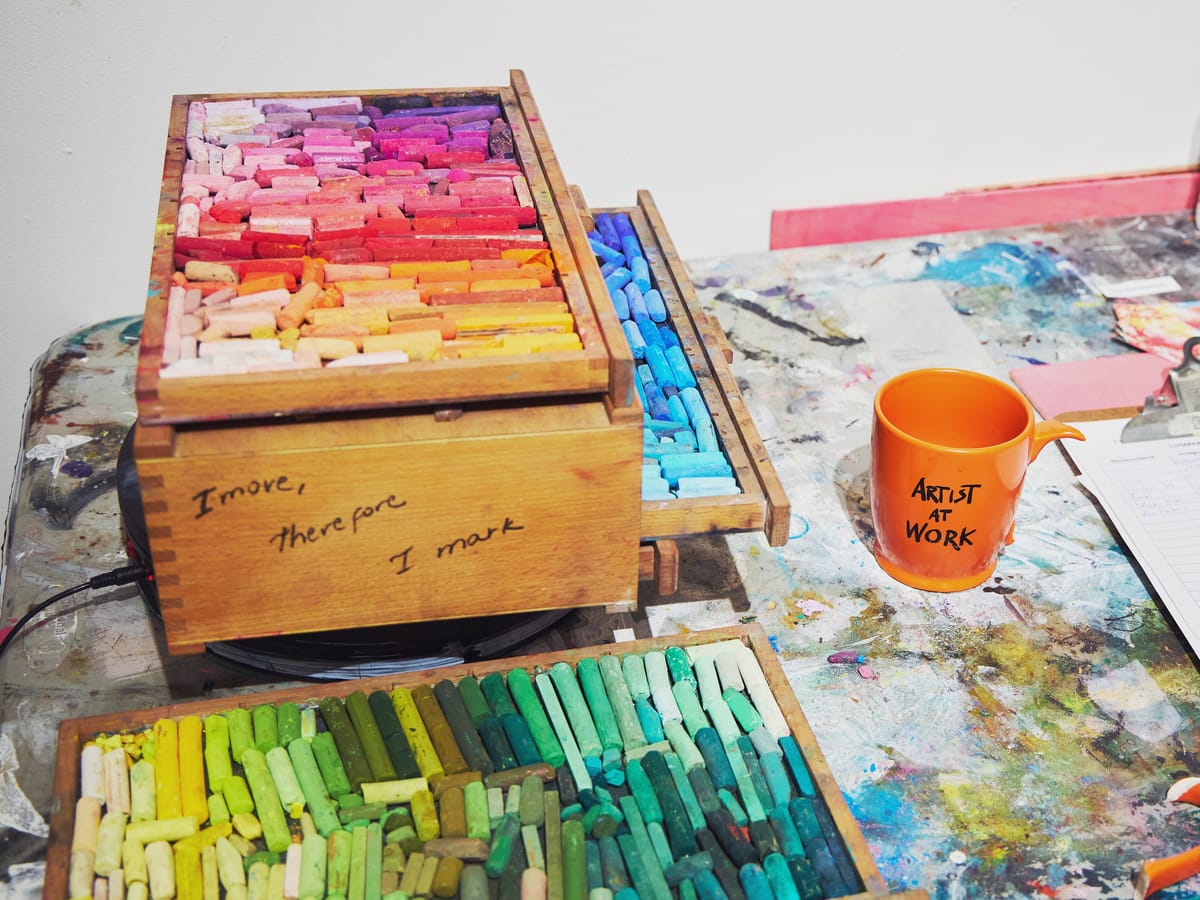
I work outside, carving and shaping the stone. Outside my house, I have a table, an extension cord, and tools. It's very cold and I have to wear all my winter clothes. When it's too cold, I do the filing and finishing work inside after I shape it outside. I listen to all kinds of music. I listen to Eminem all the time; his albums are all my favorites. For drawings, I work at Kinngait Studios or at home on my kitchen table.
Arts
fromHyperallergic
2 months agoA View From the Easel
Mornings are best for concentrated work. In the winter, I turn on the heat at 8am and get started around 10am. Summer, I start around 9am. I have two areas in the studio for projects. The large, heavy wood sculptures are carved in the front section of the studio, closest to the roll-up wide door. Smaller sculptures are placed on a hydraulic workbench. Before I start, I focus, connect with the Source, and ask for guidance.
Arts
Arts
fromThe Art Newspaper - International art news and events
2 months agoNew experimental art organisation opens in New York
Summer Guthery and Francesca Sonara launch Times, a small, nimble three-year Manhattan art space prioritizing artists' needs, flexibility, and rejection of perpetual-growth institutional models.
[ Load more ]