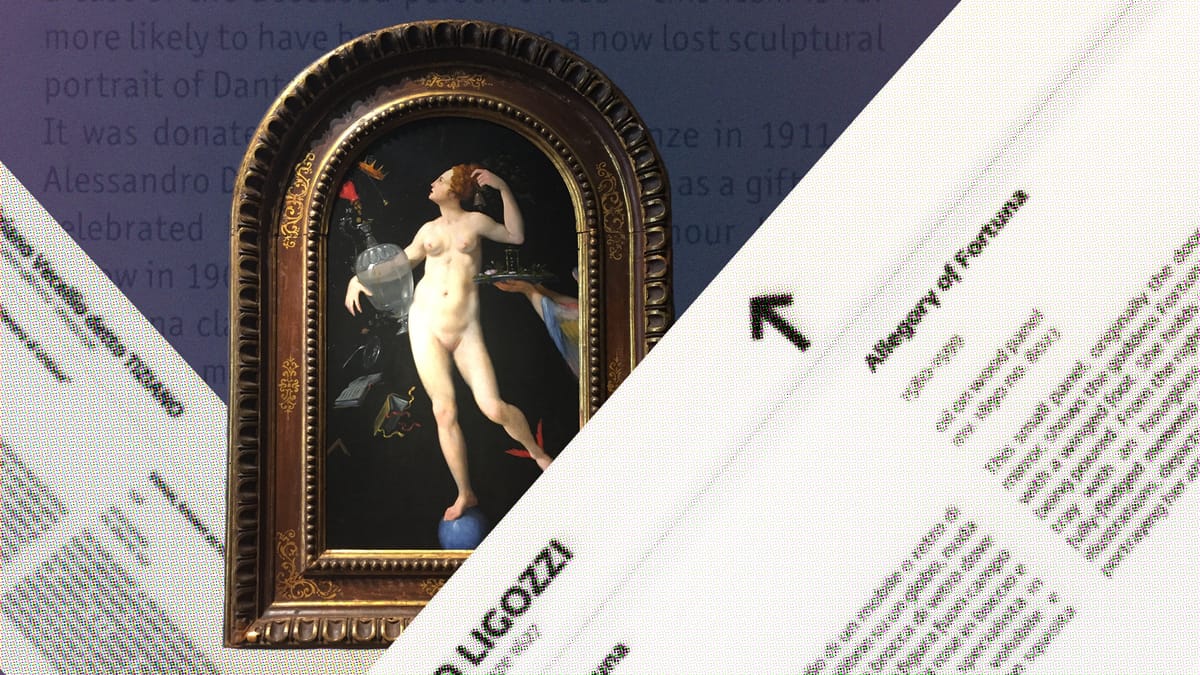
"In 2024, I made a vow to never base my art criticism on wall labels. My decision came after reading reactions to that year's Whitney Biennial. "If every label in 'Even Better Than the Real Thing,' the 81st installment of the Whitney Biennial, were peeled off the walls and tossed into the Hudson, what would happen?" asked Jackson Arn in the New Yorker. (He went on to suggest that the overall show would have been much better.)"
"Travis Diehl, writing for the New York Times, noted that the labels, which attempted to "help viewers orient themselves according to the works' intentions, or social causes," felt "belittling." In the Washington Post, Sebastian Smee, who proclaimed the show was the best in more than a decade, stated nonetheless that "you may come away less impressed by the art than alienated" by wall texts that he deemed "convoluted" and "brain-draining.""
Exhibition wall labels that overexplain or prescribe interpretation can feel belittling, convoluted, and alienating to viewers. Reactions to a major biennial argued that removing didactic labels might improve the viewing experience and that texts attempting to orient viewers by artists' intentions or social causes can undercut the art itself. Large-scale exhibitions intensify this dynamic: the 36th Bienal de São Paulo presented 125 artists and roughly 1,200 works across 30,000 square meters, creating a context where didacticism and dense wall texts can overwhelm or distract from direct engagement with artworks. Critical vows to avoid label-based judgment are challenged by such didactic exhibitions.
Read at Hyperallergic
Unable to calculate read time
Collection
[
|
...
]