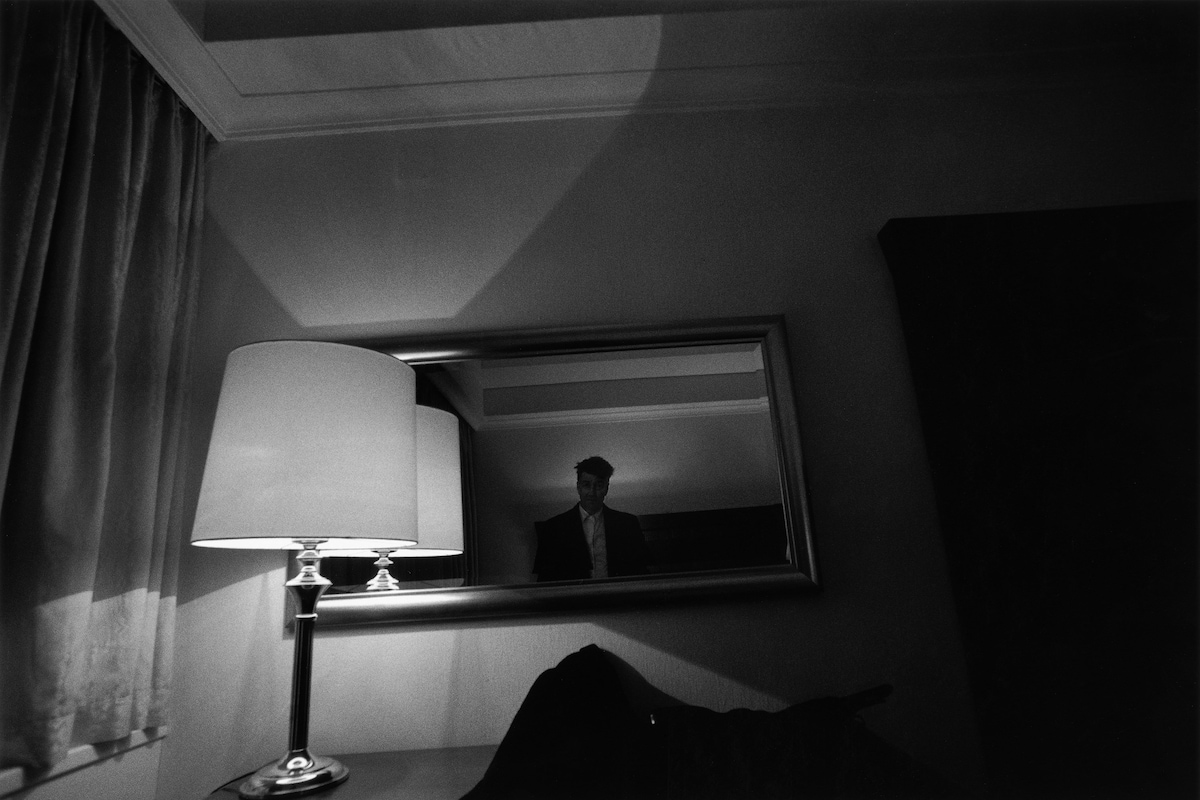
"Before he was a filmmaker, David Lynch was a painter and, if you're familiar with his esoteric filmmaking practice - peppered as it is with some of cinema's most indelible imagery - it all makes a lot of sense. A year after the auteur's passing, a newly opened show at Pace Gallery's Berlin space, Die Tankestelle, foregrounds Lynch's career-spanning fine art practice and its inextricable link to his cinematic oeuvre."
"During his studies, Lynch famously had a vision of the wind ruffling the grass of a static painting he'd made, and was moved to create his first moving image: a one-minute film called Six Men Getting Sick, featuring six Baconesque heads spewing out liquid. "I started out being a painter and the film came out of wanting to make a picture move," he said in a 2014 interview. "So I always say the same rules of painting apply to a lot of cinema, and you could say that films are moving paintings that tell a story with sound.""
David Lynch began as a devoted painter, declaring his intention to become a professional artist at 14 and drawing and painting obsessively. He enrolled in and left two art schools before transferring to the Pennsylvania Academy of Fine Arts in Philadelphia in 1966, where he thrived as a painting student. Philadelphia's urban decay, industrial ruins, and strange visual juxtapositions influenced his sensibility. A vision of wind ruffling a static painting inspired his first film, Six Men Getting Sick, and established the idea of films as moving paintings. Pace Gallery's Die Tankestelle highlights the overlap between his paintings and films, including recurring interests in form and colour.
Read at AnOther
Unable to calculate read time
Collection
[
|
...
]