Films seen long ago but unavailable for rewatching often loom large, like myths shadowed by fear: Will a second viewing confirm or dispel the initial impression? I first saw "Caught in the Acts" ("Délits flagrants"), a documentary by the French director Raymond Depardon, in Paris, a few months after it opened there, in 1994, and it struck me as one of the greatest documentaries I'd ever seen.
This exhibition's second round (whose opening reception takes place Thu/19, 5-8pm) is not only an aesthetic journey into one of our most powerful creators of U.S. revolutionary imagery, but might also serve as space to reflect and recharge in 2026. "Curators Rosalind McGary and Rio Yañez framed In Our Lifetime around Douglas's 12-point Political Artist Manifesto, a blueprint for anyone seeking to align creative practice with their revolutionary values," runs the show's description.
Shia LaBeouf had a hectic weekend down in New Orleans, where bartenders and Mardi Gras attendees alike testified to his erratic behavior before he was arrested on February 15 for two charges of simple battery. For those of us of a certain age, the news of LaBeouf popping up at a random bar in a random city and wreaking havoc is borderline old-fashioned. He made a habit of this in the 2010s,
Experience Making Waves: The Rise of Asian America, a documentary film featuring youth activists and educators around the U.S. who are utilizing Asian American Studies to shape a movement. Screening is followed by a panel discussion including Making Waves co-directors, Josh Chuck and Jon Osaki, with local youth activists from AAPI Youth Rising, who are featured in the film.
For non-binary trans photographer Laurence Philomene, art, life and identity are intimately entwined. Though drawing from art history, their photographs strike a distinctive note with their pastel colours; capturing queer subjects, including Philomene themself, in restful poses, these portraits bloom in soft hues of pink, purple, blue the full rainbow. This style seems to seep into Catherine Legault's intimate documentary, which captures not only the artist's creative process but also their daily life with vibrancy.
It was like living in two worlds, and having to go from one to another in a dramatic way. From attending film festivals and walking down red carpets to crossing the Poland border and getting into the trenches, recalls Ukrainian filmmaker Mstyslav Chernov (Kharkiv, 40 years old) of September 2023, when he was headed from screening to screening, kicking off the race to the Oscars that he would ultimately win with his documentary 20 Days in Mariupol.
In Need of Seawater is not simply a documentary about poetry-it is an experience shaped by memory, voice, and lived history. Directed with sensitivity by Richard Yeagley, the film follows poet, writer, and producer Mark Anthony Thomas as he revisits the poems that defined his early adulthood, written between his early twenties and mid-twenties, and now read aloud more than twenty years later.
The event, which was sponsored by Curve Foundation, a platform amplifying LGBTQ women's and non-binary voices and culture, featured contestants gorging themselves on a variety of pies, sans hands. The official winner of the contest was Jenn, who appeared quite triumphant in the photo featured in BAR. Per the culture blog Them, a second contestant also went home victorious that evening, as 81-year-old Babs Daitch's earnest pie-eating skills earned her best technique, plus a hearty round of applause from the crowd.
After his acclaimed documentaries profiling the likes of Ayrton Senna, Diego Maradona and Amy Winehouse, Oscar-winning director Asif Kapadia has chosen a subject close to his own heart for his latest movie. While the trio of aforementioned documentaries were made as a trilogy examining child geniuses and fame', Kapadia is a lifelong Liverpool fan and has opted to mix his hobby with the day job, with a feature-length documentary about Reds legend Kenny Dalglish.
We've been celebrating our centenary all year, and today's festivities involve "The New Yorker at 100," a new documentary that is now streaming on Netflix. Directed by Marshall Curry, the film explores how the hundredth-anniversary issue came together-following reporters, editors, cartoonists, covers editors, and fact checkers as they do their work-and what has defined each of the magazine's past ten decades. The result is a view of The New Yorker both contemporary and historical.
The hook for Turner: the Secret Sketchbooks is meant to be that many of the 37,000 sketches left behind by the great British painter JMW Turner have rarely been seen and never been filmed; therein may be hints at the nuances of his elusive character that his main oeuvre kept hidden. Equally remarkable, though, is the documentary's bold choice of contributors. As well as the art historians and present-day British artists who would dominate a standard art film, there are famous laymen, from the obviously somewhat qualified Timothy Spall played the artist in Mike Leigh's biographical film Mr Turner; Chris Packham is well placed to comment on Turner's reverence for the natural world to the more surprising hire of Ronnie Wood from the Rolling Stones.
Flophouse America is the unnervingly intimate feature debut of Monica Strømdahl, an internationally award-winning photographer who spent 15 years documenting the impoverished communities that have sprung up in rundown motels throughout the US. Which is how she met Mikal, an energetic, 11-year old boy who's called home the hotel room he's shared with his parents since the day he was born.
It is impossible to talk about cancer without invoking another Big C: cliche. Illness and pain, journeys and battles, finding appreciation for life while reckoning with death these are the building blocks of cancer stories, at once uniquely devastating and devastatingly common. The poets Andrea Gibson and Megan Falley, romantic partners for over a decade, took divergent approaches to the Big C. As a writer and editor, Falley strived to eradicate cliche; Gibson, as Falley put it, would instead double down.
This frisky film explores the canine-centric milieu with affection and respect but, laudably, it also makes room, about halfway through its runtime, for the case against racing as articulated by several animal rights activists who decry the conditions in which some dogs are raised, the practice of euthanising animals deemed no longer viable for racing, and the injury risks racing itself poses.
From 1988-1992, Yale grad and oil company founder George H.W. Bush was commander-in-chief; not only did Bush. Sr. improbably make vocal his belief that global warming ("The Greenhouse Effect") was real, but promised to employ "the White House effect" to counter it. Which included appointing as EPA chief Bill Reilly, an avid conservationist and veteran of Nixon's Presidential Council on Environmental Quality and the World Wildlife Fund.
Pol Gasco is 21 years old and he dreams of driving a light blue Lamborghini, living in Miami, and earning more than $10,000 a month. To achieve this dream, he listens to podcasts about Bitcoin, has read Think and Grow Rich several times, and has posted a dream map next to his computer screen. The more you visualize it, the more you attract it, he says of his collage of postcards showing 50 bills, the Statue of Liberty, a glass-enclosed mansion with an infinity pool,
The nature of the documentary itself gives a clue: It's the result of years of effort, traveling across the country interviewing gay men and their mothers, exploring the profound effect this relationship has in the lives of these men. Gay boys often grow up with some trauma, but when they have the support and acceptance of their mothers, the traumatic effects can be mitigated.
I could hear it in his voice, says Polsky on a recent video call, recalling DeLuca's hesitation to bring up his idea. He's like, This is kind of weird, and I don't know why I thought of you, but would you be open to hearing this really strange story that came across my desk?' Polsky, whose past film projects include documentary and feature films with collaborators such as Nicolas Cage, Wayne Gretzky and Werner Herzog, said yes.
George Orwell was dying when he wrote 1984 in the late 1940s on the desolate Isle of Jura in Scotland's Inner Hebrides. Tuberculosis ravaged his body, and typing thousands of words a day only weakened him further. His skin flaked off. Blisters burst across his throat. Feverish and emaciated, he endured painful procedures to support his failing lungs, but the treatments were too late. Eventually, in 1950, Orwell succumbed to the disease.
From reproductive rights to climate change to Big Tech, The Independent is on the ground when the story is developing. Whether it's investigating the financials of Elon Musk's pro-Trump PAC or producing our latest documentary, 'The A Word', which shines a light on the American women fighting for reproductive rights, we know how important it is to parse out the facts from the messaging. At such a critical moment in US history, we need reporters on the ground.
Going from 10 years ago when people didn't understand who trans people were to now where people have a lot of misconceptions and they think they know who trans people are but they still don't-I'm really invested in trying to show a more approachable and real and hopefully relatable side of that,
" The only people who see me are people who hope I disappear... " "He was just trying to sleep." Shawn O'Malley, one of the houseless leaders from the Vallejo Homeless Union spoke to POOR Magazine's RoofLessRadio after the tragic death at a sweep of James Edward Oakley. James is just one of the ancestors of the violent war on the poor I wrote about in the new movie Crushing Wheelchairs.
Curating, for me, is about expanding the circles around the artist. It is a process of cultural production centered on translation, extending from the nucleus and into the cellular system. Curating travels from the studio to the gallery or museum and to the communication or information networks through which the art will inevitably pass, intersecting with other social and cultural phenomena.
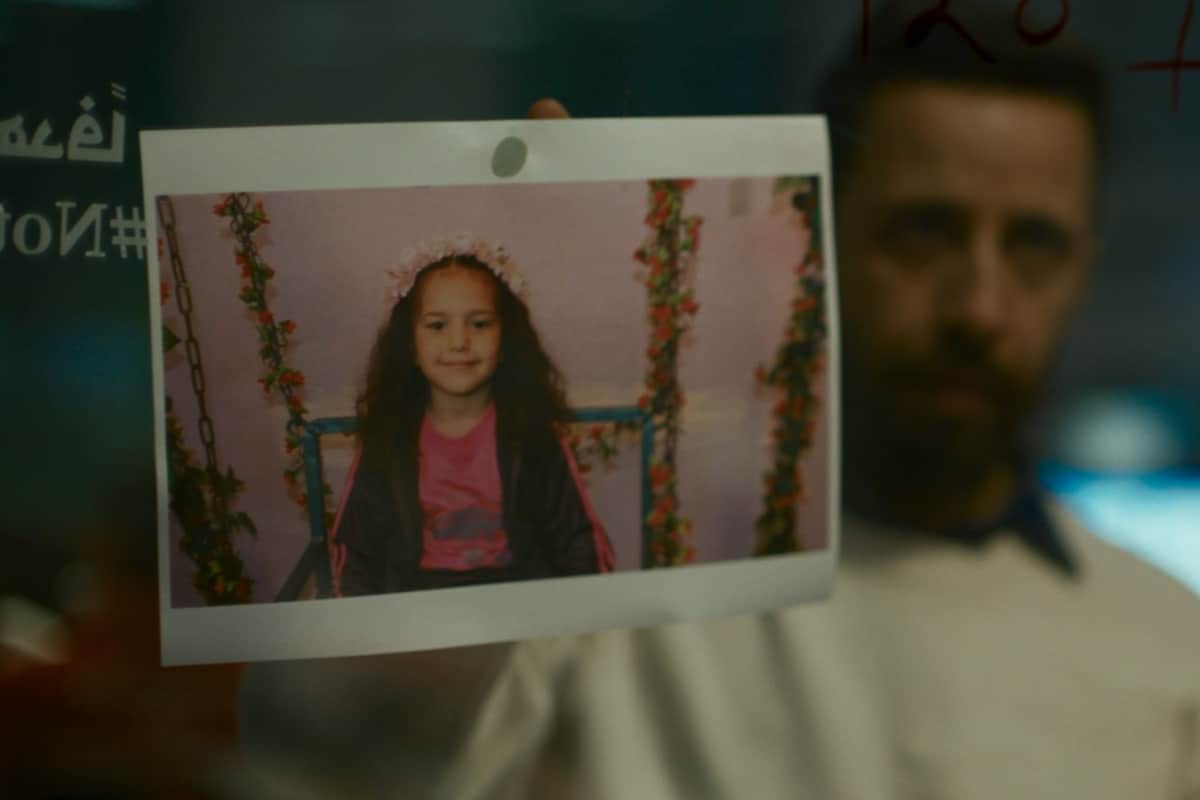
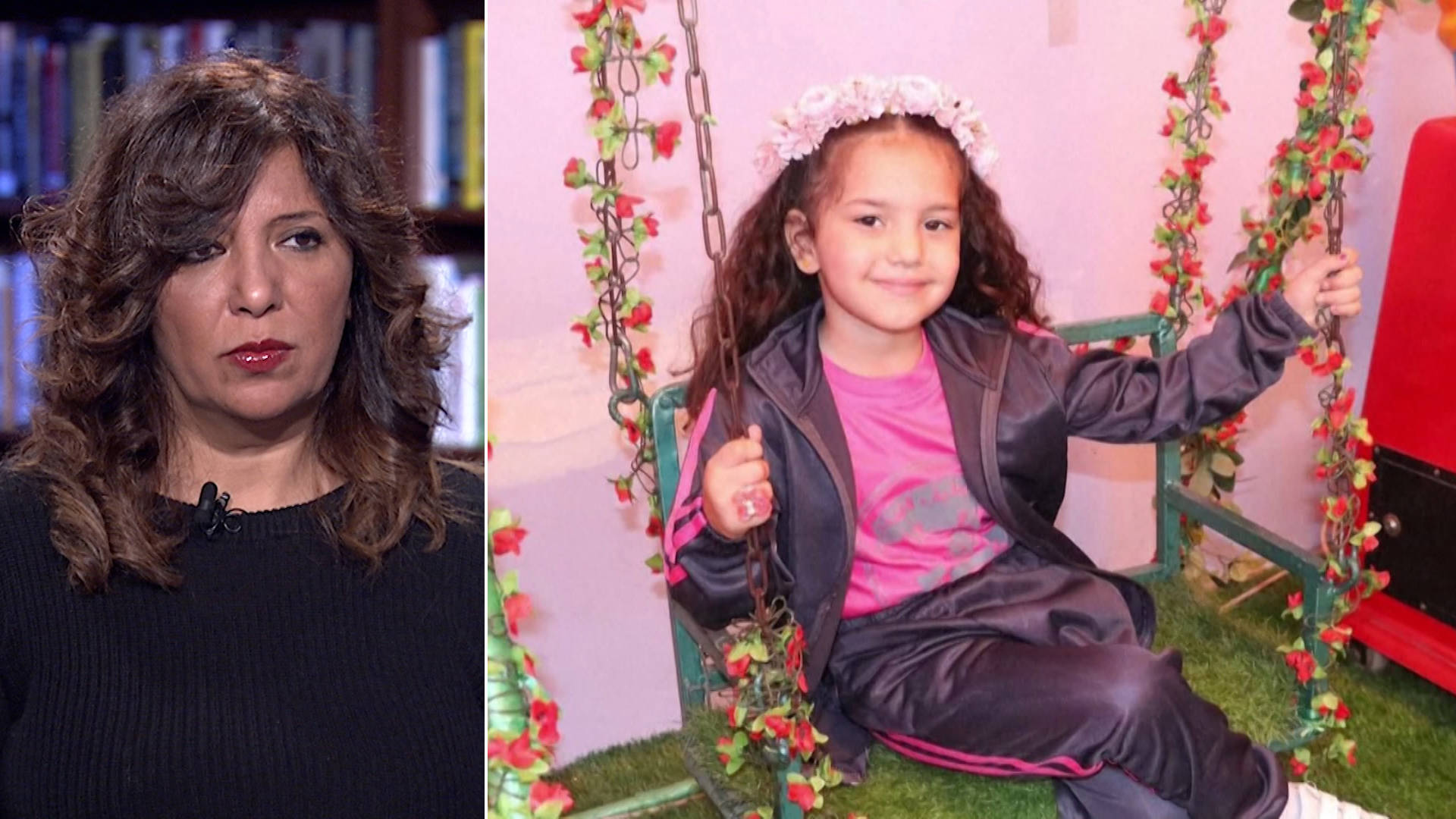
The best of the three is a movie that wasn't on many radars before Venice but became a must-see at TIFF after it emotionally devastated Italian audiences. Kaouther Ben Hania's " Four Daughters" was a breakthrough for the Tunisian filmmaker, earning her an Oscar nomination for Best Documentary Feature. She uses her skills with non-fiction filmmaking to emotional effect with the crushing "The Voice of Hind Rajab," a recounting of the events of January 29, 2024, much of which played out on social media.