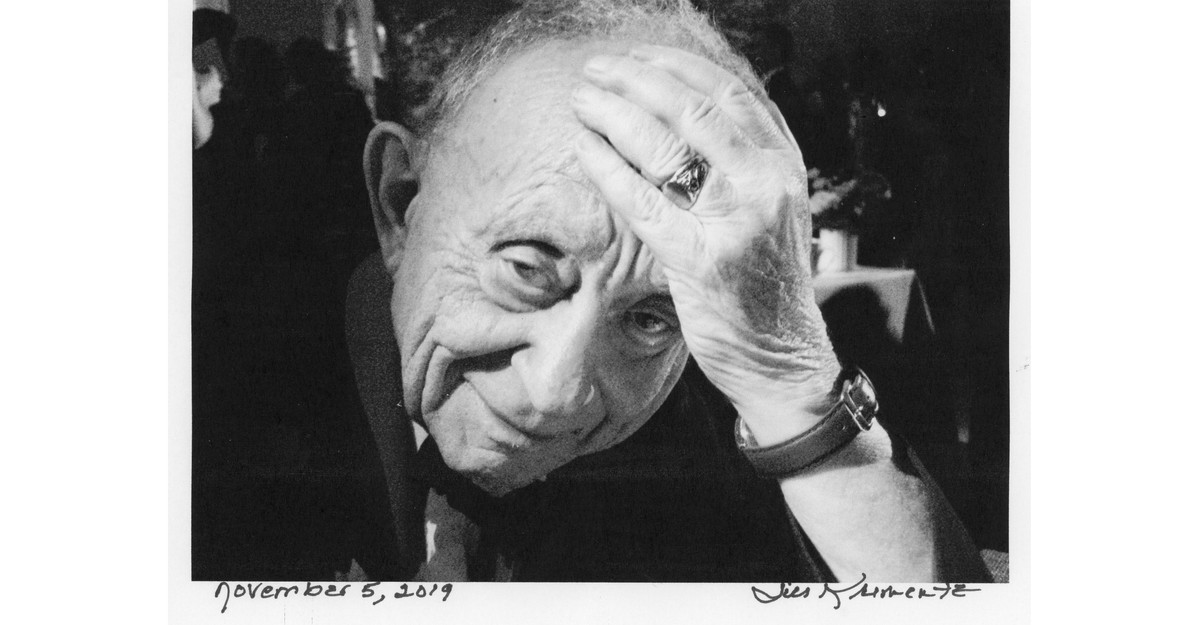
"Wiseman had gone to Yale Law School partly to avoid the Korean War draft (though he ended up drafted anyway), but also, by his own admission, because he lacked a better idea of how to spend his time. At Boston University, he taught classes on topics that he claimed he didn't know much about, so he would take his students on educational field trips to sites where their defendants might end up if they received insufficient legal representation."
"By merely observing the appalling conditions at Bridgewater, Wiseman made Titicut Follies, a film so threatening to the Massachusetts state government's reputation that the Massachusetts Superior Court ordered it to be pulled from distribution, citing patient-privacy concerns. This de facto government censorship lasted from 1967 until 1991, after a court lifted the ban and allowed Titicut Follies to be publicly screened."
Frederick Wiseman began his professional life as a law professor who often taught subjects he admitted he knew little about and used field trips to expose students to criminal-justice settings. A Boston University visit to Bridgewater State Hospital led to permission to film conditions there, producing Titicut Follies, which a Massachusetts court banned from distribution on patient-privacy grounds from 1967 until 1991. Wiseman then devoted his career to chronicling American institutions using portable handheld cameras and small crews, immersing himself in places like schools, hospitals, courtrooms, and factories to capture institutional operations and the people affected by them.
Read at The Atlantic
Unable to calculate read time
Collection
[
|
...
]