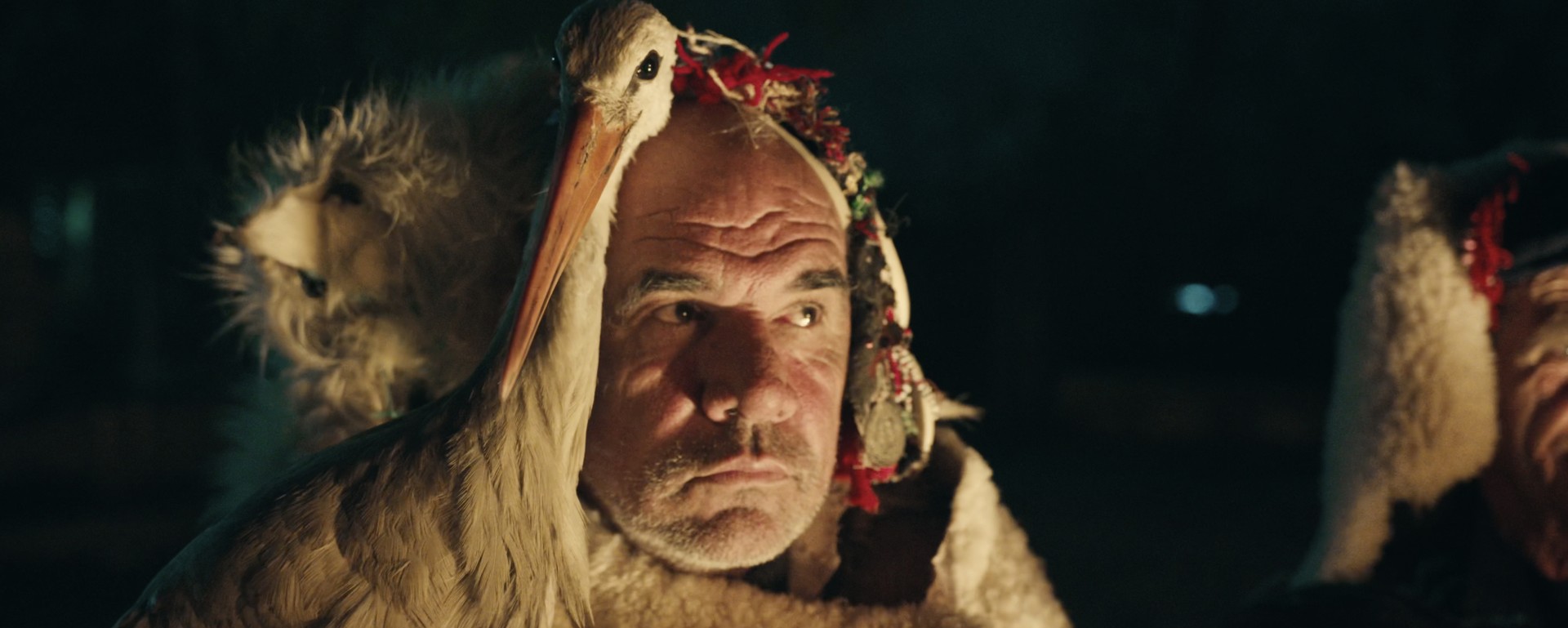
The Tale of Silyan follows storks and a Macedonian farmer named Nikola as environmental degradation and government policies transform landscapes and livelihoods. Storks, the national bird, fall ill after farmland becomes landfills; filmmakers track changing migration and encounter Nikola whose failing farm forces his family to emigrate and work at landfills. Nikola befriends an injured stork, creating a transformative relationship that illuminates broader social and ecological collapse. The film uses a traditional folktale as framing and employs lush cinematography, magical realism, and observational techniques to critique capitalism, industrialization, and governmental neglect while mourning human-nature ties.
"A few years ago, the Macedonian film " Honeyland" made history as the first documentary to be nominated in both the Best International Feature Film and Best Documentary Feature categories at the 92nd Academy Awards. This year, its co-director Tamara Kotevska is back with the equally poetic, searingly political documentary " The Tale of Silyan," which could very easily receive that same double honor this awards season."
"Inspired by the heartbreaking knowledge that storks, the national bird of North Macedonia, were becoming ill after farmland was converted into landfills, Kotevska reteamed with her longtime cinematographer and producer, Jean Dakar, to film the storks as they followed their new migration paths. As they filmed, they uncovered the story of Nikola, a farmer in North Macedonia whose farm was failing due to new government policies, forcing his family to immigrate abroad in search of financial stability."
"Kotevska soon realized that what was happening to the people of her country mirrored the traditional folktale that gives the film its title, using its text and lesson as a framing device and a form of narration. With its lush cinematography and deeply humanist tone, Kotevska's film marries observational filmmaking techniques with magical realism to craft a fiery screed against capitalism, industrialization, governments that profit over people, and an elegy for our fragile connection with nature."
Read at Roger Ebert
Unable to calculate read time
Collection
[
|
...
]