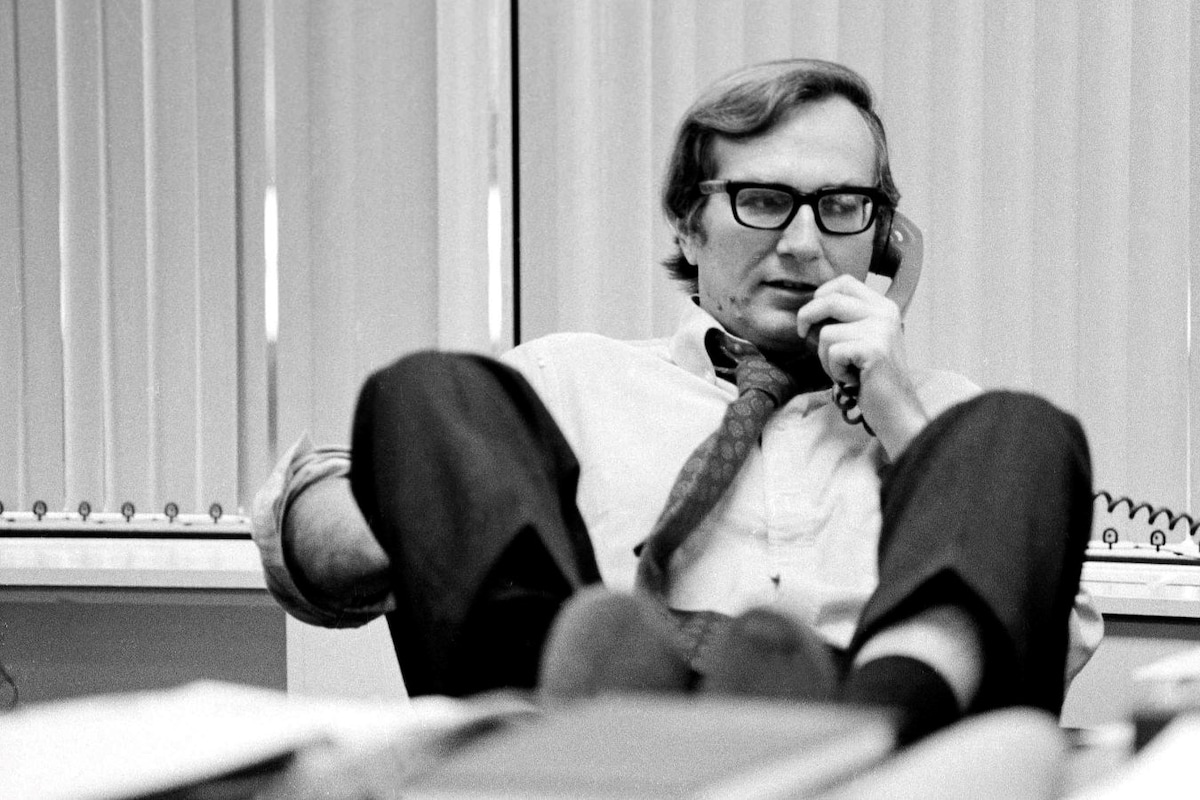
"The opening seconds of Cover-Up show footage from a 1968 news report in Utah, after a US Army nerve agent killed thousands of sheep at the Dugway Proving Ground. Institutional recklessness and an absence of accountability haunts the scene, themes that recur throughout the film - a thorough and occasionally spiky profile of investigative reporter Seymour Hersh. In addition to exposing America's chemical and biological weapon programmes, Hersh was responsible for several pivotal feats of journalism across the last half-century,"
""That kind of outsider adversarial counter-narrative, I mean, I make films about people who do that," Poitras tells AnOther over Zoom. "I've also been an outsider, maybe not so much in documentaries, but doing the Snowden reporting, I brought a big story to [the press] and they were like, 'Why are we working with a documentary filmmaker?' It was coming from a more independent perspective that is not unlike how Sy broke the My Lai story.""
The opening seconds of Cover-Up show footage from a 1968 news report in Utah after a US Army nerve agent killed thousands of sheep at the Dugway Proving Ground. Institutional recklessness and an absence of accountability haunts the scene and recurs as central themes. The film profiles investigative reporter Seymour Hersh and his career. Hersh exposed America's chemical and biological weapons programmes and broke pivotal stories including the My Lai massacre and the Abu Ghraib torture scandal. Filmmaker Laura Poitras is drawn to Hersh's dogged, adversarial ethos and collaborated with co-director Mark Obenhaus. The film leverages extensive archival newsreels, documents, and photographs.
Read at AnOther
Unable to calculate read time
Collection
[
|
...
]