#alpine-architecture
#alpine-architecture
[ follow ]
fromSnowBrains
7 hours agoA New Hope for Folgefonna, Norway - Glacier Resort Being Revitalized as Terrain Park - SnowBrains
"The glacier itself has since 1996 melted continuously. Today the glacier is 300 meters (1,000 feet) from the original lift entrance, and there is now a large lake between the glacier and the original entrance. You would need a boat to access it in summer."
Snowboarding
#architecture

Renovation
fromYanko Design - Modern Industrial Design News
3 days agoThis Japanese-Inspired Garden Studio in California Is Doing Three Jobs at Once - Yanko Design
Two-Fold Studio in Fairfax, California, is a multifunctional pavilion designed to accommodate a Pilates studio, ceramics workshop, and guesthouse within an 800-square-foot structure.
Renovation
fromYanko Design - Modern Industrial Design News
3 days agoThis Japanese-Inspired Garden Studio in California Is Doing Three Jobs at Once - Yanko Design
Two-Fold Studio in Fairfax, California, is a multifunctional pavilion designed to accommodate a Pilates studio, ceramics workshop, and guesthouse within an 800-square-foot structure.
fromwww.theguardian.com
6 days agoFrom gentle strolls to zipline thrills: summer hiking in the Swiss Alps
Thick grey-green mud squidges through my toes as I step into the icy, irresistible water. I'm on the descent from the Britannia Hut at the foot of the Allalinhorn in the Valais canton of the Swiss Alps.
Skiing
fromUnofficial Networks
2 days agoThese Skier Crosswalks Are The Peak Of Ski-Centric Infrastructure
Having the ability to ski all the way home after a day on the mountain is a rare and incredibly opportunity. Knowing you can ski right to your front or back door makes a ski trip all that much better.
Snowboarding
Snowboarding
fromsnowbrains.com
4 days agoI Went Skiing With a Legendary Australian Ski and Surf Photographer in the Alps Who Captured the Best Photos of My Life
Tony Harrington is a renowned photographer with a 40-year career in snow and surf photography, known for his breathtaking images and humble personality.
Snowboarding
fromSnowBrains
4 days agoPlacer County Planning Commission, CA, Unanimously Recommends Approval of Village at Palisades Tahoe Specific Plan - SnowBrains
The Placer County Planning Commission recommended approval of the Village at Palisades Tahoe Specific Plan, reflecting extensive community input and collaboration.
fromConde Nast Traveler
2 months agoThe Majestic Views and Warm Alpine Hospitality of Jungfrau, Switzerland
Standing among the Alps, it's easy to believe that they will last forever. They seem too big to fail, too old to change. This illusion of permanence has long entranced travelers who have visited to experience the intoxicating feeling of being daunted and dwarfed by a landscape's authority. But even mountains move: This past May an avalanche of ice and rock tore through the Lötschental Valley, erasing the village of Blatten in less than a minute.
Travel
fromFast Company
2 months agoAspen is finally getting a second ski base village. It's over 10 years in the making
After more than a decade of planning, an overlooked side of the ski haven of Aspen, Colorado, will soon be revamped into a new base village. Named Chalet Alpina and covering two-and-a-half city blocks, the development will build a new modern ski lift that is closer to the city's downtown and flank it with a luxury hotel and residences, a restaurant and ski museum inside relocated historic chalet buildings, and a broad new public plaza.
Real estate
fromTravel + Leisure
1 month agoThis Charming Western Ski Town Is Right Out of a Fairy Tale-With European Architecture and Mountain Views
Vail Village is where it all started... The original vision of creating a ski village, similar to what our founders envisioned from their experiences in Europe-particularly while serving as 10th Mountain soldiers-formed the foundation of a car-free, walkable street base village. Here, you'll find chalet-style buildings with detailed wood carvings and flower-filled window boxes.
Travel
fromTravel + Leisure
2 months agoThis May Be the Most Charming Ski Town in Europe-With Affordable Tickets, Epic Apres-ski Bars, and Long Sledding Trails
"At the top of that lift, I met my travel companion ( Travel + Leisure's own Nina Ruggiero), where we dined at Schafalm, a ski hut so charming, you'd think it was a movie set thanks to its crackling fireplace in the center, cedar walls, and lederhosen-wearing staff. "Are you guys going to the concert tonight?" three more strangers-turned-friends asked as BSB blared over the speakers, sitting down to join us for our cocoa break."
Travel
fromElite Traveler
2 months agoAlpine Chintz is Charming its Way Into Ski Chalet Design
The alpine luxury aesthetic has been whitewashed with bleached timbers, disciplined schemes in varying shades of snow, and bouclé furniture that politely receded into the background - all designed to quiet the senses after a day on the slopes. It was a look that mirrored the landscape outside: serene and elemental. But something more decorative is carving fresh tracks. A new generation of designers is embracing pattern, color and ornament at altitude, with chintz leading the mountain-maximalist charge refreshingly off-piste.
Design
fromdesignboom | architecture & design magazine
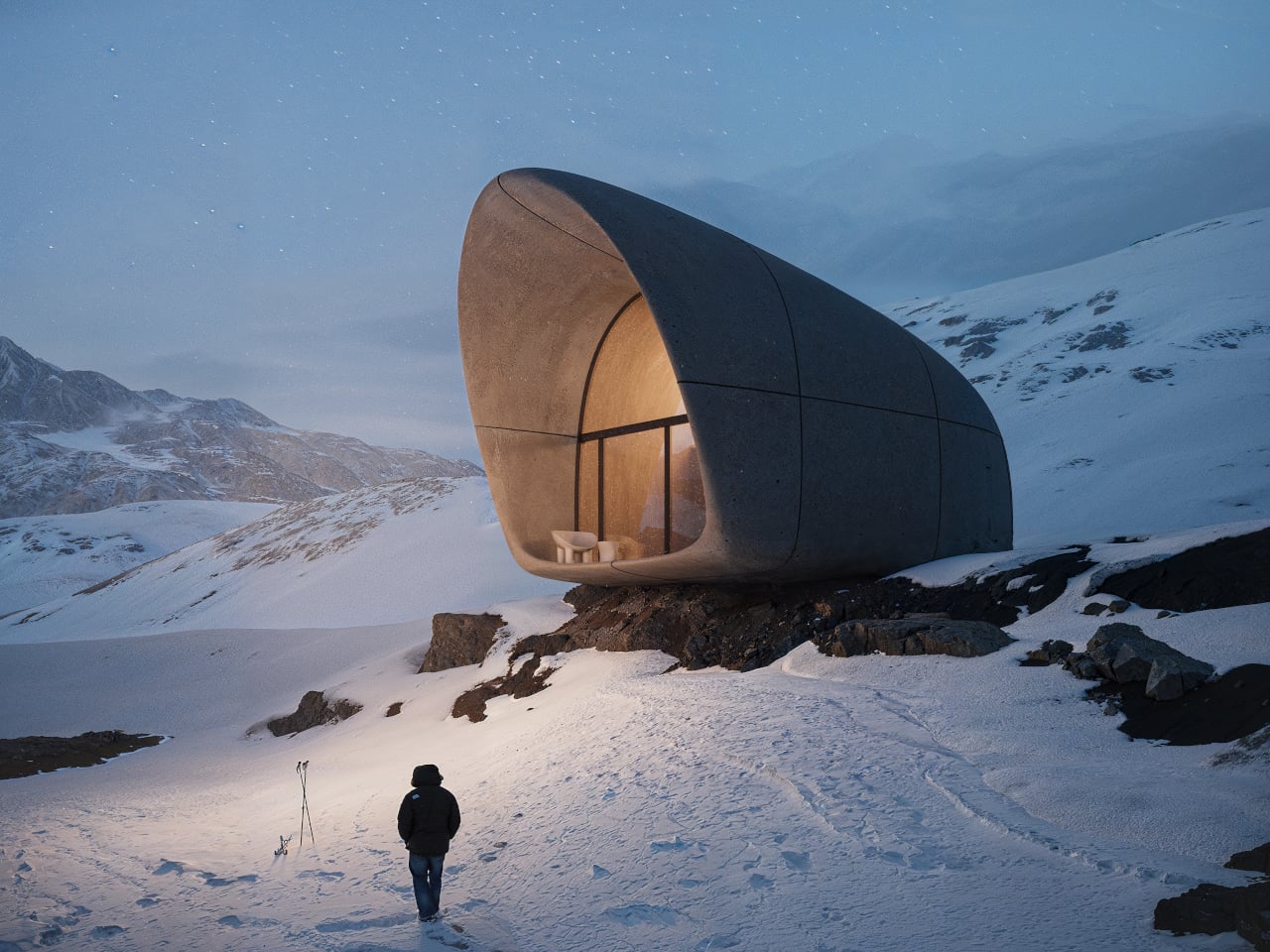
2 months agohigh-altitude cottage emerges like a rock from georgian mountains
Studio Stipfold designs AltiHut Cottage as part of first sustainable high-altitude hospitality ecosystem, combining a compact layout, fiber- architecture, and panoramic glazing to minimize impact while maximizing experience. At 3,014 meters above sea level, AltiHut stands as more than a mountain . It is a statement of responsibility, vision, and care for the planet. The project challenges the idea of adventure tourism by uniting comfort, awareness, and respect for nature. Every element, delivered by helicopter and powered by the sun, reflects a belief that hospitality can exist in balance with the environment.
Design
fromYanko Design - Modern Industrial Design News
2 months agoA 20-Square-Meter Boulder-Shaped Cabin That Blends Right Into The Pyrenees - Yanko Design
High in the Pyrenees, where forests, rock, and weather dictate their own quiet rules, Forestone Cabin appears less like a building and more like a geological event. At just 20 square meters, this experimental wooden dwelling does not announce itself as architecture in the conventional sense. Instead, it feels as though it has always been there, something solid that rolled down the mountain long before anyone thought to give it a name.
Design
fromdesignboom | architecture & design magazine
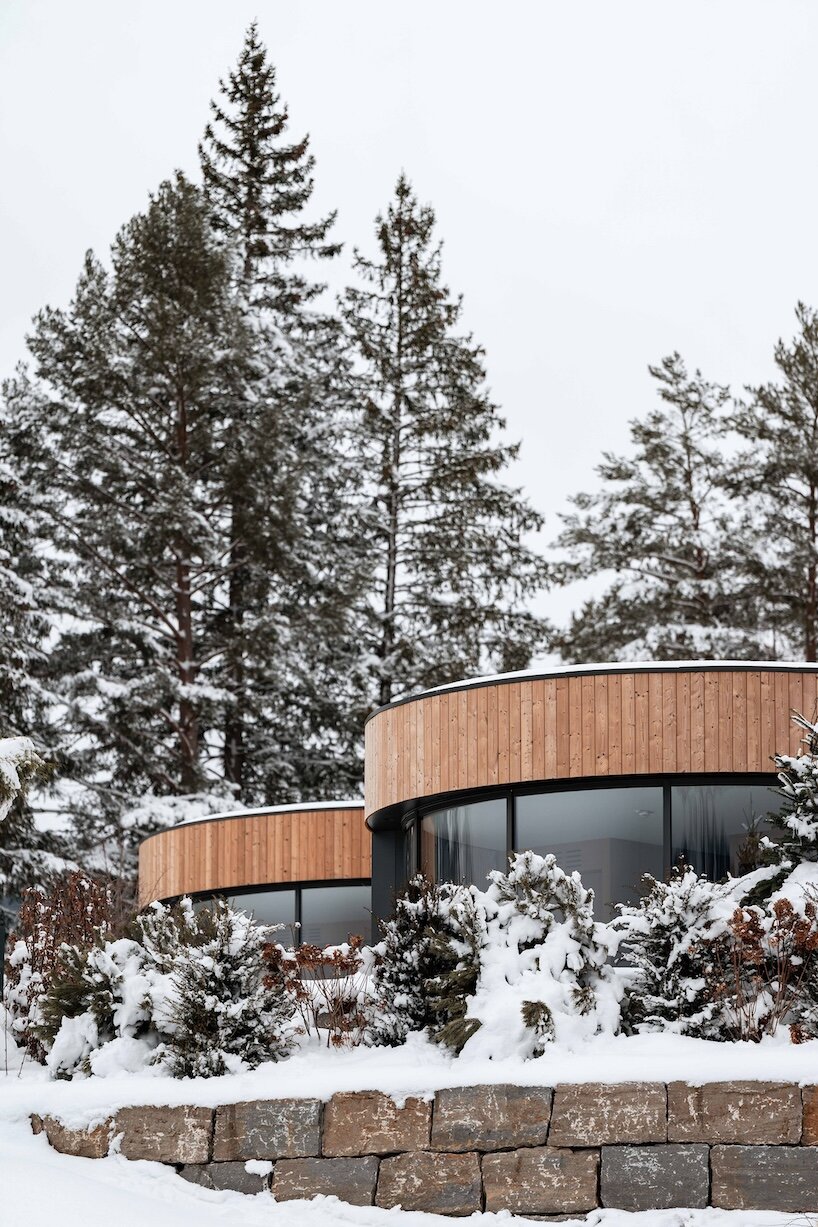
2 months agocluster of curved rooftops encloses .ket bureau's lakeside wellness pavilion for st. moritz
Lacum Respira is a lakeside pavilion by .ket bureau on the shore of Lake St. Moritz in Switzerland. Set at the water's edge, the timber structure addresses a landscape shaped by seasonal rituals and a long tradition of outdoor life, where the lake acts as both foreground and horizon. The calm setting is defined by open air and backdropped by dramatic mountains. Any architectural move here carries weight.
Design
Design
fromdesignboom | architecture & design magazine
2 months agopeter pichler designs this 'museum depot' to resemble a grassy tyrolean peak
A grass‑roofed, low‑slung museum depot in Bolzano centralizes over one million South Tyrol cultural objects, integrating conservation, research, and public access within a cohesive campus.
Design
fromdesignboom | architecture & design magazine
1 month agoGRRIZ shapes reversible timber structure along the arc of the setting sun in italian mountains
Palcosole is a reversible timber stage in Italy's Apennine hills designed with a 30-degree canopy that tracks the sun's arc, using geometric principles and dry assembly for complete removal without environmental impact.
Design
fromdesignboom | architecture & design magazine
1 month agoalpine garden installation by BUREAU emerges in milan's urban fabric for winter olympics
Flora Alpina is a temporary alpine garden installation at Centro Svizzero during the Winter Olympics that symbolizes Switzerland as a bounded yet open landscape through the historic 'Hortus Conclusus' garden concept.
fromdesignboom | architecture & design magazine
2 months agopitched thatched roof expands upon sarchina villa's cone white brick columns
The primary volume is elevated above the site and supported by four inverted-cone white columns. These structural elements lift the building clear of the terrain, preserving visual and physical continuity at ground level and allowing grass, air, and movement to pass beneath the structure. The elevation creates a shaded patio below the main volume, extending the usable space of the villa while reinforcing its lightweight presence.
Design
Design
fromdesignboom | architecture & design magazine
2 months agocedar-clad 'staggered cabin' by mork-ulnes steps down a forested slope above lake tahoe
Four staggered cedar volumes step along a forested Tahoe slope, creating compact shed-roofed cabins that preserve boulders and trees and form sheltered outdoor courts.
fromRemodelista
2 months agoA Modernist Ski House in Australia Updated by Brahman Perera
The owners accused their new house of being a tad cold and imposing. Designed about 15 years ago by eminent Australian firm Cera Stribley with interiors by Hecker Guthrie, the stone structure presented an impressive modernist take on a ski chalet. "It was conceived as a robust, contemporary alpine house with a strong architectural framework and limited palette, very disciplined and intentional," says designer Brahman ("Brem") Perera. "My clients asked me to step in to soften the interiors," Brem continues. "They deeply appreciated the architecture, but felt the spaces leaned a little austere and formal for how they wanted to live." The family retreat, located slope side on Australia's Mount Buller, has since been given an impressive makeover, courtesy of grained wood paneling, glazed brick, patterned textiles, and a lot of inviting landing spots.
Renovation
[ Load more ]