#ab-247
#ab-247
[ follow ]
#clinical-trials #eli-lilly #drug-development #biotech #fda #pharmaceuticals #cancer-research #immunotherapy
Intellectual property law
fromIPWatchdog.com | Patents & Intellectual Property Law
1 day agoThe Supreme Court Picks the Wrong Patent Fight in Hikma v. Amarin
The Supreme Court's decision in Hikma v. Amarin reflects a focus on drug pricing over patent law uncertainties affecting pharmaceutical innovation.


fromTNW | Amazon
5 days agoAmazon launches AI Bio platform to accelerate early-stage drug discovery
Amazon Bio Discovery enables scientists to run complex computational workflows through more than 40 AI-specialized foundational models, trained on a wide range of biological datasets. These models generate and evaluate potential drug molecules, alongside AI agents that help scientists to select models, optimize inputs and evaluate candidates according to their research.
Public health


#patent-law
Intellectual property law
fromIPWatchdog.com | Patents & Intellectual Property Law
5 days agoFederal Circuit Distinguishes Amgen in Reversal of Invalidation of Teva Headache Treatment Patents
The Federal Circuit reversed the district court's invalidation of Teva's headache treatment patents, affirming their validity under written description and enablement requirements.
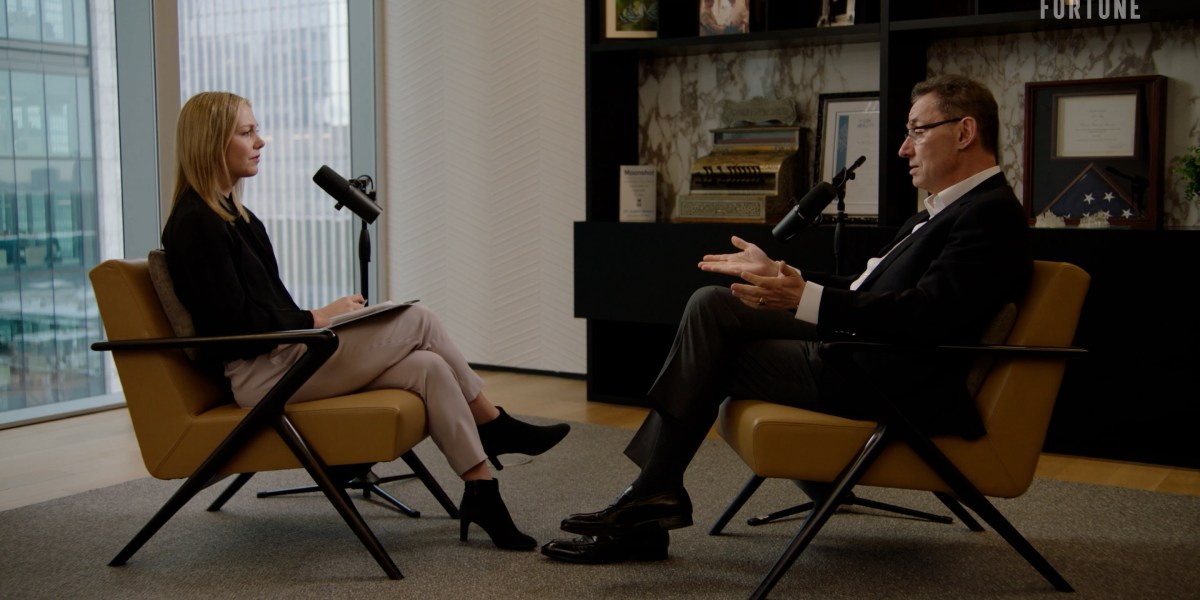
from24/7 Wall St.
2 weeks ago5 Biotechs That Big Pharma Could Snap Up as Oncology M&A Heats Up
Incyte tops this list due to its rare combination of commercial scale, cash generation, and pipeline depth. The company posted FY2025 revenue of $5.14 billion, up 21.2% YoY, anchored by Jakafi generating $828.2 million in Q4 2025 alone (+7% YoY) and Opzelura delivering $207.3 million (+28% YoY). With $3.58 billion in cash and 14 pivotal clinical trials underway, Incyte offers an acquirer immediate revenue, margin expansion potential, and a deep oncology pipeline spanning KRASG12D, CDK2 inhibition, and mutCALR.
Venture
fromnews.bitcoin.com
3 weeks agoEnlivex Announces $21M Debt Financing and Prediction Markets Treasury Expansion
We are continuing to execute our prediction markets treasury strategy, and we are pleased that Lind provided us with substantial capital, stated Shai Novik, Executive Chairman of Enlivex.
Fundraising

London startup
fromBusiness Matters
1 month agoBIOCAPTIVA raises 1.58m to transform liquid biopsy sample preparation
BIOCAPTIVA secured £1.58 million funding to commercialize msX technology, which simplifies blood sample preparation for cancer diagnostics by using magnetic bead extraction to isolate cell-free DNA directly from whole blood.
from24/7 Wall St.
1 month agouniQure, Syndax and Erasca Are Drawing Analyst Interest Ahead of Key Drug Catalysts
RBC Capital analyst Luca Issi upgraded the stock to Outperform from Sector Perform with a price target of $35, up from $11. Wells Fargo also upgraded uniQure to Overweight from Equal Weight with a $60 price target. The catalyst: the departure of Vinay Prasad from the FDA. RBC views this as a positive for uniQure, noting it is "not inconceivable" that the FDA reverts to its prior stance, and believes Prasad's departure is likely to open up a more balanced discussion on risk/reward for Huntington's disease.
NYC startup
fromenglish.elpais.com
2 weeks agoFollowing the initial trials in Africa of the groundbreaking drug that could put an end to AIDS
On that sunny March morning, in a small health center in Lobamba, a rural area of Eswatini, this 32-year-old sex worker has just become one of the first people in the world to receive lenacapavir, a drug that, administered twice a year, offers nearly 100% protection against HIV.
Medicine
OMG science
fromHarvard Gazette
2 months agoWhy did that cancer cell become drug-resistant? - Harvard Gazette
TimeVault records and stores cellular gene-expression history inside living cells, enabling retrieval of past gene-activity information to study differentiation, stress responses, adaptation, and drug resistance.
Healthcare
fromFast Company
1 month agoResponsible compounding could close the innovation gap
Compounding can responsibly accelerate patient access to needed therapies when grounded in rigorous data, filling genuine clinical gaps while pursuing FDA approval, particularly in underserved areas like women's health.
fromIPWatchdog.com | Patents & Intellectual Property Law
1 month agoModerna Settles with Genevant and Arbutus, Ending LNP Patent Dispute
The settlement resolves all U.S. and international patent litigation concerning the unauthorized use of Genevant's and Arbutus' lipid nanoparticle (LNP) delivery technology in Moderna's COVID-19 vaccines. The agreement came just days before a highly anticipated jury trial was scheduled to begin in the U.S. District Court for the District of Delaware.
Intellectual property law
fromArs Technica
2 months agoFDA refuses to review Moderna's mRNA flu vaccine
While the move came as a surprise to the high-profile vaccine maker, it is just the latest hostility toward vaccines-and mRNA vaccines in particular-from an agency overseen by the fervent anti-vaccine activist Robert F. Kennedy Jr. In his first year in office, Kennedy has already dramatically slashed childhood vaccine recommendations and canceled $500 million in research funding for mRNA vaccines against potential pandemic threats.
Public health
fromArs Technica
1 month agoHave we leapt into commercial genetic testing without understanding it?
Martschenko's argument is largely that genetic research and data have almost always been used thus far as a justification to further entrench extant social inequalities. But we know the solutions to many of the injustices in our world-trying to lift people out of poverty, for example-and we certainly don't need more genetic research to implement them. Trejo's point is largely that more information is generally better than less.
Science
fromNature
2 months agoThis AI has chemical expertise - and helps synthesize 35 new drugs and materials
Now, researchers have created an artificial-intelligence system that vastly simplifies and accelerates the process of chemical synthesis. The system, which is called MOSAIC and is described in a study published in Nature on 19 January, recommended conditions that researchers were able to use to generate 35 compounds with the potential to become products like pharmaceuticals, agrochemicals or cosmetics without needing to do any further trawling or tweaking.
Artificial intelligence
fromMail Online
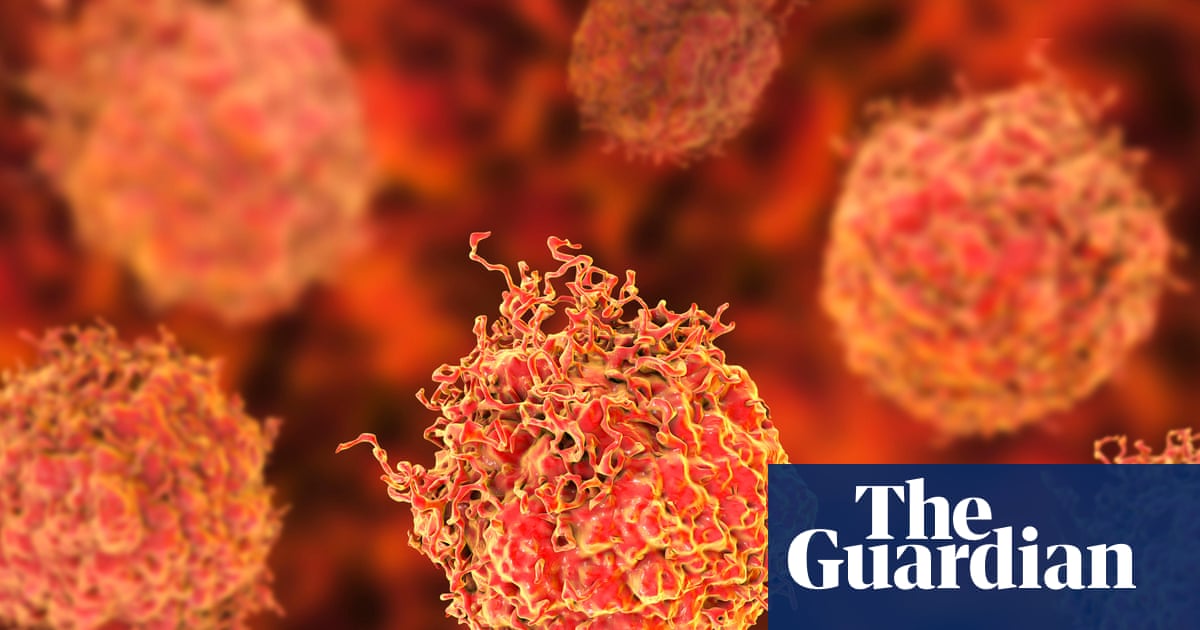
1 month agoOutrage as cancer-fighting drug in US patent echoes hidden CIA file
According to the patent, a specific crystalline form of the drug known as polymorph C may be more effective than other versions because it is absorbed more efficiently by the body. The patent also notes that laboratory studies showed the drug reduced tumor growth and helped mice with brain tumors live longer, prompting early clinical trials to test whether the treatment is safe and effective in humans.
Cancer

fromIPWatchdog.com | Patents & Intellectual Property Law
2 months agoJudge Wolson Issues Key Summary Judgment Ruling on Eve of Trial in Arbutus v. Moderna
On February 2, 2026, U.S. District Court for the Eastern District of Pennsylvania Judge Joshua D. Wolson, sitting by designation in the U.S. District Court for the District of Delaware, made several key summary judgment rulings in advance of trial in Arbutus Biopharma Corporation and Genevant Sciences GmbH (collectively "Arbutus") v. Moderna, Inc. and ModernaTx, Inc. (collectively " Moderna "), No. 1:22-cv-00252 (D. Del.).
Intellectual property law
from24/7 Wall St.
1 month agoX4 Pharmaceuticals, Immuneering and Tango Therapeutics Are Getting New Analyst Attention
X4 Pharmaceuticals drew a fresh initiation from Guggenheim, which assigned a Buy rating and $12 price target, framing the company as a "differentiated hematology play" with significant upside in the next 18 months. The firm's thesis centers on mavorixafor, a potential first-in-class oral CXCR4 antagonist already approved for WHIM syndrome and currently in Phase 3 development for primary chronic neutropenia.
Cancer
Cancer
fromenglish.elpais.com
1 month agoDouglas Hanahan, biologist: We don't necessarily need a cure, what we really need is cancer without disease'
Cancer cells acquire hallmarks: uncontrolled proliferation, evasion of growth barriers, resistance to programmed death, and relative immortality, driving tumor diversity and treatment variability.
Medicine
fromSilicon Canals
2 months agoEurope Oncology Genomics Tracker Captures Oncologist Perspectives Across Major European Markets - Data Report by DeciBio Consulting LLC - Silicon Canals
Genomic testing adoption for solid tumor oncology is growing across EU-5 with varied country-specific drivers and infrastructure tracked via a survey of 100+ oncologists.
fromNature
2 months agoMy 'detective' job as a competitive-intelligence consultant for pharma
We provide thought partnership. When a company is developing a drug, there's a lot of work involved, such as understanding the science, designing a study and generating good data. We come in and explain what the standard of care looks like today for their patient population, and what we think it will look like in five to eight years or whenever they plan to launch their therapy.
Medicine
fromArs Technica
2 months agomRNA cancer vaccine shows protection at 5-year follow-up, Moderna and Merck say
As for side effects, the companies reported that little had changed from previous analyses; adverse events were similar between the two groups. The top side effects linked to the vaccine were fatigue, injection site pain, and chills. The results "highlight the potential of a prolonged benefit" of the vaccine combined with Keytruda in patients with high-risk melanoma," Kyle Holen, a senior vice president at Moderna, said. They also "illustrate mRNA's potential in cancer care," he said, noting that the company has eight more Phase 2 and Phase 3 trials going for mRNA vaccines against a variety of other cancers, including lung, bladder, and kidney cancers.
Medicine
fromTNW | Deep-Tech
2 months agoAerska raises $39M to help RNA medicines reach the brain
For families living with neurodegenerative disease, the hardest part is not always the diagnosis. It is the slow erosion that follows: memory fading, personality shifting, independence shrinking. It unfolds quietly. First, forgotten appointments. Then repeated questions. Then moments when a familiar face no longer feels familiar. The illness does not isolate itself to one body. It rearranges the lives around it.
Medicine
fromNature
2 months agoNIH rolls back red tape on some experiments - spurring excitement and concern
Many researchers are surprised and relieved over an unusual step taken by the US National Institutes of Health (NIH): the agency is rolling back the red tape on a host of basic-science experiments that involved human participants and had been classified as clinical trials. The decision, which was announced on 29 January and is part of a broader NIH effort to reduce administrative burden, should free such research from the heavy bureaucratic requirements that are designed for clinical trials but are sometimes ill-suited to other fields, such as basic psychology and behavioural studies.
Medicine
Medicine
fromwww.theguardian.com
2 months agoPeople are turning themselves into lab rats': the injectable peptides craze sweeping the US
Grey-market injectable peptides are unapproved, widely used by biohackers despite lacking reliable safety data, quality control, and presenting potential health and legal risks.
[ Load more ]