#us-dollar
#us-dollar
[ follow ]
#federal-reserve #treasury-yields #monetary-policy #federal-reserve-policy #inflation #currency-markets #gold





Business
fromLondon Business News | Londonlovesbusiness.com
2 weeks agoThe future of silver: Where are prices heading? - London Business News | Londonlovesbusiness.com
Silver is becoming a significant hybrid investment due to rising industrial demand and its role in clean energy, despite challenges from monetary policies.
#geopolitical-risk
US Elections
fromLondon Business News | Londonlovesbusiness.com
2 weeks agoUS dollar rose amid a rebound in geopolitical concerns - London Business News | Londonlovesbusiness.com
The US dollar strengthened due to geopolitical fears and better-than-expected economic data, while uncertainty keeps market volatility high.

#petrodollar
World politics
fromFortune
3 weeks agoDollar dominance is reinforced by the global oil trade, but the Iran war could give rise to the 'petroyuan' as U.S. security shield weakens | Fortune
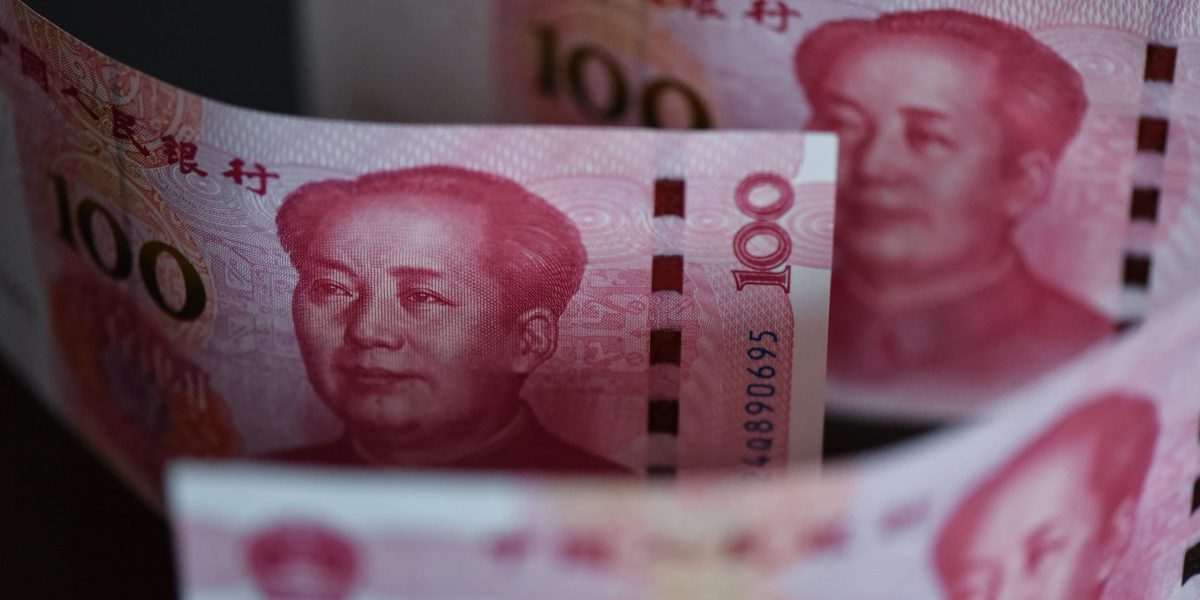
Trump's actions against Iran may weaken the petrodollar and allow China's currency to gain influence in global trade.
Business
fromLondon Business News | Londonlovesbusiness.com
4 weeks agoA cautious recovery in silver - London Business News | Londonlovesbusiness.com
The silver market is influenced by monetary and geopolitical factors, with current price movements reflecting tactical responses rather than structural shifts.

fromLondon Business News | Londonlovesbusiness.com
1 month agoDollar under pressure as geopolitical concerns ease - London Business News | Londonlovesbusiness.com
The expectations of a decrease in tensions triggered a pullback in oil prices, which in turn softened immediate concerns about inflation pressures. However, the broader geopolitical backdrop remains fragile, and any renewed escalation could quickly push oil prices, the dollar, and Treasury yields higher again.
World politics
US politics
fromLondon Business News | Londonlovesbusiness.com
1 month agoDollar Faces Risks Amid Tariff and Policy Uncertainty - London Business News | Londonlovesbusiness.com
The dollar faces pressure from Trump's unchanged tariff stance and trade policy uncertainty, partially offset by Fed caution and strong employment data supporting Treasury yields.
fromLondon Business News | Londonlovesbusiness.com
2 months agoDollar stable ahead of incoming data releases - London Business News | Londonlovesbusiness.com
However, the index could continue to see some downside risks after Friday's softer-than-expected inflation report reinforced the disinflation narrative and strengthened expectations for additional easing later this year. Forecasts now point to three rate cuts this year instead of two before the inflation data release. Momentum in the index will see Dollar pairs break through key levels of support and resistance, injecting life into trends.
US news


US news
fromLondon Business News | Londonlovesbusiness.com
2 months agoDollar edged slightly higher ahead of key inflation test - London Business News | Londonlovesbusiness.com
January CPI could recalibrate Fed policy expectations; softer inflation would support disinflation and rate cuts, while upside risks would strengthen the dollar and yields.
US news
fromLondon Business News | Londonlovesbusiness.com
2 months agoDollar stabilised as investors await key US data - London Business News | Londonlovesbusiness.com
Dollar steadied but remains vulnerable as reduced appetite for dollar assets and softer US data could weaken the currency and Treasury yields.
World news
fromLondon Business News | Londonlovesbusiness.com
2 months agoMexican Peso strengthen amid a weaker dollar - London Business News | Londonlovesbusiness.com
The Mexican peso strengthened toward 17.16 per dollar amid broad dollar weakness while persistent core inflation supports a continued Bank of Mexico policy pause.
US news
fromLondon Business News | Londonlovesbusiness.com
2 months agoDollar slides as markets brace for jobs data and Fed signals - London Business News | Londonlovesbusiness.com
The US dollar weakened ahead of the January employment report, with payrolls and Fed comments able to move markets and influence rate‑cut expectations.

fromLondon Business News | Londonlovesbusiness.com
2 months agoDollar steady as data delays force caution - London Business News | Londonlovesbusiness.com
The US dollar traded in a consolidation phase on Wednesday, as a partial government shutdown continues to delay key economic releases and keeps investors in a wait-and-see mode. With job data postponed, markets are temporarily deprived of fresh evidence on the health of the US labour market, limiting directional moves in the market. Markets could react to new data, including the ISM Services PMI figures release later today.
US news
fromFuturism
2 months agoInvestors Dumping American Stocks as the Country Bets Everything on AI
For decades, the United States stock market has been a juggernaut on the international stage. The US dollar has been - and still is - the de facto currency globally. But for how much longer that will be the case is now looking uncertain. As the New York Times reports, investors are starting to look elsewhere as the Trump administration continues to threaten the independence of its central bank, start a trade war with Europe, and implement self-conflicting monetary policies.
US politics
fromLondon Business News | Londonlovesbusiness.com
2 months agoDollar struggle and monetary policy shape the next phase - London Business News | Londonlovesbusiness.com
The resilience of gold above $4,800 per ounce at this stage reflects a delicate and complex balance between traditional supporting factors and emerging pressures-one that cannot be superficially interpreted or reduced to the movement of the dollar alone. It is true that the U.S. dollar's retreat from its recent peaks, after failing to sustain its recovery momentum from a four-year low, provided gold with a short-term breather and attracted some buyers.
Business
fromBusiness Matters
2 months agoFTSE 100 hits record high as dollar rallies and gold extends sharp pullback
London's blue-chip index finished up 118.02 points, or 1.15 per cent, at 10,341.56, reversing an early European sell-off and setting a new closing peak. Traders bet that the dollar's recent rally would boost earnings prospects for UK-listed multinationals, around three-quarters of which generate revenues in dollars. The session was marked by heavy volatility across asset classes: Gold prices fell a further 1.9 per cent to $4,648.76 an ounce, their lowest closing level since mid-January and more than 13 per cent below last week's record high.
Miscellaneous
US news
fromFortune
2 months agoTrump thinks a weaker dollar is great, but the U.S. needs a stable currency as national debt heads toward $40 trillion, former Fed president says | Fortune
Rising U.S. debt and recent political moves have weakened the dollar, prompting concerns that currency stability may be prioritized over export gains.
Business
fromLondon Business News | Londonlovesbusiness.com
2 months agoHow does the decline of the US dollar reshape the sector landscape within the S&P 500 index? - London Business News | Londonlovesbusiness.com
US dollar weakness has become a pivotal determinant of S&P 500 sectoral performance, structurally supporting internationally exposed technology, digital services, communications, and global healthcare.
US politics
fromenglish.elpais.com
2 months agoDollar slump shows no signs of ending: Analysts foresee more drops as traders move to protect portfolios
U.S. political unpredictability and global financial shocks have weakened the dollar, prompting investors to diversify toward safer, more stable assets.
fromwww.theguardian.com
2 months agoAI boom will produce winners and carnage,' says tech boss; dollar sinks to four-year lows after Trump comments business live
It pushed the US dollar index to a four-year low and continues to drive gold and silver to fresh record highs this morning. Trade and geopolitical uncertainty, tied to an increasingly unreliable American friend and ally, as well as growing concerns about what will happen to the Federal Reserve's credibility once Jerome Powell leaves office (it will fly out of the window), continue to weigh on the US dollar.
Business
fromBitcoin Magazine
2 months agoBitcoin Price Nears $90K As Trump Shrugs Off Dollar Concerns
The bitcoin price rallied sharply into the close on Tuesday, surging above $89,400 after trading as low as $87,100 earlier in the day, according to Bitcoin Magazine Pro data, as markets reacted to fresh remarks from President Donald Trump on the U.S. economy. The late-day move came as Trump, speaking in Iowa, dismissed concerns over the weakening U.S. dollar, telling supporters he was "not concerned" about its decline and insisting the dollar was "doing great."
Cryptocurrency
US politics
fromLondon Business News | Londonlovesbusiness.com
2 months agoDollar stabilises near multi-month lows - London Business News | Londonlovesbusiness.com
Dollar faces pressure from US political uncertainty, potential Fed leadership change, trade tariff risks, and yen-strengthening intervention ahead of the Fed decision.
World news
fromFortune
2 months agoAn unusual Fed 'rate check' triggered a freefall in the U.S. dollar and investors are fleeing into gold | Fortune
The U.S. dollar plunged after a New York Fed 'rate check' signaled possible coordinated support for the yen, while gold surged above $5,000 and traders fled the dollar.
fromFortune
2 months agoThe Trump TACO trade is driving up the price of gold as central banks hoard bullion to hedge against the dollar | Fortune
Perhaps we should not have been surprised.In what now looks like a well-worn negotiating tactic, President Trump yesterday did a complete 180-degree U-turn from his previous threats and said he would not use military force to invade Greenland, would not impose tariffs on European countries resisting a U.S. takeover of Danish territory, and would accept "additional discussions" instead.The markets breathed a big sigh of relief.
US politics
fromLondon Business News | Londonlovesbusiness.com
3 months agoDollar retreats as trade tensions fuel risk aversion - London Business News | Londonlovesbusiness.com
The US dollar weakened at the open on Monday, pulling back from multi-week highs and underperforming against other major currencies. The move followed renewed geopolitical and trade tensions after President Donald Trump threatened several European countries with new tariffs in an effort to gain control over Greenland. Germany, the United Kingdom, France, Denmark, Norway, Sweden, the Netherlands and Finland were identified as potential targets, facing a proposed 10% tariff from February 1, which could rise to 25% in June unless an agreement is reached.
US politics
US politics
fromFortune
3 months agoDollar sinks as Trump's new tariffs raise fears about U.S. debt and reserve currency status. 'When it's lost, economic collapse will follow' | Fortune
Trump's new tariff threats weakened the dollar and propelled gold and silver higher, raising risks to trans-Atlantic ties and the dollar's reserve status.
fromLondon Business News | Londonlovesbusiness.com
3 months agoDollar holds on strong labour data - London Business News | Londonlovesbusiness.com
The US dollar held steady on Friday after Thursday's advance. The stronger-than-expected labour market data supported the currency. The reports reinforced the scenario where the Federal Reserve holds its interest rates unchanged in the near future. Initial jobless claims fell by 9,000, reaching 198,000 claims and contradicting expectations for an increase to 215,000. Continuing claims also declined, extending a downward trend in place since October. Together, these figures suggest labour market conditions remain relatively firm, easing concerns about a rapid deterioration in employment momentum.
US news
fromLondon Business News | Londonlovesbusiness.com
3 months agoDollar consolidates near multi-week highs - London Business News | Londonlovesbusiness.com
The US dollar remained in a consolidation phase on Thursday, holding close to multi-week highs. Inflation data released on Wednesday painted a broadly stable picture. Producer prices increased moderately on the month. Taken together with earlier CPI data, inflation trends appear neither re-accelerating nor cooling decisively. Retail sales provided a contrasting signal, rebounding strongly in November. Improved consumer spending, suggesting household demand remains relatively healthy, limiting immediate downside risks to growth.
US news
US politics
fromLondon Business News | Londonlovesbusiness.com
3 months agoDollar slumps as Fed independence comes under fire - London Business News | Londonlovesbusiness.com
Concerns about the Federal Reserve's independence after reports of a criminal investigation into Chair Jerome Powell weakened the US dollar and raised market volatility risks.
US news
fromLondon Business News | Londonlovesbusiness.com
3 months agoEURUSD: US labour data cool, but not enough to form a clear trend - London Business News | Londonlovesbusiness.com
The U.S. economy is cooling gradually, reducing dollar strength while leaving the Fed likely to delay immediate rate cuts amid elevated inflation expectations.
US news
fromLondon Business News | Londonlovesbusiness.com
3 months agoDollar volatile on geopolitical jitters and weak manufacturing data - London Business News | Londonlovesbusiness.com
US economic slowdown and geopolitical tensions increased dollar volatility and raised expectations of a dovish Federal Reserve with markets pricing two 2026 rate cuts.
fromFortune
3 months agoDollar set for worst year since 2017 with Fed drama center stage | Fortune
The dollar is poised for its sharpest annual retreat in eight years and investors say more declines are coming if the next Federal Reserve chief opts for deeper interest-rate cuts as expected. The Bloomberg Dollar Spot Index has fallen about 8% this year so far. After tumbling in the wake of Donald Trump's "Liberation Day" tariffs in April, the greenback came under sustained pressure as the president kicked off his aggressive campaign to get a dovish appointee installed as Fed chair next year.
US news
US news
fromLondon Business News | Londonlovesbusiness.com
3 months agoDollar hovers near multi-week lows ahead of FOMC minutes amid thin year-end liquidity - London Business News | Londonlovesbusiness.com
FOMC minutes and Federal Reserve leadership uncertainty are weighing on the US dollar, with markets pricing two rate cuts in 2026.
fromLondon Business News | Londonlovesbusiness.com
3 months agoDollar slips ahead of GDP, rate cut expectations weigh - London Business News | Londonlovesbusiness.com
The US dollar edged lower on Tuesday ahead of the release of GDP data, as expectations of further monetary easing continued to weigh on both the currency and Treasury yields. The 10-year yield slipped back, erasing Monday's gains, reflecting renewed caution among investors. While markets broadly expect the Federal Reserve to keep rates unchanged at its January meeting, expectations for 2026 remain tilted toward two rate cuts, leaving the dollar vulnerable to downside surprises in macro data.
Business
fromLondon Business News | Londonlovesbusiness.com
4 months agoDollar at risk on rate cut expectations - London Business News | Londonlovesbusiness.com
The dollar could remain under pressure, as it hovers near multi-week lows, and could extend last week's losses, as markets continue to expect additional interest rate cuts. The latter could continue to weigh on the greenback and US treasury yields. Attention now turns to a dense macro calendar that could define market direction in the weeks ahead. Tuesday's release of delayed nonfarm payrolls data for October and November will be closely scrutinised for confirmation of labour market cooling.
US news
fromLondon Business News | Londonlovesbusiness.com
4 months agoDollar stable ahead of new economic data
The US dollar was relatively flat today, stabilizing after a second week of declines. Weaker US labour data reinforced expectations of a Fed cut next week. Yesterday's ADP report showed a surprise 32,000 drop in private-sector jobs, signalling that the job market is losing steam and fuelling concerns about the economy. Markets are still pricing close to an 87% probability of a 25 bps rate cut at the December FOMC meeting, in addition to more cuts during 2026.
US news
US news
fromLondon Business News | Londonlovesbusiness.com
4 months agoUS dollar slides as Fed cut expectations rise and BoJ hints at hike - London Business News | Londonlovesbusiness.com
US dollar weakens as markets price an ~87% chance of a December Fed 25bp cut, a potential Fed chair pick signals easing, while BOJ hints at tightening.
World politics
fromFortune
5 months agoTrump 'dominates the political scene' like no other recent U.S. president, says famed diplomat Kishore Mahbubani | Fortune
Donald Trump has been a consequential president who reshaped the political agenda while U.S. economic size and the dollar remain powerful tools amid China's rise.
[ Load more ]