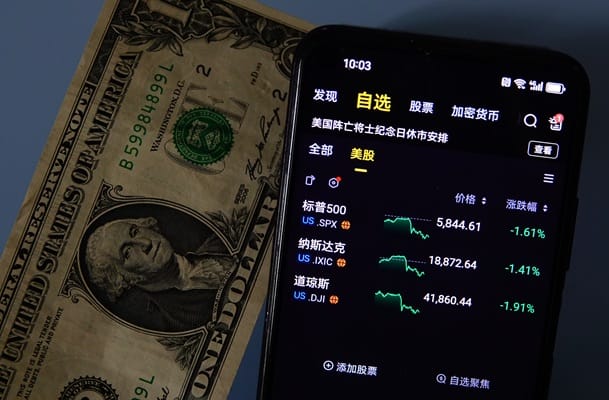
"In light of the recent shifts in currency markets, I believe that the weakness of the US dollar is no longer a secondary factor in equity pricing, but has become a pivotal variable reshaping expectations for the S&P 500 index and the broader trajectory of US equities. From my perspective, what we are currently witnessing is a delicate transitional phase, where currency movements intersect with monetary policy and the evolving nature of the US economy itself."
"The dollar is no longer merely a pricing tool or a safe haven; it has become a direct transmission channel for both economic shocks and investment opportunities. As dollar volatility returns to the forefront of investor concerns, a negative feedback loop strengthens, influencing hedging behaviour and the reallocation of capital across sectors, with direct implications for the performance of the S&P 500."
"From my standpoint, US dollar weakness provides structural support to sectors with high international exposure, most notably technology, digital services, communications, and global healthcare. These sectors benefit not only from improved global competitiveness, but also from the revaluation of future earnings when foreign revenues are translated back into dollars. Accordingly, I expect these sectors to maintain their relative outperformance within the index, even in the event of a potential economic slowdown, as long as the dollar remains weak or volatile."
US dollar weakness has become a primary influence on equity pricing and sectoral dynamics within the S&P 500. Currency movements now intersect with monetary policy and structural shifts in the US economy, making forward-looking assessments dependent on dollar–sector relationships. A weaker dollar reshapes sectoral performance by improving global competitiveness and revaluing foreign revenues in dollar terms. Dollar volatility acts as a transmission channel for economic shocks and investment opportunities, prompting hedging adjustments and capital reallocation that affect index performance. Sectors with high international exposure—technology, digital services, communications, global healthcare—receive structural support and are likely to sustain relative outperformance while the dollar remains weak or volatile. Traditional, dollar-sensitive sectors face more complex headwinds.
Read at London Business News | Londonlovesbusiness.com
Unable to calculate read time
Collection
[
|
...
]