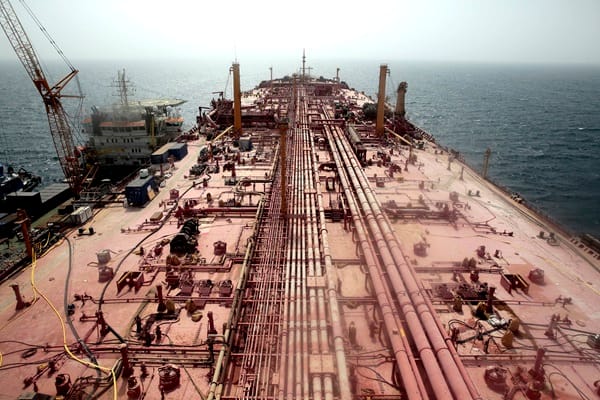
"The rise in Brent and WTI crude prices following Iranian boats approaching a U.S. oil tanker confirms that the market remains sensitive to any signals threatening the security of navigation through the Strait of Hormuz-the vital artery through which the majority of Gulf oil exports to Asia pass. In my view, this sensitivity is somewhat exaggerated, as recent history shows that such incidents are often leveraged politically and in negotiations without turning into long-term supply disruptions."
"Nevertheless, the mere increase in geopolitical risk is sufficient to push traders to price in a temporary risk premium. On the other hand, I see that the broad sell-offs in global equity markets represent a significant constraint on any strong oil rally. Oil no longer moves independently of overall market sentiment; rather, it is part of an asset basket that investors manage according to risk and liquidity strategies."
The oil market sits in a fragile balance between geopolitical drivers that support prices and financial and economic forces that cap sustainable gains. Recent crude moves near $64 largely reflect swift reactions to political and security events, notably renewed US–Iran tensions, and function more as psychological effects than concrete supply shocks. Markets remain highly sensitive to threats to navigation through the Strait of Hormuz, prompting temporary risk premia. Broad global equity sell-offs and declining risk appetite constrain oil rallies by reducing investment demand, while a strong U.S. dollar and tight monetary policy further restrain oil price momentum.
Read at London Business News | Londonlovesbusiness.com
Unable to calculate read time
Collection
[
|
...
]