#mine-warfare
#mine-warfare
[ follow ]
#military-technology #drones #iran #us-military #drone-warfare #ukraine #pentagon #directed-energy #ukraine-conflict
fromLondon Business News | Londonlovesbusiness.com
1 day agoMoD has lost track of 95,000-strong war reserve as defence readiness fears mount - London Business News | Londonlovesbusiness.com
Lord Robertson stated, 'We need to sort of round up those who are available, fit, and willing to be able to do it.' This emphasizes the urgency of engaging former service personnel in the strategic reserve.
UK politics

Artificial intelligence
fromFortune
6 days agoA retired general's warning: America can't fight the AI arms race on tech it doesn't control | Fortune
The U.S. faces a critical AI arms race affecting military power and national security, highlighted by the Anthropic-Pentagon standoff over AI usage control.




fromwww.mediaite.com
1 week agoWeird Obsession With Death': Current and Former Defense Officials Sound the Alarm on Hegseth
Retired Army Special Forces officer Mike Nelson criticized Hegseth's rhetoric, stating, 'That's a necessary end to achieve goals through military force - you have to kill people to achieve them. That's not the end. It's a weird obsession with death for the sake of it.'
Right-wing politics
from24/7 Wall St.
1 week agoThe 3 Numbers You Need to Know About the Economics of War
The economics are hard to ignore. Shooting down a drone with AeroVironment's LOCUST laser system costs less than $10, using just two to five seconds of laser energy. Compare that to the interceptor missiles currently used against Iranian drone swarms, which cost orders of magnitude more and are in short supply across allied arsenals.
Venture
Russo-Ukrainian War
fromLondon Business News | Londonlovesbusiness.com
6 days agoRussia launches one of their most destructive bombs causing devastating destruction - London Business News | Londonlovesbusiness.com
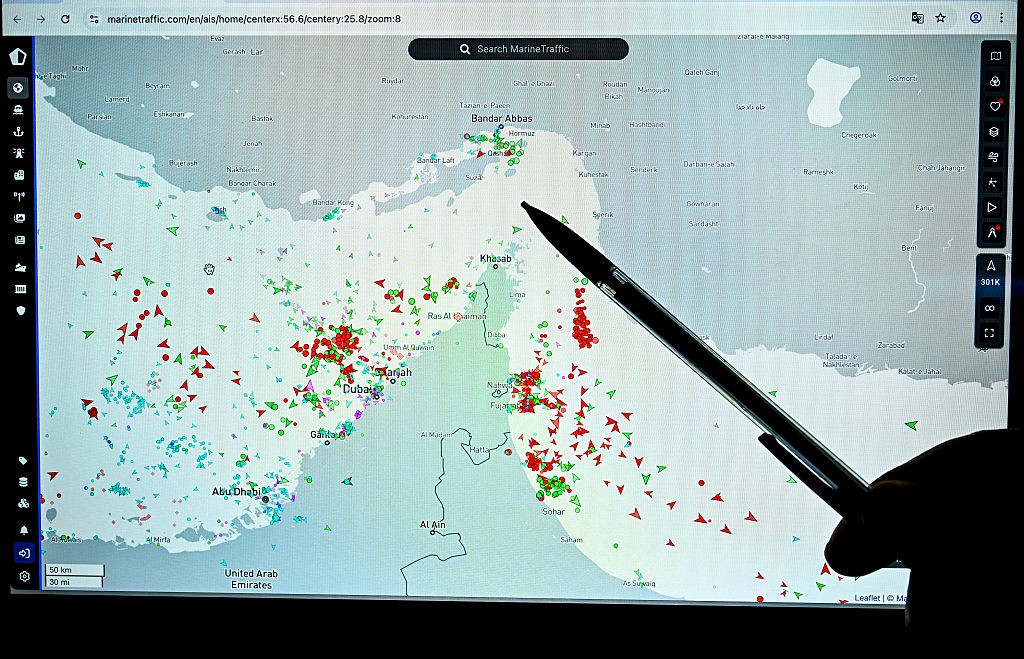
Russian forces bombed Sloviansk, destroying infrastructure and injuring at least one person, highlighting the increasing use of heavy guided munitions.


European startups
fromwww.businessinsider.com
3 weeks agoThe US military is pushing up production for the weapons that could matter most in a major war
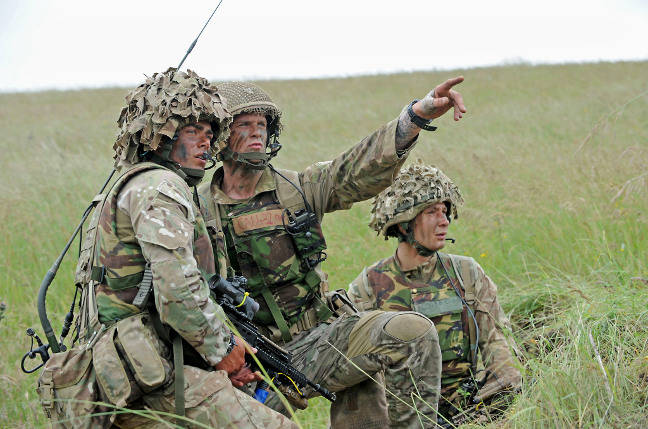
The Department of Defense is increasing production of critical weapons, including THAAD interceptors, to meet rising demand and address stockpile concerns.
History
from24/7 Wall St.
1 month ago25 Weapons That Changed Warfare Over the Last Century
Technological breakthroughs over the last century transformed warfare by introducing tanks, missiles, stealth aircraft, and precision-guided weapons that forced armies to continuously adapt tactics and reshape military doctrine globally.
Miami Marlins
fromBusiness Insider
1 month agoUS Navy destroyers are firing top interceptors to bring down Iranian missiles flying into NATO airspace
US Navy destroyers in the Eastern Mediterranean have used SM-3 interceptors three times in two weeks to defend NATO airspace against Iranian ballistic missiles.
Public health
fromBusiness Insider
1 month agoThe Army is getting a new lethal hand grenade for the first time in decades
The Army approved the M111, its first new lethal hand grenade since Vietnam, replacing the asbestos-made MK3A2 blast grenade with a safer plastic alternative for close-quarters combat.
fromIntelligencer
1 month agoAll Modern Warfare Is Chemical Warfare
On the night of Saturday, March 6, Israeli forces struck three sets of oil depots ringing Tehran - west, east, and south - simultaneously. The explosions were massive. Nearby residential areas were destroyed. Millions of liters of gasoline, diesel, and petroleum derivatives ignited, sending columns of black smoke thousands of feet into the air.
World politics
fromThe Washington Post
3 weeks agoU.S. uses hundreds of Tomahawk missiles on Iran, alarming some at Pentagon
The U.S. military has fired more than 850 Tomahawk cruise missiles in four weeks of war with Iran, burning through the precision weapons at a rate that has alarmed some Pentagon officials.
World news
Artificial intelligence
fromSilicon Canals
1 month agoAI companies are hiring chemical weapons experts for safety - while embedded in military systems - Silicon Canals
AI companies hire weapons experts to prevent misuse of AI systems, creating structural contradictions between safety principles and commercial deployment in military operations.
Information security
fromThe Cipher Brief
1 month agoThe Drone War's Real Problem Isn't Technology - It's Speed
Defense acquisition reforms implement recommended changes but fail to address the fundamental cycle-time gap between rapidly evolving adversary capabilities and the military's ability to deploy countermeasures.
fromenglish.elpais.com
1 month agoDoes the United States have enough munition for a prolonged war?
We've got no shortage of munitions. Our stockpiles of defensive and offensive weapons allow us to sustain this campaign as long as we need. Iran is hoping that we cannot sustain this, which is a really bad miscalculation.
US politics
fromWIRED
2 months agoICE Pretends It's a Military Force. Its Tactics Would Get Real Soldiers Killed
As a veteran of the war on terror, I have spent the past year watching Immigration and Customs Enforcement officers expand their operations across the country on a heretofore unprecedented scale and with a new faux-military bearing. From equipment to weapons to tactics, ICE and other immigration enforcement bodies want to be seen as combat forces carrying out their missions.
US politics
fromBusiness Insider
2 months agoSnowmobiles, skis, and laser tag: How NATO soldiers train for Arctic assaults
The encounter took place during a recent winter combat exercise involving roughly 20 NATO troops, beginning with an assault on skis and snowmobiles before shifting into a simulated firefight using blanks and lasers instead of live ammo. The drill was part of a monthlong course led by Finland's Jaeger Brigade that trains allied forces in Arctic warfare and cold-weather survival. Business Insider observed the battle's start at a training site 75 miles north of the Arctic Circle in Finland's snow-blanketed Lapland region.
Miscellaneous
Russo-Ukrainian War
fromBusiness Insider
1 month agoThe US Army wants to see if it can get robots to rescue wounded troops like they're doing in Ukraine
The US Army is testing ground robots to evacuate wounded soldiers in high-intensity combat, reducing risk to medical personnel and troops during dangerous battlefield movements.
fromBusiness Insider
1 month agoThere's a new US Army office 'getting in the dirt' with soldiers and trying to quickly turn their ideas into real battlefield tech
Number one is speed takes priority over perfection. We can iterate to get to operational capability. And the second is that early soldier feedback is critical in order to make sure we're getting the right technology for the future fight, and then we want to be able to prove the demand signal before we spend big dollars on programs.
US news
Artificial intelligence
fromBusiness Insider
2 months agoUS Army leaders say soldiers are drowning in so much battlefield data that AI is needed to make sense of it all
The US Army is developing AI to process and contextualize overwhelming battlefield sensor data faster and more reliably than humans; it is in beta testing.
from24/7 Wall St.
2 months agoWeapons That Performed Well Except For Desert, Jungle, or Arctic Conditions
On paper, many of the world's most famous weapons looked like reliable successes. In practice, desert sand, jungle humidity, and arctic cold often had other ideas. Systems that performed well in testing or early combat sometimes broke down once environmental stress became unavoidable. Here, 24/7 Wall St. is taking a closer look at how the environment, not enemy fire, can quietly expose limits that designers never fully anticipated.
World news
[ Load more ]