#hung-liu
#hung-liu
[ follow ]
#contemporary-art #theresa-hak-kyung-cha #art-exhibition #art #sculpture #performance-art #lunar-new-year
fromHi-Fructose Magazine - The New Contemporary Art Magazine
5 days agoKyle Cobban Draws From The Unknown - Hi-Fructose Magazine
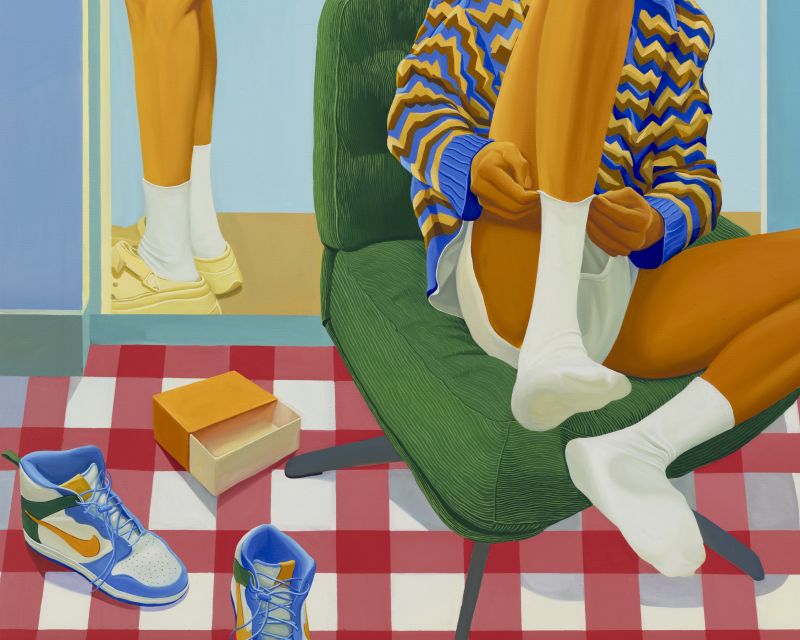
"It's an amalgamation of the Chicago neighborhood aesthetic with a Bulls fan, quite literally. It's kind of on the nose, but that's how I juxtapose the elements of my work, with the structure of a home and then a figure who is around or in the home."
Chicago Bulls



fromThe Art Newspaper - International art news and events
1 week agoMatisse's explosive finale and a new chapter for Hong Kong? Plus, Schiaparelli and Dali-podcast
The Grand Palais in Paris unveiled an enormous exhibition focusing on the final 13 years of Henri Matisse's life and work, featuring abundant examples of his celebrated gouache cut-outs.
Paris food
Graphic design
fromThe Art Newspaper - International art news and events
1 week agoSwimming pools and school rules: artist Chan Wai Lap on the unusual themes behind his installations
Chan Wai Lap explores the structured environment of public swimming pools through art, focusing on their visual order and social dynamics.


Portland
fromOregon ArtsWatch * Arts & Culture News
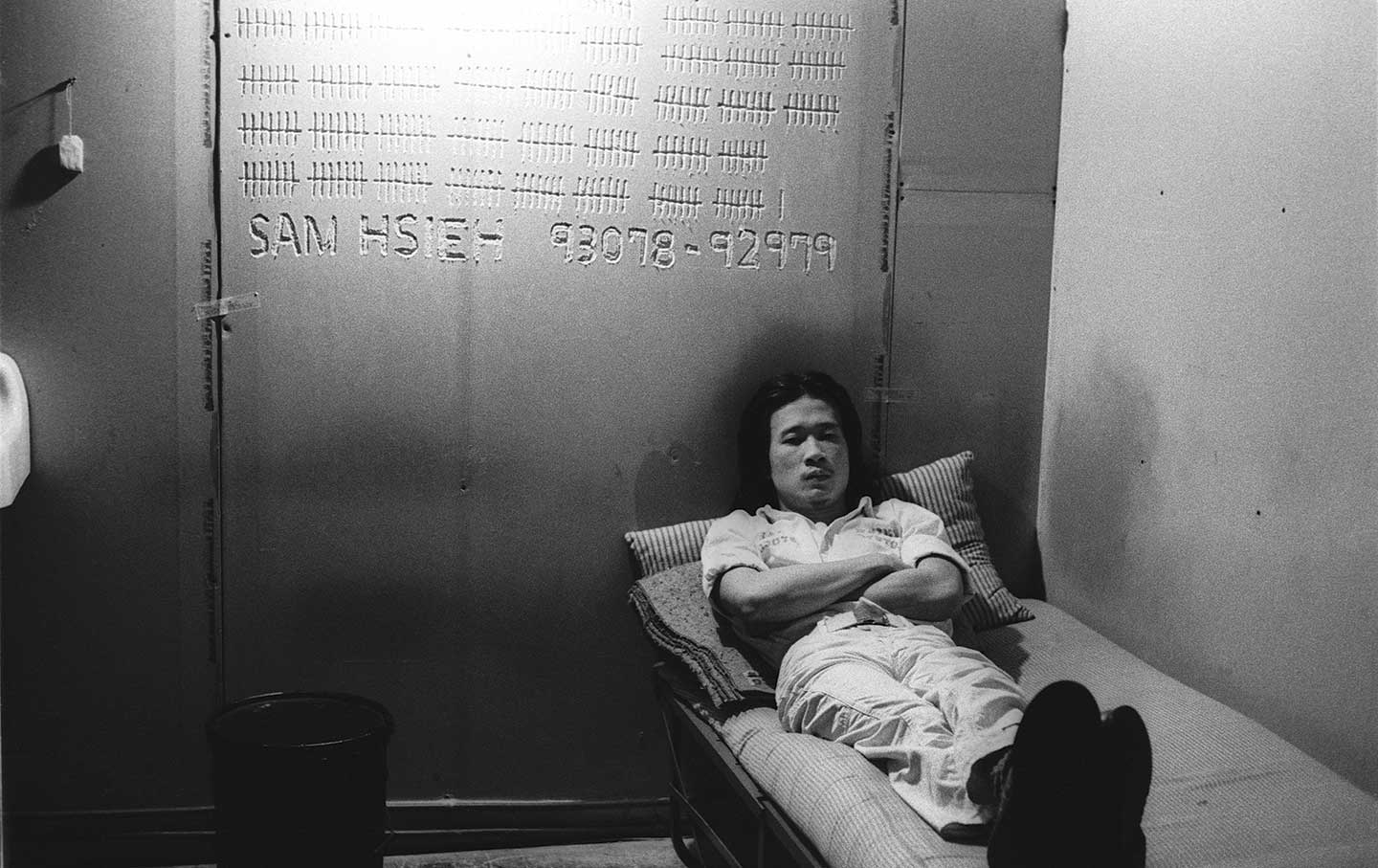
3 weeks agoMichael Luo profiles the complex history of Chinese immigrants in the United States * Oregon ArtsWatch
Michael Luo's book examines Chinese immigrant experiences in America, prompted by personal racial discrimination, challenging the historical exclusion of Chinese people from American narratives.
Photography
fromenglish.elpais.com
3 weeks agoWriting, watching, photographing: the heart of the matter according to Larry Sultan
Larry Sultan's writings reveal that writing was integral to his artistic practice, documenting his reflections on seeing, family memory, and photography's limits through correspondence, notebooks, diaries, and essays.
#lunar-new-year
San Francisco
fromABC7 San Francisco
1 month agoBay Area artist brings Year of the Horse statue to life for Golden State Warriors
Artist Robin Zhao creates the Year of the Horse mascot 'Maverick' for San Francisco's 2026 Lunar New Year Parade, continuing her family's artistic legacy while reconnecting with her Chinese heritage.

San Francisco
fromABC7 San Francisco
1 month agoBay Area artist brings Year of the Horse statue to life for Golden State Warriors
Artist Robin Zhao creates the Year of the Horse mascot 'Maverick' for San Francisco's 2026 Lunar New Year Parade, continuing her family's artistic legacy while reconnecting with her Chinese heritage.
fromJuxtapoz
1 week agoJuxtapoz Magazine - Last Days to See Kate Meissner's New Paintings @ Lyles & King's Project Space, NYC
"These works are an exploration of the human body's elasticity and capacity to metamorphose. Informed by my own experience of pregnancy and the birth of my first child last year, these paintings are a meditation on physiological transformation and the body's underlying animalistic and mammalian nature."
Arts

fromVulture
1 month agoWhen Identity Doesn't Conform: Chinese Republicans
Both plays set out to examine the ugly ways that American capitalism has twisted itself up with the striving of characters of color - characters whose immediate roots stretch beyond the U.S. and whose ambitions within its borders have resulted in a malignant combination of rugged self-reliance and internalized self-hatred.
Miscellaneous

fromBoard Game Quest
2 months agoSand Art Review
Sand Art is a game by Kory Jordan and published by 25th Century Games for two to four players ages 10 and up. It takes about an hour to play, and has you collecting resources and then coloring in a bottle, making art in a bottle out of sand, in case the name didn't give away the plot. Gameplay Overview: Sand Art has you gathering and mixing sand, which is used to fill your bottle.
Board games
fromItsnicethat
2 months agoFeng Yitong illustrates the surreality of living between cities
Feng Yitong is a Berlin-based illustrator from Xi'an, China whose comic and hand-drawn imagery addresses migration, cultural shifts and embodied experiences in heavy, tactile forms of oil pastels. Using skills learned from her bachelors and masters degrees in illustration at the Berlin University of the Arts, she sketches her emotive scenes, then scans before using a light table to transfer them onto A4 and A3 paper. Coloured with oil pastels, she achieves her sharp visual effects by using kitchen cloths to remove or mix thick marks to create defined edges and distinct segments of her dense images.
Berlin
fromThe Art Newspaper - International art news and events
3 weeks agoNext edition of Getty's PST Art initiative will focus on Los Angeles's connections around the Pacific Rim
The next PST Art will highlight exchange around the Pacific across several centuries, from the arrival of Chinese porcelain in the Spanish missions to the influence of Japanese visual culture on the city's architecture and design, to the ongoing impact of contemporary Korean pop culture.
Arts
Fashion & style
fromJuxtapoz
2 months agoJuxtapoz Magazine - Glenn Hardy Jr. "Building Identities Through Style" @ Charlie James Gallery, Los Angeles
Style and presentation function as social shorthand that both enables belonging and exposes conditional acceptance, especially for Black bodies navigating judgment and aspiration.
from48 hills
2 months agoBetween worlds with Sky Hopkina's visual poetry - 48 hills
While Hopkina, who is based in New York and Massachusetts, has been included in many local group exhibitions and screenings, Basso dives deep into the artist's work with six films created over a nine-year period. As a member of the Ho-Chunk Nation/Pechanga Band of Luiseño Indian, Hopkina's use of poetry and atmospheric aesthetics is not only visually compelling, but mines the edges of linguistic, visual, and cultural legibility.
Film
Arts
fromdesignboom | architecture & design magazine
4 weeks ago'horizons' at perrotin LA to show JR's california works from prison yards to border wall
JR's 'Horizons' exhibition at Perrotin Los Angeles showcases large-scale photographic artworks created across California, transforming public spaces by placing enlarged portraits of individuals and communities onto architectural and landscape surfaces.
fromThe Mercury News
2 months agoEuphrat exhibit aims to create 'A Sense of Belonging'
The exhibit, which runs Jan.15-March 14 at the De Anza College museum, is presented in conjunction with Silicon Valley Reads and its 2026 theme, "Bridges to Belonging." Self, family and neighborhood portraits reflect South Bay Area faces and stories. Marie Cameron's "People in My Neighborhood" series grew from her desire to meet and celebrate essential workers and creatives in her hometown of Los Gatos. The portraits include her neighbor's caregiver, grocery store and café workers, an artist, an author and a small business owner.
Photography
Arts
fromHi-Fructose Magazine - The New Contemporary Art Magazine
1 month agoF. Scott Hess: Art History & The Dreams of a Reluctant Realist - Hi-Fructose Magazine
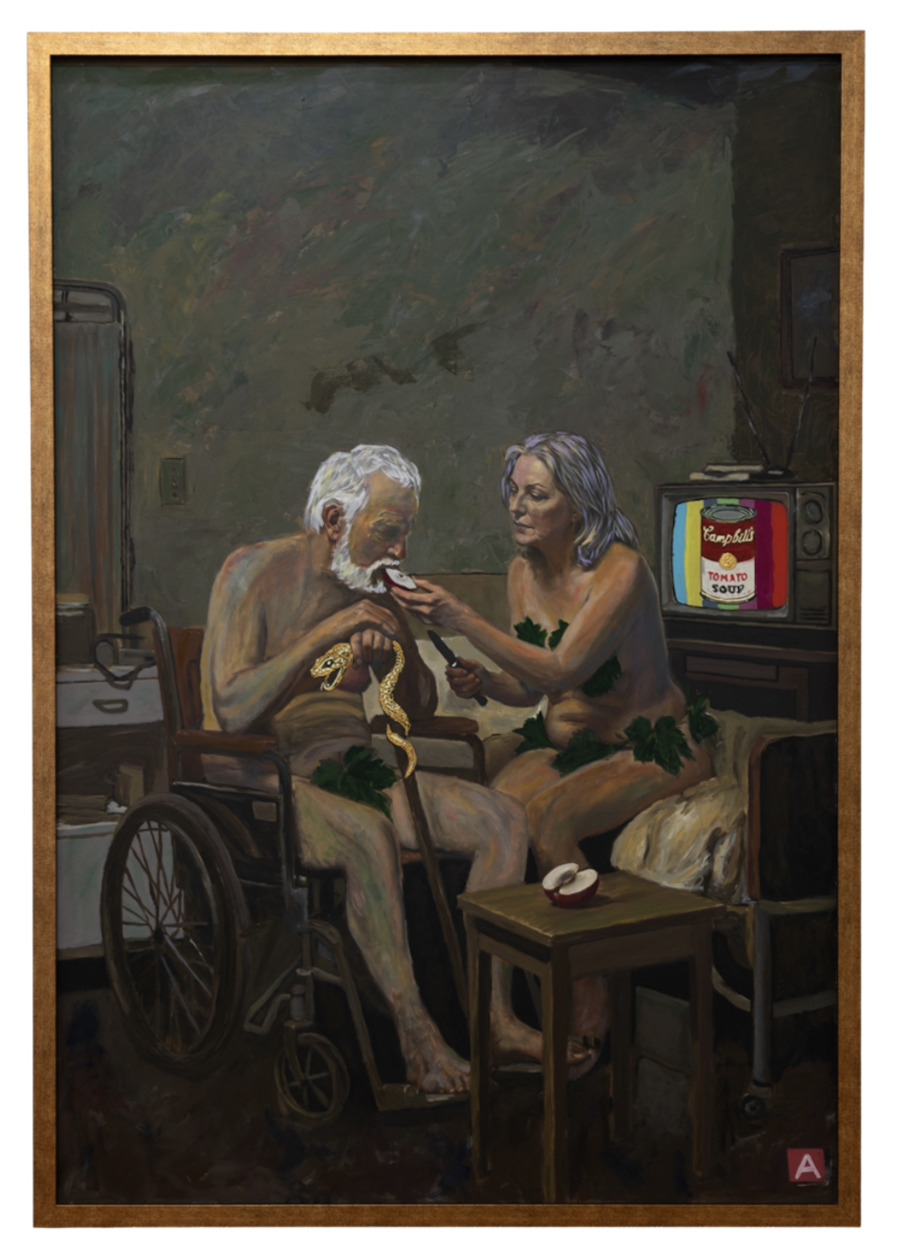
Artist F. Scott Hess transformed a 40-year-old fever dream about art history into a detailed 54" x 96" painting that explores his complex relationship with artistic legacy and fame.
#asian-american-art
Arts
fromThe Art Newspaper - International art news and events
1 month agoA new home for Asian contemporary art opens in landmarked building in Manhattan's Chinatown
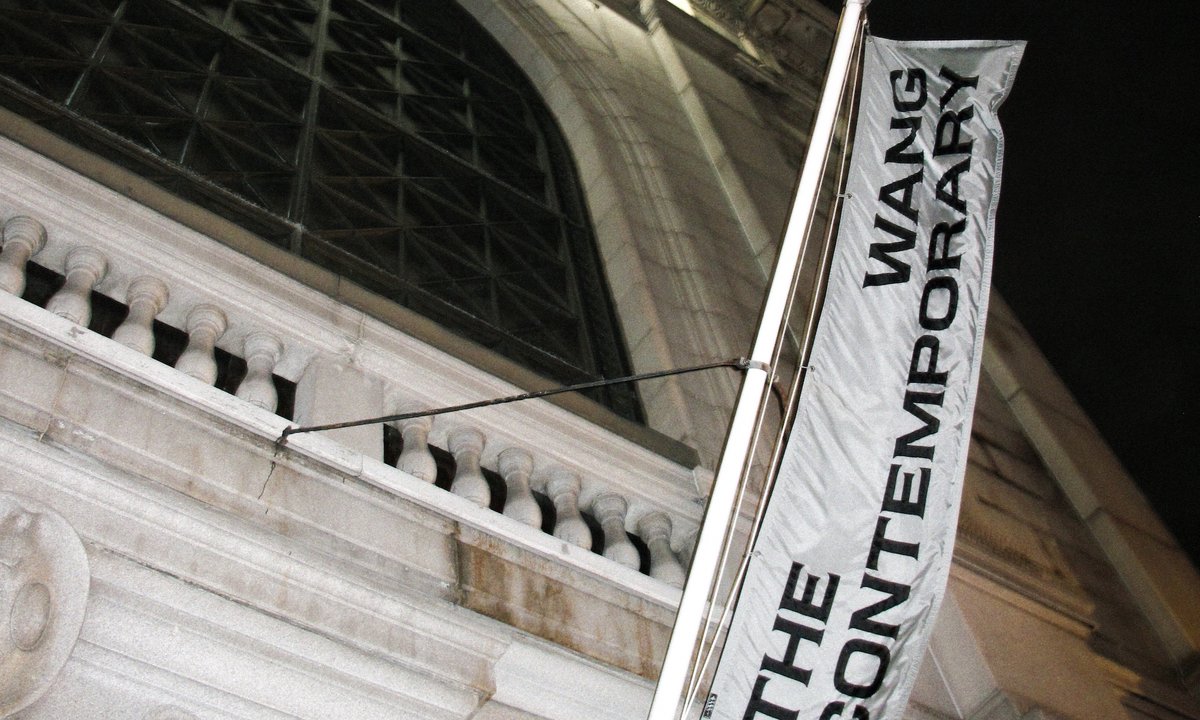
Wang Contemporary opens at 58 Bowery as a global platform for Asian and Asian American creativity, inaugurating with MSCHF's paper plane installation during Lunar New Year.
Arts
fromThe Art Newspaper - International art news and events
1 month agoAt Frieze Los Angeles, Greg Ito's bright baggage carries hope
Greg Ito's installation at Frieze Los Angeles uses suitcases and trunks inspired by his family's Japanese American internment camp history to explore universal themes of displacement, uncertainty, and resilience.
Arts
fromThe Art Newspaper - International art news and events
1 month agoIn Pictures: Sculpture gets a leg up at Frieze Los Angeles
Contemporary artists showcase innovative sculptural works at art fairs, blending traditional materials with conceptual themes and attracting significant collector interest.
fromHyperallergic
1 month agoThis Is Not My LA Art World
We're just a week away from Frieze LA, when East Coast dealers and local artists alike descend upon the Santa Monica Airport, but this isn't Renée Reizman's first rodeo. Since the critic and artist moved to the area almost 15 years ago, she's witnessed blue-chip New York galleries set up shop and sideline the irreverent, DIY spaces that shape the local art scene. Without these spaces, Reizman writes, she would not have discovered what art can be outside of the white cube.
Arts
Arts
fromJuxtapoz
1 month agoJuxtapoz Magazine - Judith F. Baca: Great Wall of Los Angeles: The 1970s- A Decade of Defiance and Dreams @ Jeffrey Deitch, Los Angeles
The Great Wall of Los Angeles expands to depict 1970s Indigenous reclamation, prison and campus uprisings, Chicano antiwar protests, and art's role in testimony.
fromThe Mercury News
1 month agoSan Jose artist brings wind, light to bear in her paintings
Artist Ayelet Gal-On does not just paint; she builds, layering oil, acrylic and plaster on canvas. Gal-On's signature subjects for "Taken by the Wind, Swept by the Light," her upcoming solo exhibition at Gallery 9 in Los Altos, are white dresses that appear to hang on a line, defying the stillness of the canvas. "I love the process of playing with color," says the artist.
Arts
Arts
fromThe Art Newspaper - International art news and events
2 months agoSan Francisco museum rejects permanent space in favour of site-specific exhibitions
Two site-responsive installations—Lily Kwong's seed-embedded EARTHSEED DOME and Tara Donovan's recycled-CD columns—activate Redwood Park and the Transamerica Pyramid Center through public fabrication and seasonal change.
fromJuxtapoz
2 months agoJuxtapoz Magazine - Israel Campos "Echoes" @ Charlie James Gallery, Los Angeles
These paintings reveal the layers of history that undergird modern Los Angeles. Yaanga Lies Under the 101 imagines the city's earliest Tongva inhabitants as they made their home on the land that, in the modern day, runs beneath the Hollywood Freeway. Campos's process mimics this archaeological layering: each canvas begins with a screenprinted underlayer that is then painted over in acrylic, and then once again layered with screenprinted details.
Arts
[ Load more ]