#carve
#carve
[ follow ]
#craftsmanship #sculpture #architecture #creativity #identity #furniture-design #home-design #photography #diy

fromdesignboom | architecture & design magazine
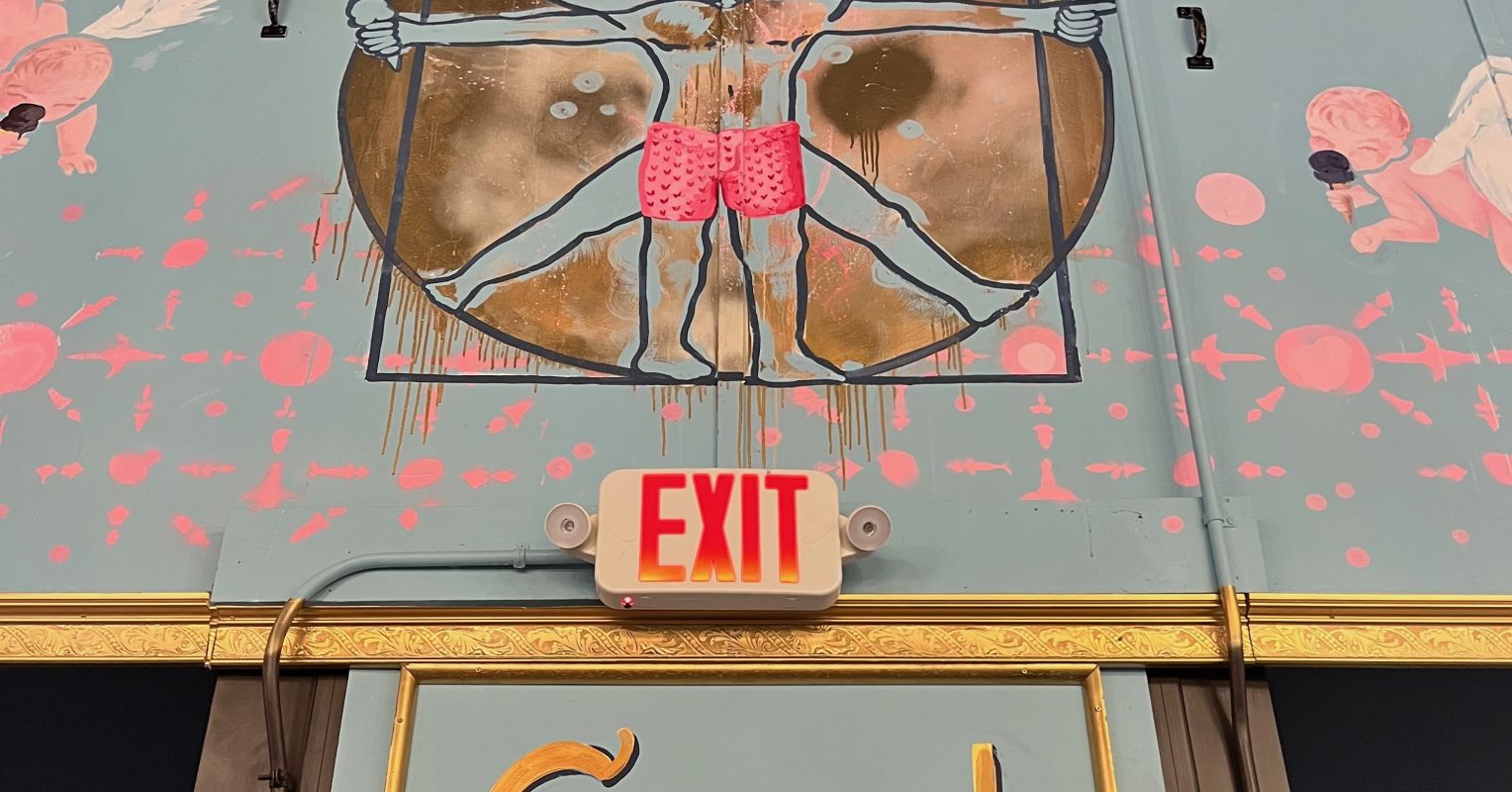
5 days agohow spanish ceramics bridge culture, memory and identity at milan design week 2026
Throughout its history, Spain has been shaped by a wide range of cultures and civilizations, including Muslim, Phoenician, Roman, Greek, Carthaginian, and Visigothic influences, which are reflected in its architecture and design.
Madrid food
#home-design

Renovation
fromIrish Independent
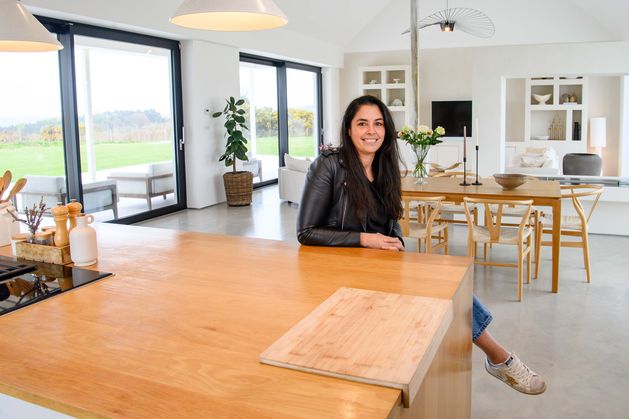
1 week agoSelf-build story: 'It awakened something in me; I probably did it in a past life. But I've finally found a really creative career that I love'
A West Cork bungalow combines Irish and French design elements, focusing on light and texture to create a Mediterranean-inspired family home.
fromChrbutler
1 week agoCraft is Untouchable - Christopher Butler
Craft is often defined as skill in making things by hand, but this interpretation is being challenged by AI. Craft transcends physical interaction; historical figures like Mozart and Beethoven exemplify mastery without traditional methods.
Intellectual property law
fromThe Art Newspaper - International art news and events
1 week agoPressing issues: the vital role of printmaking in the history of art
Yale came to me and said there isn't an overarching book about the history of printmaking; they wanted it to be about the printed image. There are a lot of books about printing-about the history of journalism or the history of books, the printing press and the printed word-but not so much about the printed image and its processes. So that was my challenge.
Arts
fromColossal
1 month agoHistoric Architecture Emerges from Stone in Matthew Simmonds Ethereal Sculptures
From unassuming hunks of Carrara marble and limestone, Matthew Simmonds carves realistic, miniature gothic cathedral arches, stairwells, and colonnades. Often based on architectural details of real places, such as cities around Tuscany and Germany's Bamberg Cathedral, the sculptures portray intimate details of corners, vaulted ceilings, arcades, and stairwells that can sometimes be peeked through additional apertures.
Berlin music
fromColossal
1 month agoFolklore and Nature Converge in Cat Johnston's Expressive, Eccentric Puppets
Drawing on childhood memories, folk art, and nature, the London-based illustrator and model maker creates expressive sculptures and puppets that inhabit dreamlike realms. Invoking historical costumes and cartoonish and emotive faces, Johnston's otherworldly cast seems both familiar and strange, as if children's book protagonists have sprung to life or converged with a strange dream.
Graphic design
fromColossal
1 month agoRestrained Emotions Simmer in Shinsuke Inoue's Tender Wood Sculptures
I have virtually no idea what the finished piece will look like until I actually begin working with the wood. As a result, the form often emerges as I carve, and I frequently change my plans midway through the process. Naturally, I keep the many failures a secret.
Arts
Gadgets
fromYanko Design - Modern Industrial Design News
2 months agoStop Ruining Your Chisels: This Sharpening Kit Locks Angles Every Time - Yanko Design
EdgeForm mechanically locks the sharpening angle and stabilizes the stroke to deliver repeatable, precise sharpening using modular plates, rollers, and clamps.
Relationships
fromSlate Magazine
2 months agoI Walked In On My Colleague Defiling a Precious Piece of Art. Now His Fate Is in My Hands.
An artist masturbated on a communal sculpture, apologized, promised to stop, and trusting him may be reasonable unless a recurring inappropriate sexual pattern appears.
Graphic design
fromItsnicethat
1 month agoThe illustrations of Sebastian Curi are all about learning analogue tools (flaws and freckles included)
Sebastian integrates multiple artistic mediums—acrylic painting, colored pencils, and relief printing—while using digital tools primarily for documentation and learning the foundational principles behind each technique.
fromdesignboom | architecture & design magazine
1 month agovernacular bridge craftsmanship informs micro-museum set within bamboo grove in china
Baqiao bridges, including the nearby Shisanba Bridge, typically appear in areas where the difference between river level and embankment is relatively small. Their upstream piers are shaped like tapered spindles with slightly raised tips, creating a distinctive structural profile. Stone slabs span between the piers, forming a bridge deck assembled through interlocking construction methods.
Design
fromFast Company
2 months agoMaking things that make things
The advertising industry has always been in the business of making things, such as the OOH billboard, the 30-second spot, the snappy social post, the standard website: final, finite assets polished and pushed into the world. Agencies were paid, often by the hour, for producing final versions of these things and then moved on to the next project. Even with generative AI entering the picture, much of the conversation remains focused on making those same things faster or cheaper.
Marketing
fromPsychology Today
2 months agoKintsugi: The Japanese Art of Being Remade
Kintsugi 金継ぎ is known as the Japanese art of putting broken things back together, like broken pottery, using materials mixed with powdered gold and other elements. Instead of hiding damage, this technique celebrates the restoration of an object once viewed as broken, flawed, or imperfect. This same process can be seen as a metaphor for addiction recovery. Even for people with addiction who willingly choose recovery, there's an element of being remade that can't be ignored. Addicts often go through a period of denial.
Mental health
Psychology
fromSilicon Canals
2 months agoPeople who built things for a living usually see the world differently from people who worked behind a desk, and psychology says the difference matters more than you'd think - Silicon Canals
Hands-on work fosters embodied cognition, leading to different problem-solving, stress responses, and life perspectives compared with abstract office work.
Gadgets
fromYanko Design - Modern Industrial Design News
2 months agoThis Reciprocating Detail Sander Works on Detailed Projects like Gundam Kits, Wood, and Jewelry - Yanko Design
NeoSander is a palm-sized, cordless linear-motor detail sander delivering up to 13,000 SPM and adjustable stroke for precise, low-vibration finishing in tight spaces.
fromRemodelista
2 months agoExpert Advice: DIY Building Lessons from Artist Sean Spellman
When Sean Spellman opened Dawnlands in Westerly, Rhode Island, last year, it was more than just a new address on the map. Conceived as an art gallery and gathering place, Dawnlands was built entirely by Sean and his family-no contractors, no designers, no outside help. Each board and bench was made with intention, using local pine and sensibility shaped by Japanese, Scandinavian, and coastal Californian influences.
Renovation
Photography
fromdesignyoutrust.com
1 month agoIncredible Behindthescenes Reels Where A Loose Doodle Evolves Into A Polished Illustration Packed With Personality And Story
A diverse collection of contemporary visual art, advertising, and inventive photography highlights creative reinterpretations, surreal manipulations, and socially aware installations across global artists and campaigns.
fromBoard Game Quest
2 months agoSand Art Review
Sand Art is a game by Kory Jordan and published by 25th Century Games for two to four players ages 10 and up. It takes about an hour to play, and has you collecting resources and then coloring in a bottle, making art in a bottle out of sand, in case the name didn't give away the plot. Gameplay Overview: Sand Art has you gathering and mixing sand, which is used to fill your bottle.
Board games
Gadgets
fromYanko Design - Modern Industrial Design News
2 months agoPilot Just Turned a 400-Year-Old Japanese Craft Into Living Art - Yanko Design
Arita porcelain vases coated with Pilot's thermochromic ink reveal a celadon glaze when heated, creating unique, time-based color transformations that return as they cool.
Arts
fromHyperallergic
1 month agoMerging Craft Practices and New Media at the Museum of Craft and Design
Video Craft exhibition explores how video, film, and early moving image technologies share formal and technical properties with traditional craft media like ceramics, textiles, and glass through encoding, looping, and sampling.
Renovation
fromLos Angeles Times
36 years agoArchitectural Antiques Used as Home Decorating Elements
Architectural antiques from salvage houses and demolition sites are increasingly used as distinctive building and decorating elements in new home construction, driven by renewed historical interest and their status as art forms.
fromSilicon Canals
2 months agoTreasures worth thousands: homeowners discover vintage items hidden in walls during renovation - Silicon Canals
Picture this: you're knee-deep in renovation dust, crowbar in hand, when something unexpected tumbles from behind century-old plaster. A yellowed envelope? A strange metal box? That moment when your heart skips because you realize you might have just found something extraordinary. For some lucky homeowners, these discoveries turn out to be worth thousands of dollars, transforming a simple home improvement project into an unexpected treasure hunt.
Renovation
fromDesign Milk
1 month agoThe Fountain Celebrates Craft, Connection, and Lime Green
To drink, to bathe, to swim, water has been integral to every society, at every point in our relatively short history here on earth. We connect, drink, and extend ourselves over water, a lifegiving force whose polarity explains much of human behavior. Fostering this sense of community is vital to our health and happiness as well.
Design
Arts
fromdesignboom | architecture & design magazine
2 months agotiny leaves with cut-outs portray joyful animals as silhouette artworks
Lito creates finely cut leaf silhouettes of joyful animals by removing leaf material to carve detailed patterns and facial lines, exhibited across multiple Japanese venues.
fromElite Traveler
2 months agoThese One-of-a-Kind Chandeliers Take Hours to Make by Hand
Lighting is one of the most essential aspects of a home; it's also one of the most overlooked. The right illumination can create ambience, soften harsh edges, and imbue a sense of warmth. However, not all light sources are of the same quality. A custom chandelier, for instance, will always stand head-and-shoulders above the rest. These meticulously made creations can range from minimalist to monumental, bringing scale, ambition, and elegance into the room.
Design
Arts
fromdesignboom | architecture & design magazine
2 months agolight sculptures preserve ancestral designs through antique doilies and lace textile
Kinship transforms heirloom doilies and stockings into LED-lit stainless steel sculptures that preserve textiles and project lace-like shadows and layered histories.
fromYanko Design - Modern Industrial Design News
2 months agoThe Case for Heirloom Furniture in an Era Obsessed With Biodegradable Everything - Yanko Design
Furniture made from mycelium or algae can decompose in five years, sure, but a well-made antique armoire outlives empires because no one throws it away. Columns takes that logic seriously. Handcrafted in solid oak, natural leather, and horsehair, the pieces are built to last a thousand years, which sounds like marketing hyperbole until you look at the joinery, the hand stitching, and the material choices. This is furniture designed to be inherited, repaired, and remembered.
Design
fromColossal
1 month agoInside the Sacred Valley Ceramics Studio Referencing Ancient Peruvian Practices
It is not about reproducing the past but about engaging in dialogue with it. We apply the same level of care and rigor to all pieces. Many of our utilitarian pieces have a strong sculptural quality, and several of the more artistic works originate from everyday forms and functions. We do not establish rigid boundaries between these categories; all are part of the same vision.
Arts
Arts
fromThe Art Newspaper - International art news and events
1 month agoUK exhibition celebrates the artisans throughout history who went to war
Frontline-made objects salvaged from battlefields reveal the skills, identities, and lived experiences of ordinary soldiers across conflicts from the World Wars to modern wars.
fromHyperallergic
2 months agoA View From the Easel
The studio is at my house within a ranch, surrounded by nature. It's on the second floor of the house, where there's better light. My routine all day shifts between studio work and housework, including outdoor garden work. I get up a bit before 7am, drink coffee in the yard, and get morning sunshine. Then my husband and I eat breakfast and do a bit of cleaning or some chores in the garden.
Arts
[ Load more ]