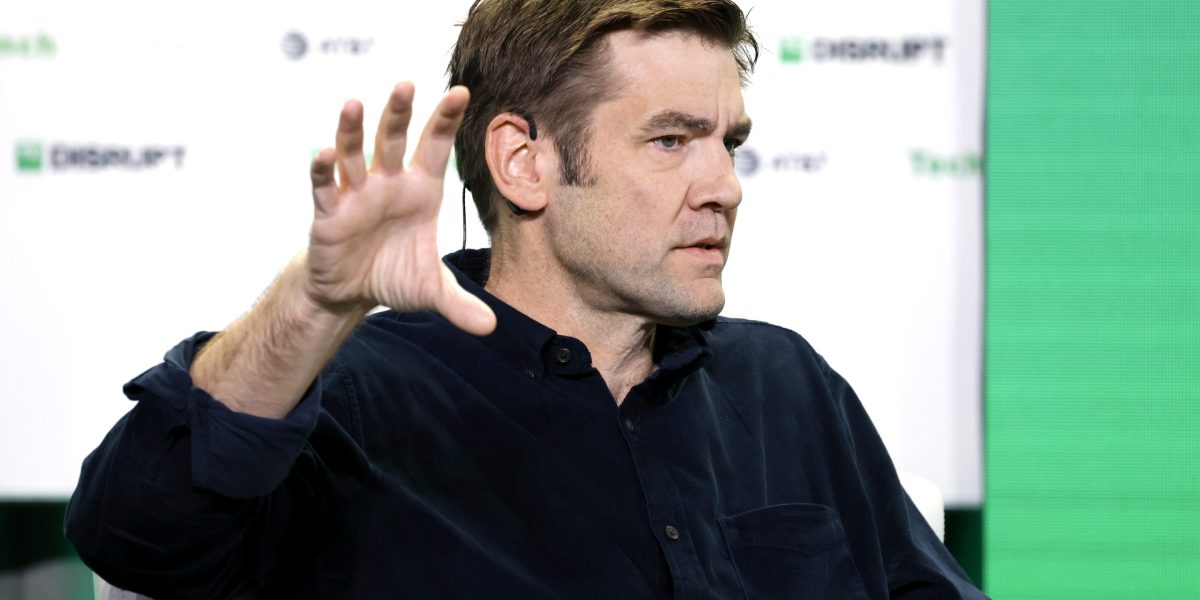
When PayPal launched almost three decades ago, the company made its name as one of the world's first fintechs. Now, PayPal faces a slew of competitors, from the payments colossus Stripe to Big Tech giants like Apple. "One of the challenges when you are at a certain scale and you've been around for a while is the very classic innovator's dilemma," Alex Chriss, the president and CEO of PayPal, told Fortune.
The online casino industry has always been driven by innovation, but no technological shift has been as transformative as the rise of blockchain and cryptocurrency. What started as an experimental payment method has now evolved into a powerful engine reshaping how players interact with gambling platforms. Even established brands like Win Olympia are adopting blockchain-driven features to stay ahead of the curve. From faster payments to unparalleled transparency, blockchain is not just enhancing the online casino experience-it is redefining it entirely.
The world's largest prediction market platform is returning to the U.S. On Wednesday, Polymarket posted on X that users can get on the waitlist for its app, saying the company will start by offering sports betting, with "markets on everything" to follow. Polymarket's impending return to the U.S. comes at a time when prediction market services, including Kalshi and Robinhood, are challenging the likes of DraftKings and FanDuel for a share of the lucrative sports betting market,
Blockchain technology is transforming the online gambling industry by enhancing transparency and security. This decentralised system ensures fair play and builds trust among users while offering financial benefits like reduced transaction fees. However, integrating blockchain presents challenges that the industry must navigate to fully harness its potential. In the rapidly evolving online gambling landscape, blockchain technology emerges as a transformative force. It offers unparalleled transparency and security, two crucial elements for enhancing user trust and safeguarding transactions.
When Val Vavilov co-founded his Bitcoin mining company, Bitfury, in 2011, the original cryptocurrency was worth less than $30, a sliver of its roughly $91,000 price today. Since then, Bitfury's mining ventures spun off into two Nasdaq listed companies whose combined worth tops $9 billion, while also launching two companies that offer AI infrastructure. Bitfury's next step? It wants to use its money to invest in the next crop of ethical tech innovators.
The American dream is "life, liberty, and the pursuit of happiness" but, in practice, it has always been about ownership. Sadly, the dream of ownership is slowly slipping away for many people. Harvard University's 2025 Youth Poll found that three-quarters say they want to own a home, but barely half think they ever will. Ownership feels increasingly out of reach.
When Satoshi Nakamoto introduced Bitcoin to the world in 2008, the pseudonymous coder envisioned his decentralized currency as a reaction to the financial crisis that had paralyzed the global economy. But nearly two decades later, the once renegade crypto industry has become increasingly intertwined with Wall Street. On the latest episode of Fortune's Crypto Playbook (which you can find on Spotify, Apple, and YouTube), Citi's head of enterprise digital assets, Artem Korenyuk, says that there's increasing "synergy" between the two sectors.
In 2018, Christie's catapulted AI artwork into the mainstream when they sold the Paris-based collective Obvious's GANS inkprint Portrait of Le Comte de Belamy (2018) for $432,500, dwarfing the work's high estimate of $10,000. And, few could forget the March 2021 sale of Beeple's digital work Everyday: The First 5000 Days (2021), which hammered at $69.3m (the house applied no estimate) and put NFTs on the art world map.
Nasdaq Inc. is asking regulators to let investors trade tokenized versions of stocks on its exchange, a move that could mark the first big test of blockchain technology inside the core of America's equity markets. The exchange operator is seeking approval from the US Securities and Exchange Commission to amend certain rules, including the definition of a security, that would allow stocks to be tokenized and traded on regulated venues like Nasdaq, according to a filing Monday.
Before going to college, I lived in the Bay Area. I was surrounded by entrepreneurs and founders, so building a company didn't seem incredibly novel to me. But in 2018, I started a company of my own called Injective. We're a blockchain network that provides infrastructure for finance applications. We've raised over $50 million in funding and got Mark Cuban to invest in our vision.
I'm very proud of where Midnight is at. It's remarkable to see that the Glacier Drop is off to a good start, with strong participation across the cryptocurrency space as a whole.
Henry McPhee has established a reputation for anticipating macroeconomic turning points and building compliant, investor-ready platforms to address them.
Mavryk Network is partnering with Fireblocks and MultiBank.io to create a robust infrastructure for tokenizing real estate, focusing on premium assets like The Ritz-Carlton Residences.