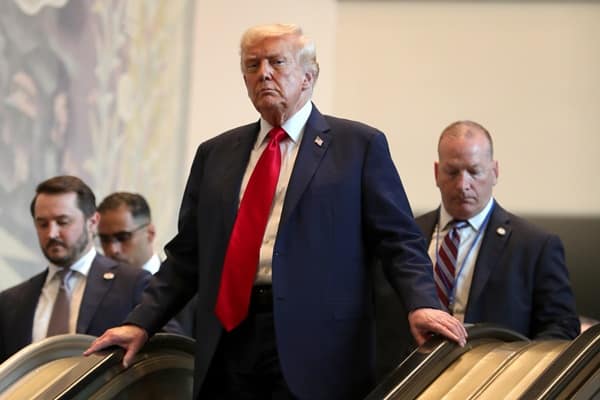
This week the IMF released an update to its World Economic Outlook, titled Global Economy: Steady amid Divergent Forces and, seriously, in what fricking world are they living? It was yet another example of international groups, governments and parts of the media sane-washing the utter crisis we all exist in because Donald Trump is an egomaniacal bully with the impulses of a spoiled toddler.
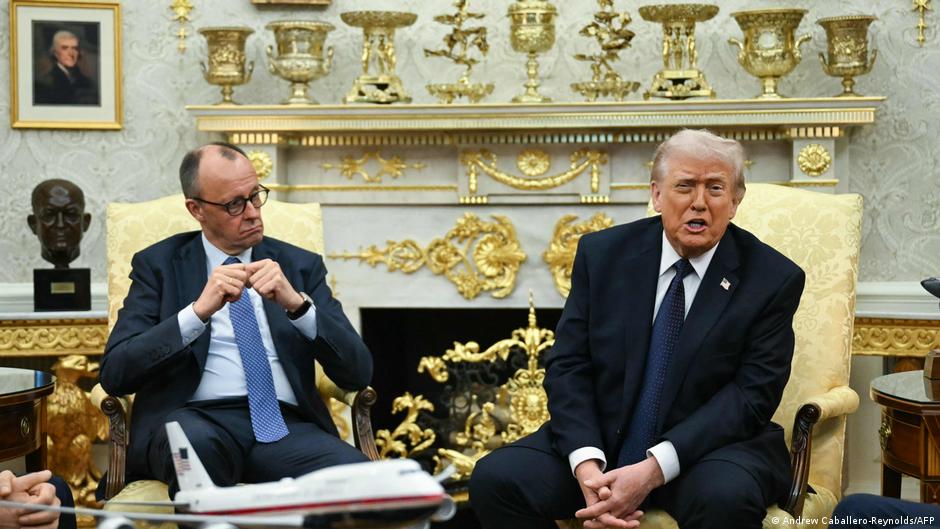
"Calm down the hysteria," Treasury Secretary Scott Bessent said Tuesday. "Take a deep breath." He was urging European counterparts and journalists not to read too much into the current kerfuffle over President Donald Trump's desire to annex Greenland, which was followed by the threat of new U.S. tariffs on a group of European countries standing in solidarity with Denmark.
It was a pathetic tactic in an E.U.-U.S. trade war that Trump singlehandedly started and would have immediately tripled the price of imported treasures like Merlot and Champagne.
Relations between the US and Germany are increasingly tense. As German and European leaders determine how to respond to Donald Trump's tariff threats over Greenland, we're asking if world events affecting the everyday lives of Americans in Germany? While we'd like to believe that everyone is capable of making the distinction between a citizen of a certain country and the actions of their government, that's not always the case.
At their disposal are mainly three options: The use of the so-called "trade bazooka" a never-before-used instrument that could even go as far as restricting market access for US companies in the EU. The implementation of retaliatory tariffs. The suspension of the EU-US trade deal, which has yet to come into effect. EU heads of state and government will meet for a summit on Thursday a dinner cobbled together in haste to coordinate which of those options the bloc will use in response to Trump's threats.
President Donald Trump will travel to Michigan on Tuesday to promote his efforts to boost U.S. manufacturing, trying to counter fears about a weakening job market and worries that still-rising prices are taking a toll on Americans' pocketbooks. The day trip will include a tour of a Ford factory in Dearborn that makes F-150 pickups, the bestselling domestic vehicle in the U.S.
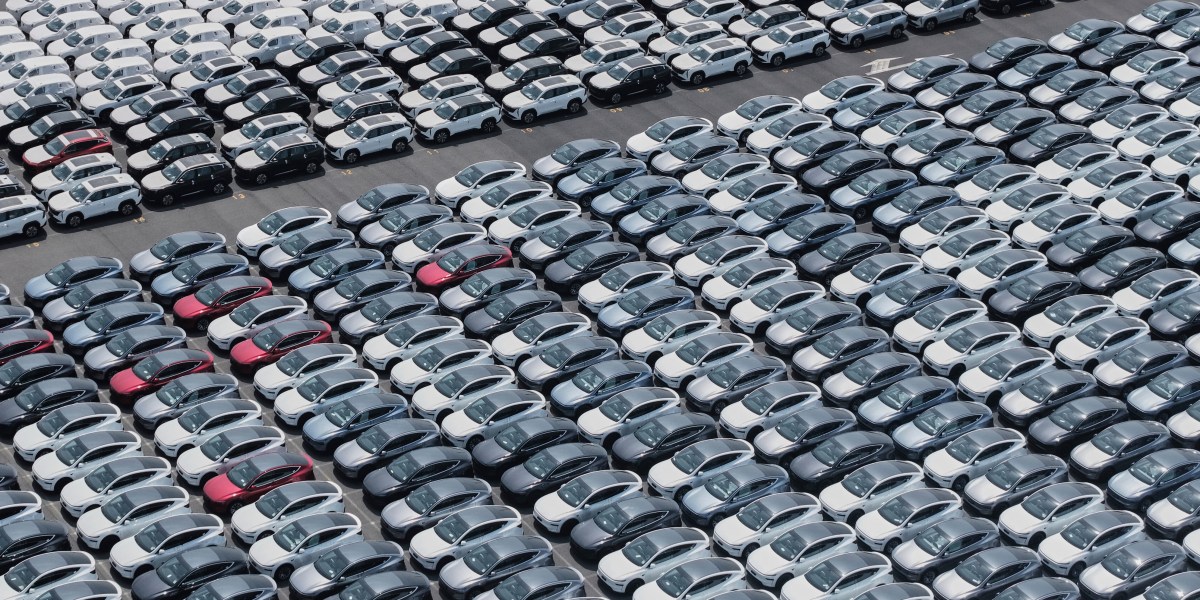
Euisun Chung, the Executive Chairman at the Hyundai Motor Group, has sounded the alarm on what a difficult year 2026 could become for the car-making game. Not just for Hyundaialthough the South Korean automaker is likely at the top of his list of concernsbut for the entire global auto industry. Things have shifted. Free trade across to one of the brand's largest markets has become less about being free and more about being how well a country can negotiate tariffs for its various industries.
Tech companies may have already grown numb to Trump's unpredictable moves. Back in February, Trump warned Americans to expect "a little pain" after he issued executive orders imposing 10-25 percent tariffs on imports from America's biggest trading partners, including Canada, China, and Mexico. Immediately, industry associations sounded the alarm, warning that the costs of consumer tech could increase significantly. By April, Trump had ordered tariffs on all US trade partners to correct claimed trade deficits, using odd math that critics suspected came from a chatbot. (Those tariffs bizarrely targeted uninhabited islands that exported nothing and were populated by penguins.)
On Monday, Donald Trump announced that his administration will give farmers a $12 billion bailout-a tacit admission that his trade policies suck. Farmers have spent much of the last year complaining about rising production costs, falling crop prices and the loss of multiple markets due to Trump's tariffs and the trade wars they have launched. All in all, farmers are projected to lose roughly $44 billion in profits this year, in large part because of Trump administration policies.
More than 50 million of the 340 million inhabitants of the United States were born abroad, according to annual data published by the US Census Bureau. About 25 million came from Latin America and the Caribbean. At more than 11 million, Mexicans are the largest group of Latin American migrants to the United States. With about 1.7 million migrants in the US, Cuba is a distant second, followed by El Salvador with 1.5 million.
The Labor Department reported Tuesday that employers posted 7.67 million vacancies in October, close to September's 7.66 million. The Job Openings and Labor Turnover Survey (JOLTS), which was delayed by the extended government shutdown, also showed that the layoffs rose and number of people quitting their jobs - a sign of confidence in the labor market - fell in October.
When the British designer Fred Rigby released his first furniture collection in 2021, he knew from the outset he would prioritize a U.S. audience-a bigger market with more sales opportunities, he says. Rigby designs and manufactures elegantly crafted furniture in the Oxfordshire countryside, and has built strong relationships with interior designer clients in cities like New York, L.A. and Miami.
Reducing trade barriers and tackling organised crime were among the topics they discussed. Both men agreed they would speak again soon. I stressed the urgency of strengthening cooperation with the US to combat international organised crime, Lula said in a social media post following the call. President Trump stressed his full willingness to work with Brazil and that he will give full support to joint initiatives between the two countries to confront these criminal organisations.
Immigration policy Dozens of raids have not only violated immigrants' human rights and torn families apart: They have jeopardized the national food supply. Farmworkers already work physically hard jobs for low wages. In legitimate fear for their lives and liberty, reports indicate that in some places 70% of people harvesting, processing, and distributing food stopped showing up to work by mid-2025.
This is the first time, the Democratic Congressional Campaign Committee says, that it's had a program specifically dedicated to engaging rural voters. Suzan DelBene, who chairs the DCCC and represents Washington's 1st Congressional District, said Democrats see an opportunity to engage rural voters as President Trump's economic agenda, particularly tariffs, becomes less popular. She said rural voters see the "damage" being done by GOP policies that have led to "costs going up, health care being gutted," and Democrats can provide an alternative.
On November 5, the Supreme Court will hear oral argument in a case testing the limits of presidential emergency powers. At issue is whether a president may use the International Emergency Economic Powers Act (IEEPA) to impose sweeping tariffs on imports from countries around the world. The stakes of this case reach far beyond trade policy. The Court's decision could shape whether the use of emergency powers to bypass Congress becomes a tool of routine governance, with profound implications for the constitutional separation of powers and limits on presidential authority.
Takaichi, who this month became Japan's first female leader after winning a vote to lead the ruling Liberal Democratic party (LDP), made her international debut at this weekend's Asean summit. But it is her meeting with Trump on Tuesday that will set the tone for Tokyo's relationship with its important and increasingly unpredictable ally, which has imposed retaliatory tariffs on Japan, despite the US president's obvious affection for the country.
Rivian now expects to deliver no more than 43,500 electric vehicles by the end of 2025, which would represent a nearly 16% drop from last year's sales. The company announced the new guidance for investors on Thursday alongside production and delivery figures for the third quarter of this year. Rivian saw deliveries jump to 13,201 vehicles, up from 10,661 and 8,640 in the second and first quarters, respectively. The company also built 10,720 EVs in the quarter.
Given the president's record of doling out special treatment to CEOs who are able to woo him with flattery, payoffs or both, the timing of his attendance at the match in the Rolex box is concerning. I have questions about whether you are attempting to curry favor with the president in an effort to secure special-interest exemptions for Rolex products.
Optimists latch on to the hope that the stability we have lost can be restored post-Trump. Having spent the past few days in Washington, I doubt it. Even in recent history, things were not quite so bad for the transatlantic relationship. The current tensions make the first Trump administration look like a walk in the park for Europeans. It is one thing to withdraw from the Iran nuclear deal, which Trump did in his first term.
Pumpkin spice is traditionally a blend of five spices - cinnamon, nutmeg, ginger, cloves and allspice - and they're all sourced primarily outside the U.S. The spice industry is bracing for how tariffs could impact prices to import a variety of spices. The American Spice Trade Association says many spices require tropical conditions, which means they can't be cultivated domestically. That includes staple spices like cinnamon, pepper, nutmeg, cloves and vanilla.
Giuseppe Alai wanders through the cellar of his dairy in Emilia-Romagna, the air filled with the smell of ageing wheels of parmesan lined up in endless rows. Pointing towards the thick rinds wrapped around them, each bearing the distinct dotted engraving of their Parmigiano Reggiano mark of origin, he recalls an anecdote from his grandfather at the end of the second world war.
This week's dramatic court ruling that Donald Trump's sweeping trade tariffs, which he has used to upend global trade, were in fact illegal is the latest in a series of losses for the president's radical agenda that are ultimately heading for a final showdown in the US supreme court. Trump has already asked the supreme court to overturn the lower court ruling in the tariffs case.
The world during Donald Trump's second presidency has entered a period of danger with certain similarities to the 30s, according to Mitch McConnell, the veteran Republican former Senate leader. McConnell made the comments primarily in reference to tariffs and foreign affairs, in a wide-ranging interview with the Lexington Herald-Leader published on Wednesday as he prepares to enter his final year in office.