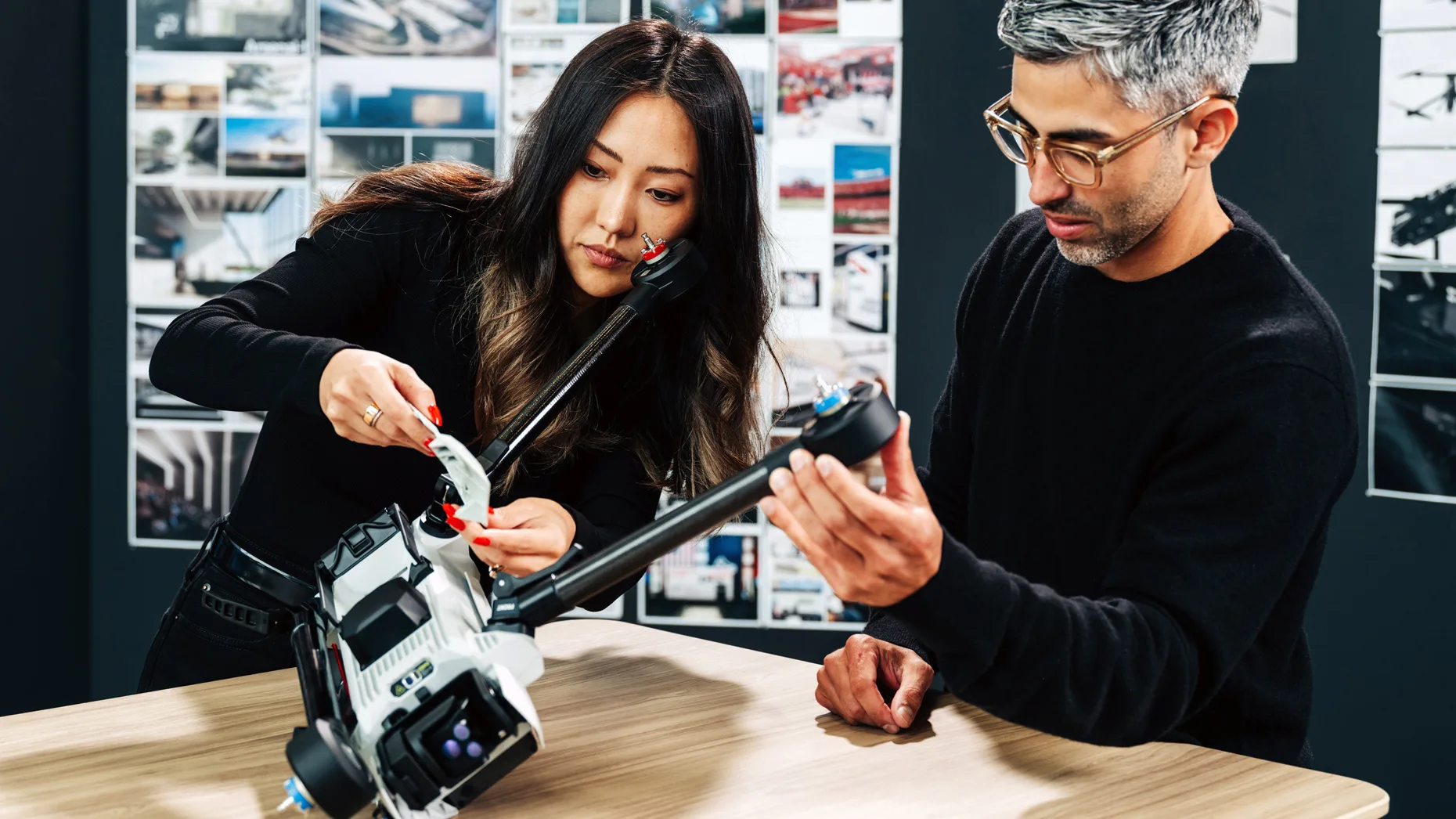
"We are building qualification panels to send to our first customers that will demonstrate that these two dimensional photovoltaics have the efficiency and the durability to survive space," Shearer said. "We're going to prove that out at a larger scale over this next year, and in doing so, we are refining the processes necessary to make every single layer of our photovoltaic to produce these in a roll to roll fashion."
Fusion power seeks to use the energy released from the fusing of atoms to generate electricity. Humans have known how to fuse atoms for decades, from the hydrogen bomb to various fusion devices built in labs.
The lowest ticket prices for TechCrunch Disrupt 2026, along with the exclusive 50% off +1 pass for the first 500 registrations, are almost gone. If you've been eyeing which tech conferences to lock into your calendar this year, this is your moment. Register now to save up to $680 on your pass and get a second ticket at 50% off. This offer ends next week on January 30, or once the first 500 tickets are claimed - whichever comes first.
South Korea has launched a landmark set of laws to regulate AI before any other country or bloc (the EU's regulations are set to go into effect in stages through next year). Under Korea's AI Basic Act, companies must ensure there is human oversight for "high-impact" AI in fields like nuclear safety, drinking water, transport, healthcare, and financial uses like credit evaluation and loan screening.
Miller, a former international tax attorney who cut her teeth in big corporate multinationals, never intended to become a tech founder. After a move back to her hometown of Lake Charles, Louisiana, she opened a solo practice, dealing with the same "bottleneck" that plagues almost every small firm lawyer: the realization that there are only so many hours in the day to sell.
Delaying, dropping out of, or skipping college altogether have long been popular in Silicon Valley. Mark Zuckerberg, Steve Jobs, Bill Gates, and Larry Ellison have all done some version of it. As artificial intelligence hype draws young founders to San Francisco, programs at companies like Palantir Technologies are rolling out anti-college initiatives for high school graduates. Meanwhile, startup entrepreneurship programs like Y Combinator skew increasingly younger, as taking a gap year has become less contrarian and more mainstream for aspiring technocrats.
One of the first modern coworking spaces, C-Base in Berlin, was launched 30 years ago by a group of computer engineers as a "hacker space" in which to share their tech and techniques. Similarly, many of the people we first encountered in our anthropological research into the emerging world of digital nomadism in the mid-2010s were hackers and computer coders.
Shalini Aggarwal: Andy and I began working together in 2015, after I relocated to the US from India. He was a dev engineer, and I worked on the product and program execution side. Aggarwal: We quickly realized that we took a lot of systems and tools for granted when we were in an enterprise company. The startup world is completely different; here, we have to build from scratch, and there was a lot about our mindset we had to unlearn.
Series, a small New York-based start-up, thinks it has a shot at winning a profitable share of the market. The business, only launched last year, is today revealing it has now signed up 10,000 daily active users who have collectively exchanged more than a million messages so far. Series is the brainchild of two Yale University students, Nathaneo Johnson and Sean Hargrow, who saw an opportunity to do something different in the social networking space.
A Harris Poll survey commissioned by Dub in June highlights the contradiction: While 60% of Gen Z and 66% of millennials are investing in the stock market outside of their 401(k)s, just 17% of Americans feel "very confident" in their understanding of how markets actually work. Most believe investing, rather than a traditional nine-to-five career, offers the fastest path to wealth-a dream increasingly shaped by viral TikTok finance videos or meme-stock success stories rather than grounded investment knowledge, Wang told Fortune this summer.
Today, we meet James Eder, the 42-year-old cofounder of Student Beans (a discount coupon company targeting the college crowd), who is now a work-life coach splitting his time between London and the French Alps, and author of The Collision Code.Eder was inspired to build Student Beans in 2005 after organising his university's summer ball-a party for over 600 students where he was responsible for sponsorship. "My calls to big brands led to me asking for samples and raffle prizes," Eder recalls to Fortune.
Rednote is also known as Xiaohongshu, which translates to "Little Red Book." For Chinese tech workers in the Bay Area working at companies like OpenAI and Meta, Rednote has become a sort of home away from home for shopping and food recommendations. And since the launch of ChatGPT, AI-related content on Rednote has exploded. Technology-related content on the app has more than doubled in the past year, and the number of tech-related creators has more than tripled, according to Rednote.
The two-time founder told Fortune that he approaches it the way he approaches his business: always on. "It's just like in business, you have to, consistently, every day, show up and don't have any excuses for poor performance." He said that not all his Ironman training days are great, but he has to make sure he follows his plan. It aligns with how he works.
So allow me to flag one new item on the table that may have gone unnoticed: Warner Music Group's legal settlement with AI music startup Suno. The deal, announced on Tuesday, ends Warner's copyright lawsuit against Suno and establishes a partnership that will let consumers create AI-generated music with the voices, compositions, names, and likenesses of any Warner Music artists who choose to participate.
With holiday shopping on the horizon, OpenAI and Perplexity both announced AI shopping features this week, which integrate into their existing chatbots to help users research potential purchases. The tools are markedly similar to one another. OpenAI suggests that users could ask ChatGPT for help finding a "new laptop suitable for gaming under $1000 with a screen that's over 15 inches," or that they can share photos of a high-end garment and ask for something similar at a lower price point.
In Australia, the federal government currently commits around about a $100 billion per year to disability and aging. And we know that we're only just scratching the surface of what is way in excess of a $13 trillion global opportunity around innovation in this space,
Countries like Indonesia and Vietnam have very low GDP per capita, which means the willingness to buy your product or service is still extremely challenging [and low],