#capital-gains-tax
#capital-gains-tax
[ follow ]
#housing-market #real-estate #home-equity #tax-policy #homeowners #wealth-tax #tax-reform #home-sales
#inflation-indexing
Retirement
from24/7 Wall St.
3 days agoKiplinger Calculates How Treasury Inflation Indexing Could Save Retirees Tens of Thousands on a $500,000 Portfolio
Indexing capital gains cost basis to inflation would reduce taxable gains for long-held, high-unrealized-value assets, potentially saving retirees tens of thousands in taxes.
#wealth-tax




UK politics
fromLondon Business News | Londonlovesbusiness.com
3 days agoWes Streeting backs 12bn wealth tax as Labour leadership battle looms - London Business News | Londonlovesbusiness.com
A £12 billion-a-year wealth tax proposal would equalise capital gains tax with income tax while preserving incentives for genuine entrepreneurs.


UK politics
fromwww.theguardian.com
3 days agoRich already being taxed properly, says minister, as Streeting calls for wealth tax that works' UK politics live
Reeves announces cost-of-living measures including free bus travel for children, while Wes Streeting proposes aligning capital gains tax with income tax rates to raise revenue.
UK politics
fromwww.theguardian.com
3 days agoMarginal change': Keating lashes Coalition, John Howard and startup sector over CGT claims
Capital gains tax reforms are marginal, needed for housing affordability, and correct long-standing preferential treatment that favored wealthy investors over wage earners.
#startups

UK politics
fromwww.theguardian.com
1 week agoTech founders use AI-generated images to poke fun at Anthony Albanese in protest against tax changes
Proposed capital gains tax changes face opposition from tech founders, who warn they could reduce incentives, harm startups, and drive founder flight overseas.
Retirement
from24/7 Wall St.
1 week agoThe Charitable Remainder Trust That Pays a 72-Year-Old $85,000 a Year for Life and Generates a $179,000 Tax Deduction in Year One
A Charitable Remainder Annuity Trust converts appreciated stock into lifetime fixed income, provides a large tax deduction, and avoids immediate capital gains tax.
Boston real estate
from24/7 Wall St.
1 week agoA 78-Year-Old's $1.2 Million Inherited Family Home Faces a $190,000 Capital Gains Surprise When the Heirs Missed the Step-Up
Inherited property cost basis must be stepped up to fair market value at death using a date-of-death appraisal to avoid large capital gains taxes.
Online marketing
fromwww.theguardian.com
2 months agoSide hustles: what you need to know about paying tax in the UK
Online platforms must report user data to HMRC if sellers exceed 30 items or £1,700 annually, but this doesn't automatically trigger tax liability; personal possessions sales are generally tax-free unless exceeding £6,000, while trading activities and services are taxable.
UK news
fromwww.theguardian.com
2 months agoWealthy British nationals fleeing Gulf conflict bypass UK to avoid tax bills
Wealthy UK nationals are relocating to Ireland and France to avoid UK tax liabilities while fleeing conflict in the Gulf, with some seeking HMRC's exceptional circumstances provisions to extend their tax-free days in Britain.
fromwww.bbc.com
2 months agoHigher tax helped UK government reach record January surplus
A surge in capital gains tax, employers' National Insurance contributions and a boost in income tax receipts helped buoy the government's finances last month. An uptick in tax receipts, which far outstripped spending, created a 30.4bn surplus in January. The Office for National Statistics (ONS) said it was the highest surplus in any month since records began in 1993, without adjusting for inflation, and nearly double last January's 15.4bn figure.
UK news
UK news
fromIndependent
3 months agoYour money questions: Can I combine my private pension and an investment into a new plan to lower tax?
Capital gains tax applies to the €6,000 investment growth after the annual exemption, and pension withdrawals are taxed as income after a 25% tax-free lump sum, so staged drawdown can reduce marginal tax.




UK news
fromLondon Business News | Londonlovesbusiness.com
6 months agoInvestors flock to tax-efficient gold ahead of Rachel's budget - London Business News | Londonlovesbusiness.com
Demand for tax-free physical gold surged ahead of the November 26, 2025 Budget, driven mainly by its Capital Gains Tax and VAT exemptions.


fromRedfin | Real Estate Tips for Home Buying, Selling & More
6 months agoDebunking the Timing Myth: Understanding The Home Sale Tax Timeline
If you've been wondering how long you have to buy a house after selling one to avoid a tax penalty, you're dealing with a widely circulated, but outdated belief. The idea that you must purchase another home within a specified window after selling your current one in order to avoid taxes is no longer accurate. Rather than focusing on a deadline for buying another house, current U.S. tax law hinges on how long you owned and lived in the home you sold.
Real estate
fromHomebuilding
6 months agoHomeowners warned over potential 20% exit tax on property
Leaving the UK could soon become more expensive for homeowners if a proposed exit tax is introduced for those looking to emigrate from the UK. The government and HMRC currently say there is no general exit tax in force, but recent reporting shows Treasury officials are modelling options and Ministers have not ruled out new measures. If you are buying a house in the UK now, or already own one, the way exit rules are drafted could affect whether you pay tax on that property.
UK politics


fromwww.theguardian.com
6 months agoRachel Reeves considers 20% tax on assets of people deciding to leave UK
Rich people quitting the UK could be required to pay a 20% tax on their business assets as part of plans reportedly being considered by the chancellor, Rachel Reeves. The Treasury has drawn up plans for a settling-up charge on assets; a move that would bring the UK into line with most other G7 nations and raise a predicted 2bn for the public coffers, according to the Times.
UK politics
Apple
fromFortune
7 months agoWarren Buffett retires from Berkshire Hathaway in 100 days-and Apple could be on the chopping block | Fortune
Berkshire Hathaway will have a new CEO in roughly 100 days, prompting active trading, potential rebalancing of core holdings (notably Apple), and record cash deployment.
Real estate
fromRedfin | Real Estate Tips for Home Buying, Selling & More
8 months agoDo I Have to Pay Capital Gains If I Sell My House and Buy Another?
Primary residence sales can qualify for Section 121 exclusion, potentially eliminating capital gains tax when selling and buying another home if IRS requirements are met.
fromBusiness Matters
8 months agoCGT changes at a glance: what investors need to know about the new rules
The UK's capital gains tax (CGT) system underwent significant changes in October 2024, following the Chancellor Rachel Reeves' Autumn Budget. The adjustments affect everyone from casual investors to landlords, entrepreneurs, and those disposing of crypto assets - and, crucially, HMRC's outdated self-assessment software has not kept up with the mid-year changes. For anyone filing a 2024-25 return, here is a comprehensive guide to the new rules, the key numbers, and what it means for your finances.
UK politics


fromwww.theguardian.com
9 months agoRachel Reeves needs to find cash fast. A wealth tax really is her only viable option | Faiza Shaheen
The past few weeks, we have seen a bewildering parade of policies emerging from Treasury sources. These include reforms to inheritance tax, replacing stamp duty with a national proportional property tax for homes worth more than 500,000, replacing council tax with a local proportional property tax levied on house values up to 500,000 with a minimum annual bill of 800 paid by the property owner, and a potential capital gains tax (CGT) on primary residences valued at more than 1.5m.
UK politics








fromSFGATE
9 months agoWhen Selling Your Home in a Divorce, Who Pays Capital Gains Tax?
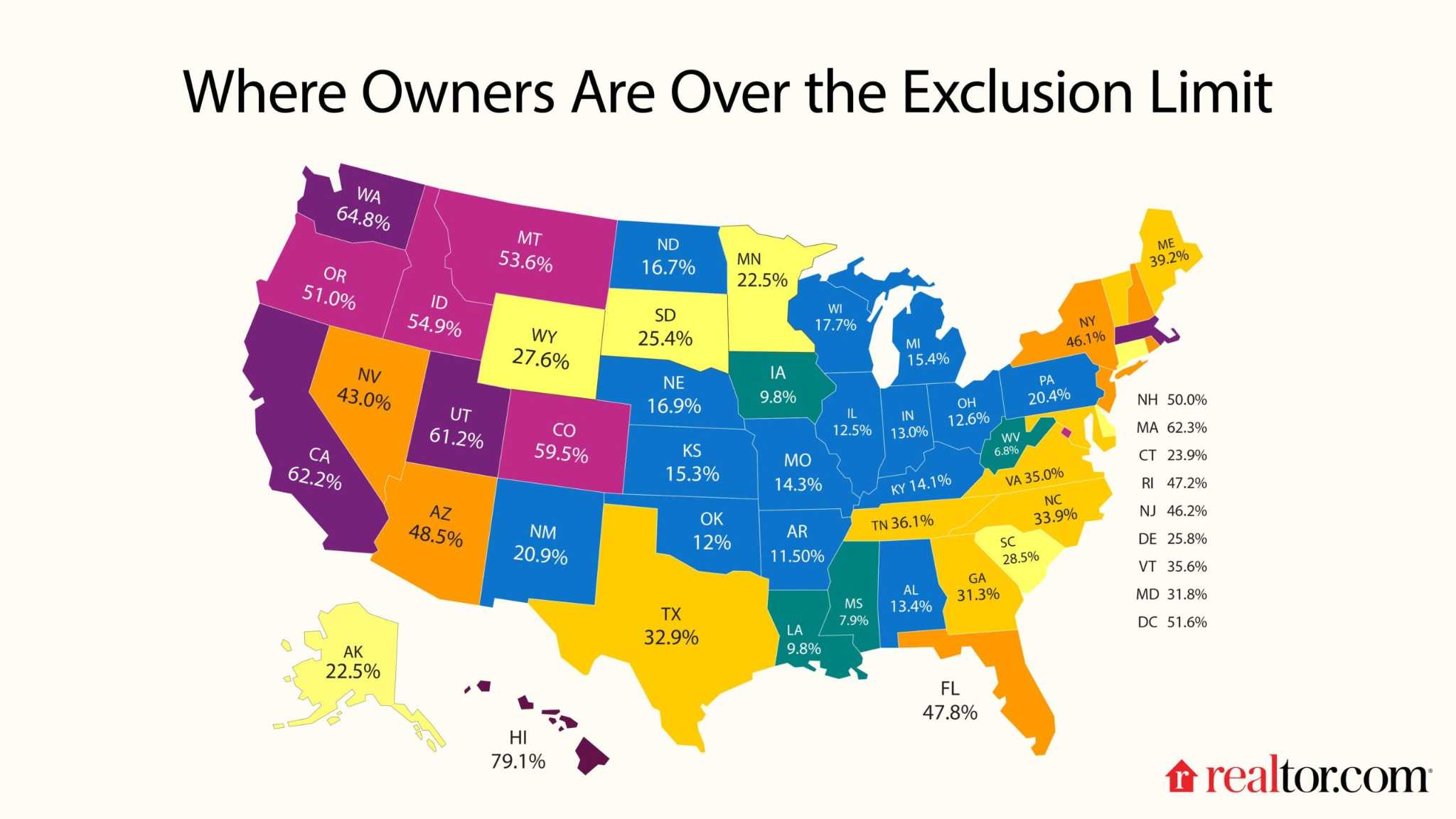
Divorce brings complexities in property division, with capital gains tax implications occurring when a marital home sells for more than its purchase price. Understanding capital gains exclusions and their timing assists couples in avoiding costly surprises.
Real estate




fromSFGATE
10 months ago35% of Homeowners in Virginia Will Face a Hidden Home Equity Tax If They Sell
According to the National Association of REALTORS®, 35% of homeowners in Virginia now exceed the federal capital gains tax exemption, potentially triggering thousands in federal and state taxes when they sell.
Real estate
fromSFGATE
10 months ago51% of Homeowners in Oregon Will Face a Hidden Home Equity Tax If They Sell
More than half of Oregon homeowners may face unexpected tax liabilities due to increased home equity exceeding federal capital gains tax exclusions, potentially losing significant profits on sales.
Real estate


fromSFGATE
10 months ago39.2% of Homeowners in Maine Will Face a Hidden Home Equity Tax If They Sell
The capital gains exclusion was designed in 1997 to help homeowners avoid taxes when selling their primary residence. At the time, the $250,000 (individual) and $500,000 (joint) limits covered most home sales. But those limits have never been adjusted for inflation.
Real estate
[ Load more ]