#hallstatt-period

[ follow ]
History
fromwww.thehistoryblog.com
10 hours ago

Oldest example of restorative dentistry in Scotland found in parish church bone

A gold thread bridge found in a 17th-century skull is Scotland's oldest example of restorative dentistry.
UK news
fromwww.independent.co.uk
21 hours ago

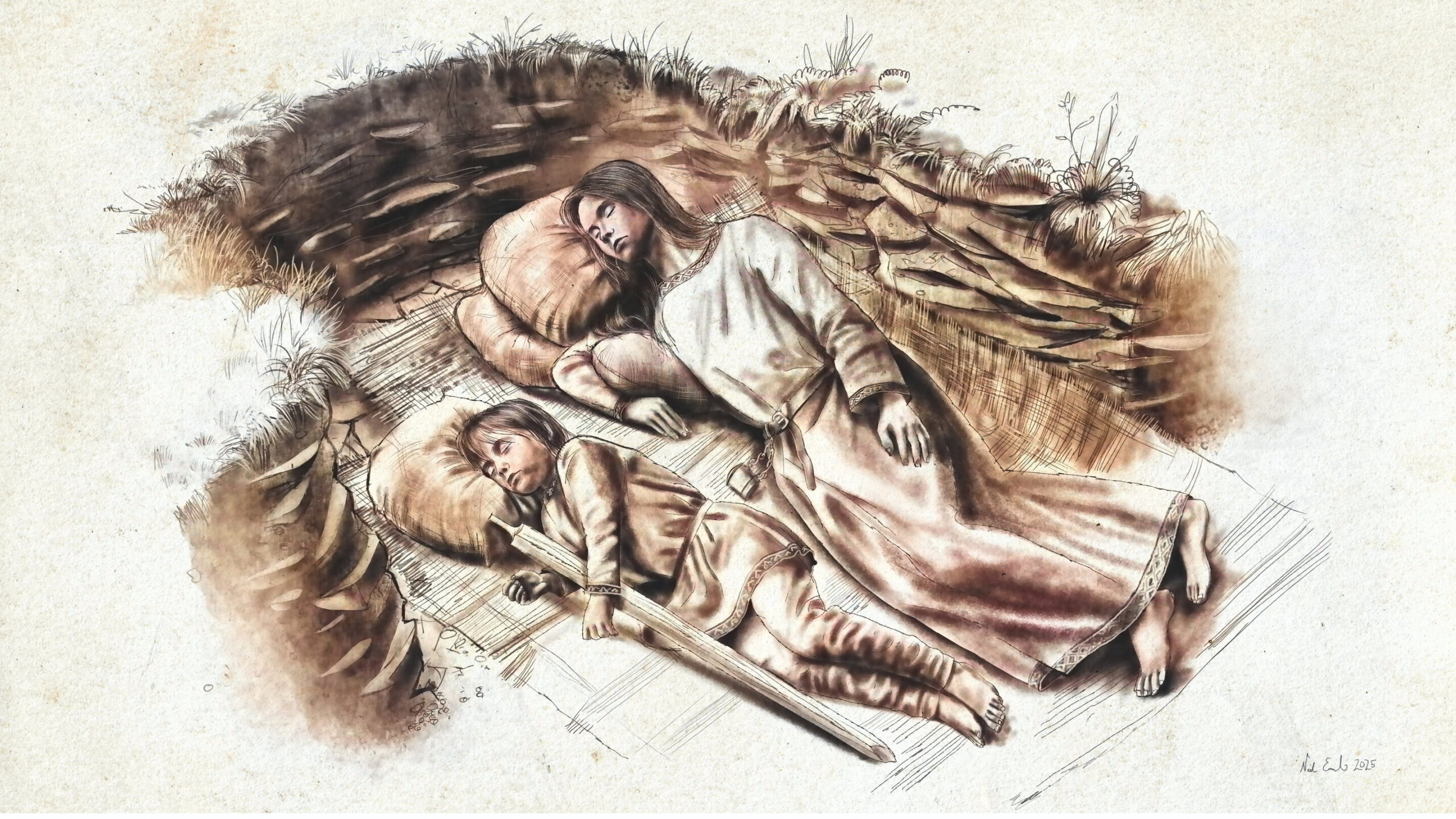
Rare instance of Anglo-Saxon joint siblings' burial proved by DNA test

Two siblings were discovered buried together in an Anglo-Saxon grave, highlighting a rare familial bond in ancient burial practices.
#roman-archaeology
Digital life
fromMatt Strom-Awn
1 week ago

Expansion artifacts

Compression technology enables efficient data storage and transmission by discarding imperceptible information, crucial for platforms like YouTube and Spotify.
#bronze-age
History
fromwww.thehistoryblog.com
3 days ago

2,000-Year-Old Hadrian's Wall Cup Discovered in Spain

A bronze cup depicting Hadrian's Wall was found in Spain, naming forts on the east side, and is the largest of its type.
#archaeology
#ancient-greece
History
fromwww.dw.com
1 week ago

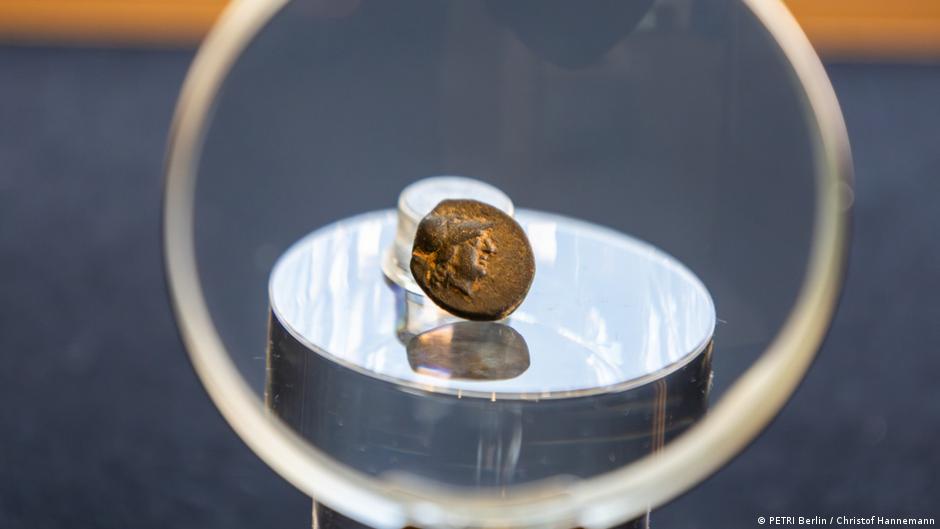
Teen discovers first ancient Greek artifact found in Berlin

A 13-year-old discovered a rare ancient Greek coin from Troy in Berlin, revealing potential links between ancient Greece and northern Europe.
History
fromwww.dw.com
1 week ago

Teen discovers first ancient Greek artifact found in Berlin

A 13-year-old discovered a rare ancient Greek coin from Troy in Berlin, revealing potential links between ancient Greece and northern Europe.
fromArtnet News
1 month ago

Massive Cache of 42,000 Pottery Shards Reveals Daily Life in Ancient Egypt

The ostraca show us an astonishing variety of everyday situations. We find tax lists, deliveries, short notes about everyday activities, religious texts, and priestly certificates attesting the quality of sacrificial animals.
Arts
History
fromMail Online
1 week ago

Scientists baffled by mysterious coin linking Vikings to Jesus

A gold coin pendant suggests Vikings may have embraced Christianity earlier than previously believed, linking them to the teachings of Jesus.
Alternative medicine
fromArs Technica
1 month ago

Never mind Band-Aids, Neanderthals had antiseptic birch tar

Neanderthals likely used birch tar for medicinal purposes, including treating infections and insect bites, beyond its known use as a weapon adhesive.
fromThe Local France
1 month ago

Mysterious ancient skeletons discovered sitting upright in France

Similar to four others unearthed nearby earlier this month, it is sitting upright at the bottom of a one-metre-wide pit. The skeleton's hands are resting in its lap. Like the others, its back is against the eastern wall, its face directed westward.
France news
#medieval-archaeology
History
fromwww.independent.co.uk
3 weeks ago

What15,0000-year-old jewellery found in a cave tells us about prehistoric life

The Independent provides accessible journalism on critical issues like reproductive rights and climate change, supported by donations.
fromwww.theguardian.com
1 month ago

Ancient skeleton discovered sitting upright in France

Five tombs of Gauls buried in a seated position have been discovered in central Dijon. Similar to four others unearthed nearby earlier this month, it is sitting upright at the bottom of a one-metre-wide pit. The skeleton's hands are resting in its lap. Like the others, its back is against the eastern wall, its gaze directed westward.
France news
History
fromwww.thehistoryblog.com
3 weeks ago

Rare ring with runic inscription found in Lincolnshire

A Viking-era finger ring with runic inscription was discovered in Lincolnshire, dating from the 8th to 10th centuries, marking a significant archaeological find.
Agriculture
fromArs Technica
1 month ago

Re-creating the complex cuisine of prehistoric Europeans

Hunter-gatherer-fishers across Eastern Europe combined specific regional foods into distinct preparations, mixing fish with berries, legumes, grasses, and vegetables rather than relying on fish alone.
fromwww.thehistoryblog.com
3 weeks ago

Neolithic axe found in Lake Constance

The axe was the most important find in the group and would have been highly valued in the Neolithic community. Experiments with fiddle bows have found that it takes more than a day of work to manufacture an axe like this one.
History
#mass-grave
UK news
fromwww.independent.co.uk
1 month ago

Coin used to pay for bus in Leeds found to be 2,000 years old

A 2,000-year-old Carthaginian coin from 1st century BC Spain was discovered in Leeds after being used as a bus fare in the 1950s and preserved for over 70 years.
fromMedievalists.net
1 month ago

Who Lies in Winchester's Medieval Mortuary Chests? - Medievalists.net

This project demonstrates the combined power of science, the study of human remains and historical research to discover new information about the six mortuary chests and their occupants which would not have been available to us a generation ago.
History
UK news
fromMail Online
2 months ago

Britain's 'oldest Northener' was a little girl dubbed the Ossick Lass

Remains from 11,000 years ago found in Cumbria belong to a female child aged about 2.5–3.5 years, the oldest human discovery in Northern England.
History
fromMedievalists.net
1 month ago

Scientists Confirm Remains of Medieval Emperor Otto the Great - Medievalists.net

Emperor Otto the Great's identity has been confirmed through scientific research, including DNA analysis, after centuries of uncertainty.
fromMedievalists.net
1 month ago

New Medieval Books: Basics of Bloomery Iron Smelting - Medievalists.net

This manuscript is intended to fill the gap between 'the doer and the thinker', and so should be expected to be an overview, especially as applies to the fine details of current archaeology.
History
History
fromMedievalists.net
1 month ago

Viking High Seat Recreated in Norway for Museum Exhibition - Medievalists.net

A reconstructed Viking Age high seat reveals insights into the power structures and agricultural foundations of early medieval Norway.
History
fromwww.thehistoryblog.com
1 month ago

New gold foil old man found in Norway

A rare Nordic Iron Age gold man was discovered in Norway, dating between 550 A.D. and 793 A.D., indicating significant cultural importance.
History
fromMail Online
1 month ago

Roman artifact found in the Americas shatters New World history

A Roman terracotta head discovered in a sealed Mexican tomb in 1933 suggests Roman contact with the Americas around 200 AD, predating Columbus by over a thousand years.
History
fromMedievalists.net
1 month ago

Two Medieval Men Found Buried in Prehistoric Site - Medievalists.net

Medieval men were buried in the Menga dolmen, a Neolithic monument in Spain, over 4,000 years after its construction, demonstrating the site's enduring symbolic importance across millennia.
History
fromwww.thehistoryblog.com
1 month ago

Only image of Gallo-Roman god found in Burgundy sanctuary

The only known pictorial depiction of Gallic god Sucellus was discovered at the Mancey sanctuary in Burgundy, a religious complex continuously used from the late Iron Age to the 4th century.
#bronze-age-archaeology
History
fromMail Online
1 month ago

The first non-binary person? Stone Age woman was buried like a MAN

Stone Age societies in Hungary practiced flexible gender roles, with some individuals buried according to non-traditional gender norms, indicating tolerance for complex identities 7,000 years ago.
fromMedievalists.net
1 month ago

Viking-Age Woman Buried with Her Dog in Norway - Medievalists.net

Excavations carried out in 2025 by the Arctic University Museum of Norway revealed that the artefacts came from a boat burial. The grave contained the skeleton of a woman placed inside a boat measuring about 5.5 metres in length. She had been buried together with a dog, suggesting the animal may have been an important companion in life.
History
History
fromwww.thehistoryblog.com
2 months ago

Analysis Nordlingen bronze sword shines spotlight on Bronze Age craftsmanship

A 3,400-year-old Nordlingen bronze sword shows exceptional Bronze Age metallurgy, precise tang-and-rivet construction, and copper-wire inlay revealing advanced metalworking skill.
History
fromwww.thehistoryblog.com
2 months ago

Early Bronze Age chieftain burial found in France

A richly furnished Early Bronze Age chieftain's pit grave (c.1900–1800 B.C.) with Armorican flint arrowheads, bronze daggers, and rock crystal was found at Ecouche-les-Vallees, Normandy.
fromwww.thehistoryblog.com
1 month ago

Samnite burials of children with bronze warrior belts found

The excavation ultimately unearthed 34 burials, 15 of them belonging to children between two and ten years old when they died. The graves are clustered in groups, probably reflecting family nuclei. Most the grave types are earthen pits covered with roof tiles angled against each other.
History
fromwww.thehistoryblog.com
2 months ago

Rare Mithraic altars found in Scotland go on display for the first time

Two exceptionally rare and beautifully carved Mithraic altars found in Inveresk, East Lothian, Scotland, are going on display for the first time. They are not just the only Roman altars ever found in Scotland, but are among the finest examples of Roman sculpture in Roman Britain. They are also uniquely early in date, having been made in 140s A.D. during Antoninus Pius' reoccupation of southern Scotland, whereas most other archaeological materials related to the worship of Mithras in Britannia date to the 3rd century.
History
fromwww.thehistoryblog.com
2 months ago

Bronze Age tombs with luxury imported goods found in Cyprus

Two 14th-century BCE chamber tombs in Larnaca contained locally made and widely imported luxury goods, demonstrating extensive long-distance trade networks.
History
fromwww.thehistoryblog.com
2 months ago

Viking raider's gold coin pendant found in Norfolk

A rare Frisian imitation of a Carolingian gold coin discovered in Norfolk was likely worn as a pendant by a Viking soldier in the 865 A.D. Great Army invasion of England.
History
fromOpen Culture
1 month ago

Behold the First Realistic Depiction of the Human Face (Circa 25,000 BCE)

The Venus of Brassempouy, a 25,000-year-old mammoth ivory carving, represents the earliest realistic human face depiction and marks the dawn of beauty in human culture.
History
fromwww.thehistoryblog.com
2 months ago

1,000-year-old gold-filled tomb unearthed in Panama

A richly furnished elite Coclé tomb (800–1000 A.D.) at El Cano reveals ornate gold and ceramics, indicating centralized chiefdoms with long-distance exchange and ritual complexity.
fromwww.thehistoryblog.com
2 months ago

Centurion's tombstone reused in someone else's grave

Both of the cyst graves feature funerary markers reused as building material. One of them contains the partially preserved tombstone of Legio I Italica centurion Gaius Valerius Verecundus was engraved with a wreath of which only traces remain and an inscription that describes him as having been heavily pressed by fate.
History
[ Load more ]